Too often when we think of protecting ourselves and our family we only focus on training with guns to deal with a criminal attack. And, while this is certainly important, it is only part of the real picture. If you look at statistics, you are far more likely to have to deal with serious injury in the home or the workplace. You are far more likely to drive up on a serious vehicle accident than you are a gunfight. Yet, too many of us have no training in dealing with serious trauma. Worse yet, well-meaning folks mighy do exactly the wrong thing while trying to help an injured person.
This situation is doubly sad when you consider that First Aid For Trauma courses are offered all over the country. EMT courses are available to people who take personal safety seriously. Even the Gunsite Academy offers trauma classes.
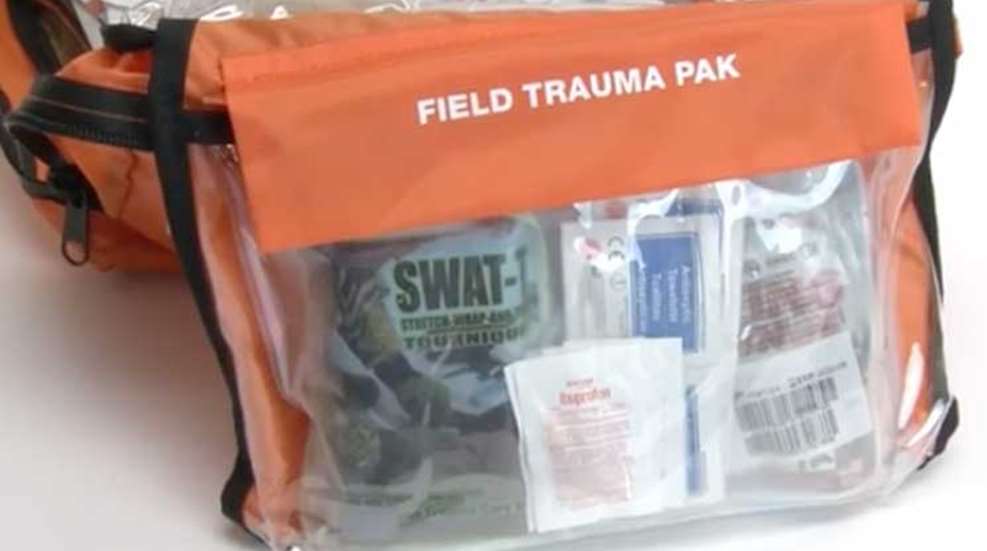
In addition, several companies sell very good trauma kits that can be carried in the vehicle or kept in the home or workplace. However the simple fact that a person owns a gun does not mean that they have had good training in personal defense; and owning a trauma kit does not qualify a person to render first aid in the case of serious injuries. You really need the training that goes with it. After all, we don't want what we have done to hinder the professionals when they arrive on the scene.
As a career peace officer, I had to deal with a number of incidents in which people were seriously injured. You have no idea of the relief that I felt when a person rushed onto the scene and identified themselves as a doctor, an ER nurse or an EMT. In many cases they were the real heroes of the day and it was truly life-saving when such a person could stop serious arterial bleeding or knew how to handle a person who had spinal injuries.
When we think of trauma first aid, we often think about helping others. But we should know that we are the ones who may be the injured party. Do you know how to properly apply a tourniquet? Do you know how to properly apply one on yourself?
The proper approach to considering providing trauma aid is to first get the training and then go buy a trauma kit. Should first aid for serious injuries be part of your personal defense plan? I can't imagine why it wouldn't be. Get the training and do it right!
Additional Reading:
NRA Gun Gear of the Week: Adventure Medical Kits--Grizzly
First Aid in the Field: A How-To