“Trust but verify.” Those words were spoken by NRA Honorary Life Member and 40th President of United States Ronald Reagan. He was talking about the Cold War, but I’m choosing here to apply it to new firearms. Modern firearms manufacturers are very good, indeed, at producing firearms that work well pretty much out of the box. But should you trust the gun completely straight from the box?
When I acquire a new gun or begin to test one, the first thing I do is read the manual. I know this is passé in our culture, but I was taught by former American Rifleman Technical Editor Pete Dicky to read the manual even before taking a gun out of the box. If I ever had a problem with gun and hadn’t read the manual, I would be in for a serious chewing. Every manual in every gun box shipped today counsels its new owner to inspect the gun and perform a function check of some sort. Sage advice. Frankly, many companies do YouTube videos, Ruger among them, that take you through the salient points of the gun, and I have found them very helpful.
A basic function check is one of those things you should do right after you get a new gun.
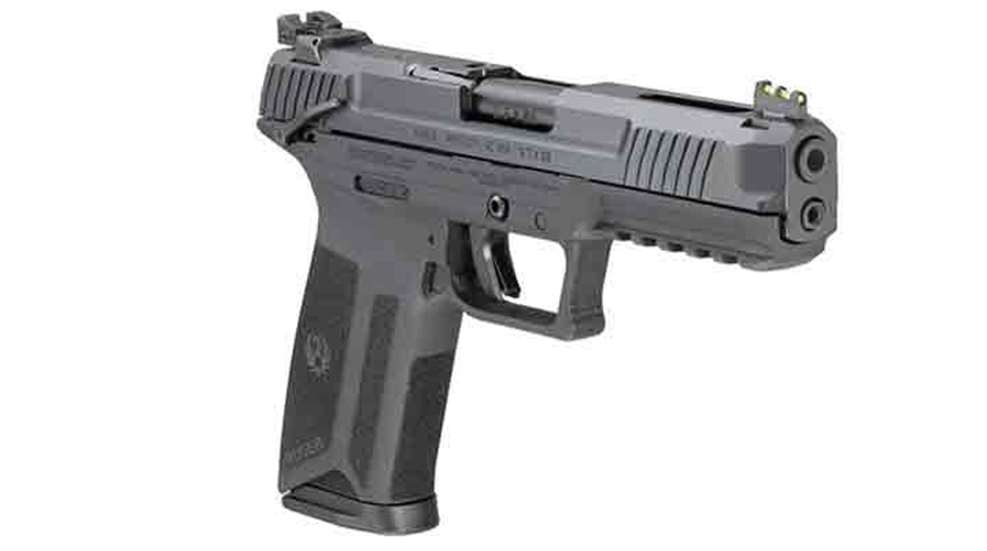
As good as guns are today, there are occasionally problems. The latest is a Safety Bulletin from Ruger about its Ruger-57 pistol having a right safety lever that may be prone to cracking. This is not a “recall”—it is a bulletin. It is my understanding that there are very few guns identified thus far that are affected; you have about the same chance of being hit by a meteorite as having this issue with your Ruger–57. You can go to Ruger‘s website to see what serial numbers are included in this bulletin, basically serial numbers below 642-26275, but a sure is way to find out is to run a function check on your gun.
This is something I try and do with every gun I acquire, as well as every gun I’m going to test. With no ammunition in the area, and a specific double-check to ensure there is not a round in either the chamber or magazine, I will check to the best of my ability to make sure that everything works properly.
This includes, of course, racking the slide multiple times to make sure there’s no drag and the gun is locking up the way it should and traveling smoothly. Lock it open using the slide lock, then release the slide lock and repeat a few times. Insert a magazine then hit the magazine release to make sure it locks into place and then releases as intended. Again, repeat. Retract the slide, then release it, and make sure it locks open on the magazine follower of an empty magazine.
You should always manipulate your safety, not just make sure it goes off and on, but that it actually works as intended when engaged, be it trigger, sear or slide blocking. As any NRA certified instructor will tell you, safeties are mechanical devices and are no substitute for safe gun handling.
- ALWAYS Keep The Gun Pointed In A Safe Direction
This is the primary rule of gun safety. Common sense dictates the safest direction, depending on different circumstances.
- ALWAYS Keep Your Finger Off The Trigger Until Ready To Shoot
When holding a gun, rest your finger alongside the frame and outside the trigger guard. Until you are actually ready to fire, do not touch the trigger.
- ALWAYS Keep The Gun Unloaded Until Ready To Use
If you do not know how to open the action or inspect the chamber(s), leave the gun alone and get help from someone who does.
Again, with an unloaded gun pointed in safe direction, apply the safety and pull the trigger. If the firing pin goes forward with the safety engaged, you have a malfunctioning safety.
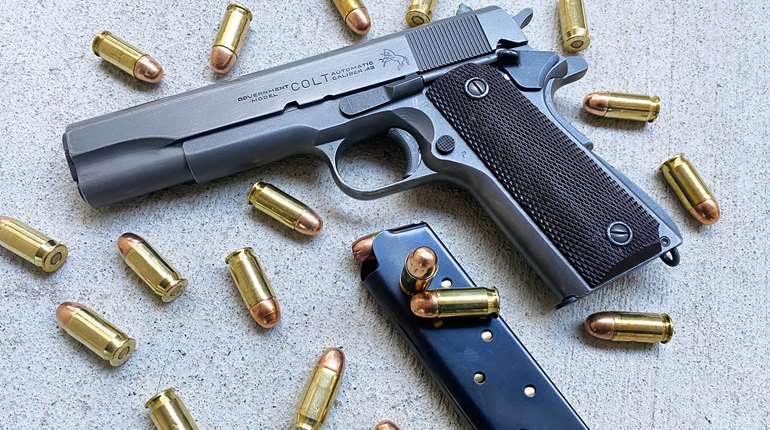
If the gun has a grip safety, you should make sure that is doing its job as well—not just be present. I once purchased a used U.S. M1911A1 at an auction, and the previous owner apparently had philosophical issues with the grip safety, so it was cleverly and unobtrusively disabled. A few parts form the bins at the next gun show saw to it that the gun would function properly.
Another thing I do, because I have guns in the office all the time, is check to make sure the firing pin is going forward. We get a lot of “new” guns here, and the SHOT and NRA shows both require samples to be handled in the exhibit halls to have bobbed firing pins. I have had dozens of guns so disabled come through my hands, with some fruitlessly going to the range with a staffer who didn’t check. As difficult as it is to believe, I once was preparing to evaluate a gun and discovered there was no hole drilled through the breech face for the firing pin to pass through. Just so you know, it was not Ruger.
I do the No. 2 pencil test. That familiar writing implement from your SAT exam has an eraser at the back of it. In particular with a 9 mm handgun, you can drop it, eraser first, down the barrel and then pull the trigger. It should be pretty obvious that that firing pin contacted the eraser. I’ve lost some pencils behind bookcases that way in the past.
After getting through the manual and function check, I will disassemble the gun and look at all the parts. Good instructions for doing so are in every manual I have ever opened, and now we have YouTube just in case they are not. I wish I done this on my Chinese-import Broomhandle Mauser, because then I would’ve discovered that the firing pin was broken. After I fired it the first time, it lodged in a loop of its spring and essentially acted as a fixed firing pin. Thankfully, although not all the rounds went were intended, no one was hurt. That was 30 years ago, and it still gives me the sweats.
I once saw a customer at a local gun shop successfully complete his background check, buy a new handgun, holster and a box of defensive hollow-points. He loaded the magazine at the counter, put it into the gun, then insert the pistol into the holster and off he went. Hopefully, that story had a happy ending. One thing he definitely did not do his perform a function check.
He had no idea if it was going work. Nor any idea if that ammunition would even function through his gun, let alone know where it would hit. Not only should you check the gun’s mechanical function, but you need to know your combination of ammunition and gun work 100 percent of the time in a defensive firearm, whether for carry or for home. It will involve a trip to the range, but it is better to verify before you need to rely on the firearm.
Most Popular