Rifleman Q & A: Grimy Little Bullets

by
posted on May 12, 2017
** When you buy products through the links on our site, we may earn a commission that supports NRA's mission to protect, preserve and defend the Second Amendment. **
grimy.jpg

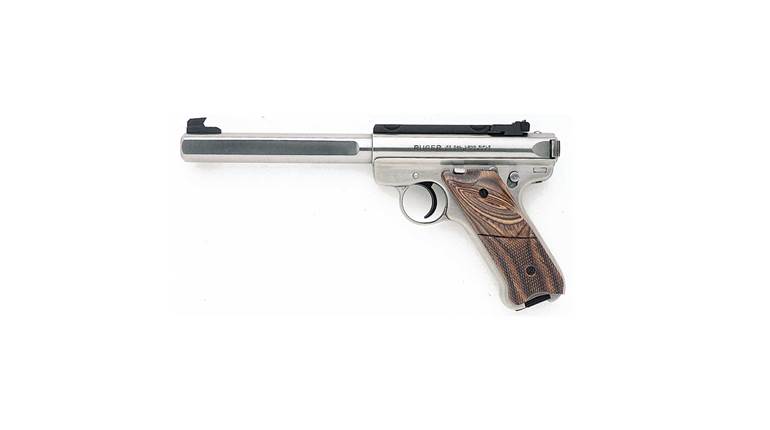
Q: After speaking to the top shooters in my group of friends about bore cleaning, I’ve learned that there are differing views. One cleans his rifle after every use. The other two clean only sporadically, on the theory that if the bore is cleaned it needs to get dirty again before it shoots consistently. Of the two that don’t clean, one shoots only moly-coated bullets. We shoot both .22 rimfire and center-fire. Which, if either, of these practices is correct?

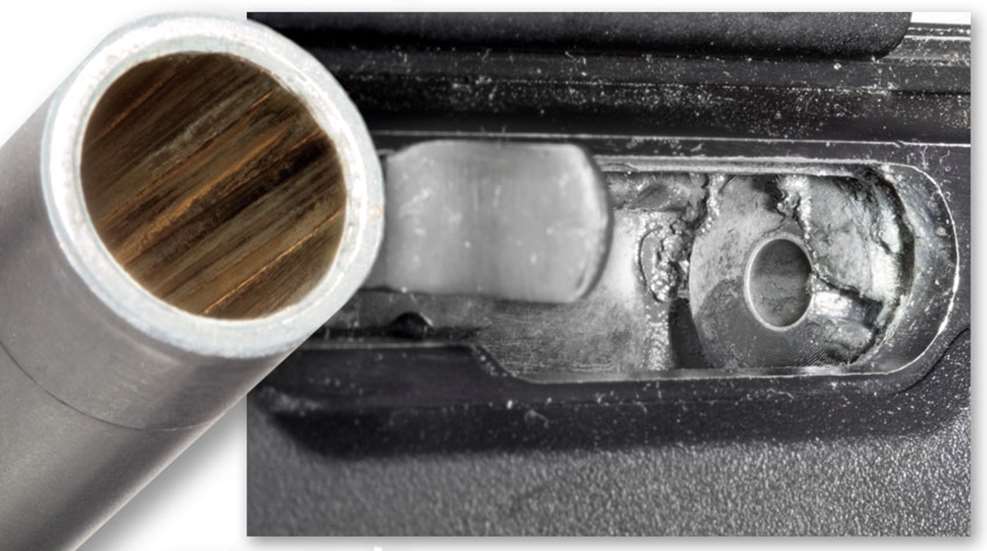
A: As you have found, there is no unanimity regarding this subject. Quality .22 rimfire bores firing quality ammunition may truly never need to be cleaned. The only reason requiring cleaning is a build-up of lead fouling. A dry bore can cause even the best barrels to foul with quality ammunition, so be sure to oil a clean bore.

Jacket fouling in a center-fire bore is inevitable, and significant jacket fouling predictably degrades accuracy. Obviously some competition rifles may have to fire 100 or more rounds without cleaning. And varmint shooters fire hundreds of rounds in a day, seldom stopping to clean. Jacket fouling rarely removes itself. On the other hand, if a well-made barrel shows no tendency toward copper fouling, and accuracy does not degrade from shooting session to shooting session, then frequent scrubbing is not warranted.

One final note: Any anticipated extended storage period should be preceded by a cleaning and oiling, for purposes of preservation.

—John Treakle

Latest

Federal 7Mm Backcountry Rifleman Review 2

Federal Signs Agreement With U.S. Army to Improve Ammo Performance

Federal Ammunition announced this week that it has entered into an agreement that allows the U.S. Army to utilize its patented Peak Alloy ammunition case technology for use in multiple cartridges and weapon systems.

Four Armed Citizen Stories That Tell us a Lot

Each self-defense case is different. As we read them, we find ourselves wondering what we would have done, and then asking if the citizen made the best decisions possible in the worst-case scenario.

The Three Rs of Performance Shooting: Rise, Return & Realignment

Way back in the day, the three Rs of learning were colloquially known as "Readin’, Rightin’ and Rithmatic." In today's modern performance shooting, the three Rs become Rise, Return and Realignment, the core mechanics of recoil control.

Subsonic Ammo 101: Everything The Suppressor Shooter Should Know

Slower-than-sound rounds are an art as much as a science. For target shooting, bullet upset is not important, but if you’re using subsonic loads for hunting or self-defense, it becomes critical.

I Have This Old Gun: Model 1874 Gras Rifle

Following the Franco-Prussian War of 1870, the French military were in desperate need of a new service rifle. Their answer was the Model 1874 Gras, which was largely an update to the earlier Chassepot design.


Compact & Quiet: CMMG's ZEROED Banshee

CMMG has expanded its Banshee line of AR-style rifles with the ZEROED, a firearm that is optimized for suppressor use.

Interests


Get the best of American Rifleman delivered to your inbox.