Imagine yourself alone or with your family or a small group where you suddenly and without warning find yourself in a situation where a mob of irritated humans (perhaps “peaceful protesters”) start forming up around you and appear hostile. What are some recommended courses of action you can take on foot, at home or in a vehicle to reduce risk, break contact and get to safety?
First off, you want to approach mob defense as a proactive measure followed by reactive measures (if needed). Before entering a potential threat area, do your homework and look for any upcoming events, protests, marches, assemblies, road closures, etc. Utilizing this valuable protective intelligence, you may then plan your travel accordingly. Avoid any potential choke points (bottlenecks that could potentially impede your immediate egress) or confined corridors (lengthy pathways without alternate escape routes). The odds of a hostile crowd forming at a protest are never zero, so watch for it, along with related traffic jams and first-responder activity, so you can pivot early.
You can’t react to something you can’t see, so practice the basics of situational awareness. Keep your face out of your phone, maintain your attention on your environment and have a plan. The untrained might call this a “paranoid posture,” but protective-services professionals call it proactive planning—just another day at the office. These cursory protective measures can help you sidestep the proverbial “fatal funnel” (choke points) where mobs can build crushing mass and momentum.
Another very useful tactic is commonly referred to as “read the need.” Trained professionals read crowds like a meteorologist predicting the weather. There are a few rules of thumb to reading the need. Crowds have an observable flow and ebb. Pressure builds at choke points such as bridges, intersections, protest lines and police activity (arrests, mitigating property damage, riot control tactics, etc.).
Situational awareness doesn’t end with seeing; it continues with processing and anticipating. The most successful professionals and civilians under stress don’t just look—they interpret behavior, body language and energy flow in real time. Pay attention to tone shifts, chanting, shouting, movement from fluid to erratic, signs like thrown objects, sudden silence or people covering their faces; all signal transition from crowd to mob.
The key is to detect these pre-incident indicators early enough to make micro-adjustments like crossing the street, changing elevation, rerouting or ducking into a secure structure before the wave crests. The faster you interpret those cues, the more time you buy to maneuver and stay ahead of the action-reaction power curve.
Your primary responsibility is to keep yourself and those with you alive and injury-free. You can accomplish this by staying clear of undesired events. Technically speaking, it’s about moving across the shortest distance between two points. Avoid movement through the dense core or mass (mob density) and getting pinned between a rock and a hard place (fixed objects like a building and the mob) or between two or more moving crowd subdivisions (clusters).
Yet another reliable mob-defense skill is the ability to de-escalate early and preferably at a safe distance. The most common visual de-escalation display is body posture and verbal judo (a high-leverage communication method that uses calm, strategic language and tactical empathy to defuse confrontation, gain compliance and steer interactions toward safe, controlled outcomes).
Keep your hands clearly visible with your palms out (universal symbol of “surrender”), work to maintain non-challenging eye contact and speak in brief quips like “We’re just passing through” or “We’re just leaving.” Keep it short and simple and keep moving—a moving target is much more difficult to confront than a stationary one. Refrain from videoing, as it occupies both hands, locks you in place and disengages your awareness from your immediate environment in exchange for “getting the shot.” Don’t “square up” or make any such physical challenges. You want to be the quintessential “gray man” and melt into the environment as you evaporate from the threat area.
If law enforcement is present and you have nowhere else to safely transit, then move toward them; otherwise, the “A” answer is immediate exit away from crowd density and toward either your vehicle, if it is accessible, or a place of business (restaurant, storefront, etc.). As difficult as it may be, you must not get in someone’s face as you and your family are exponentially outnumbered and at an overwhelming tactical disadvantage.
What if you are in your vehicle and surrounded by a mob? The best technique is to avoid it at all costs. Drive around it—up on the sidewalk, grass or the median if you must—but avoid the threat. Stay mobile, as the split second you switch from mobile to stationary, your threat profile rises dramatically. If you’re caught by surprise, keep your doors locked, hazard lights flashing, windows rolled up, seat belt on and, again, stay mobile. Move as quickly as allowable.
It is a common protective-services practice to leave at least one car-length space between your bumper and the bumper of the car in front of you so you can steer out of a trap if traffic stops. You may need to shorten that distance if other vehicles try to cut in front of you.
Refrain from leaning on your horn or pushing too close to the crowd, as you don’t want to escalate the situation. Call 911 when feasible. Use-of-force laws vary by state; treat self-defense as a last resort and follow your jurisdiction’s statutes. The general rule of thumb is unless they break a window and reach in, you are restricted to zero use of force. Remember, your primary objective if you can’t avoid being there in the first place is to immediately move to safety.
Today’s vehicles feature active safety systems—ABS, airbags, seat belts and multiple electronic control units (ECUs)—that can override driver input under certain conditions. Advanced driver-assistance systems (ADAS) like traction control, adaptive cruise, lane-keeping and automatic braking constantly monitor and react according to their programming. Many late-model cars also use LIDAR or LADAR sensors that can automatically limit or disable movement during perceived collisions—so the idea of “just driving through a mob” is often unrealistic in addition to being illegal in some jurisdictions, as the vehicle’s own safety technology will likely stop you before you get far.
Should you be on foot with kids, elderly, injured or a small group, your best bet is to stay together. Mobility is your friend. Stay mobile. Even moving slowly is better than not moving at all. For kids, a practical technique is to say “hold on to dad’s belt and don’t let go;” that way you can feel their connection at night or if you need your hands for a next or equal priority. One- or two-word communication is sufficient so that everyone remains on the same operational plan, moving in the same direction, “to the car” for example.
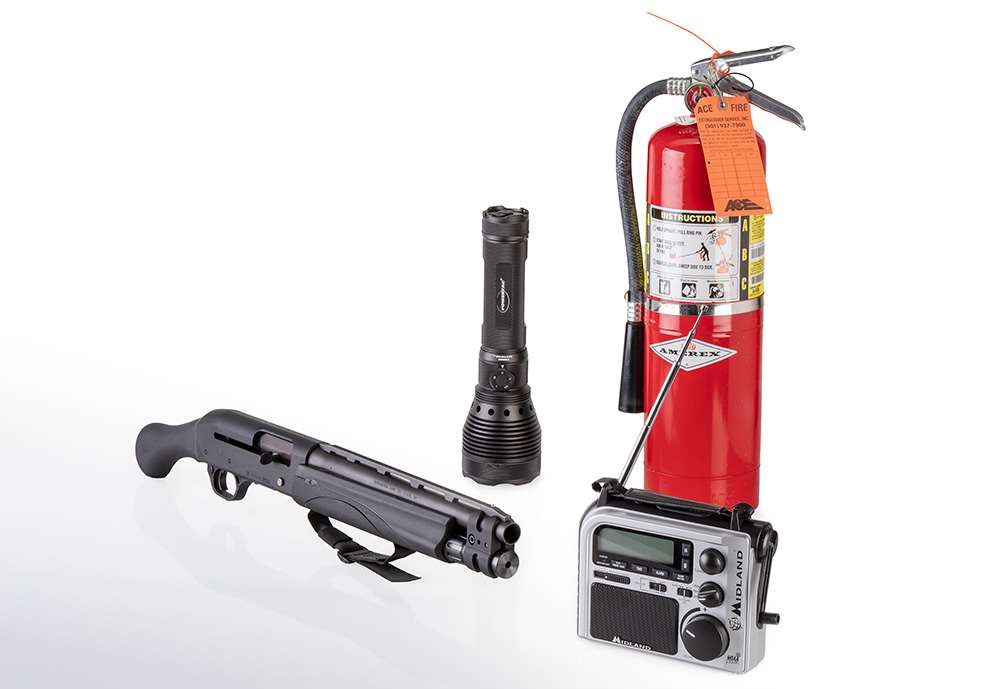
If you happen to be at home anticipating social unrest, then you want to make your residence look as unattractive as possible. It should scream “not worth your effort.” That means concentric rings of both visible and invisible security: lighting, cameras, motion sensors, trimmed landscaping (removes any cover or concealment), upgraded protective hardware (1-inch lock bolts, long framing screws, etc.), and a simple interior safe-room (not facing outward glass) with snacks, water, phone charger, defensive tools (if applicable) and an emergency plan.
If unrest is forecast, secure any vehicles off the street and review your safe-room procedures and family plan. The goal here is deterrence, distraction and delay. As predators are attracted to low-hanging fruit (easy marks), converting your residence to a more-difficult target provides likely predatorial bypass.
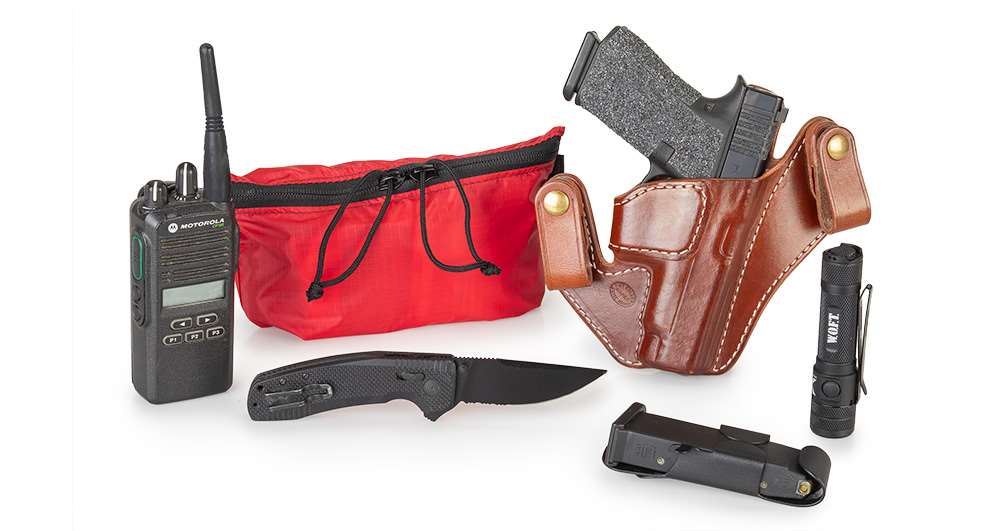
Mobs commonly introduce debris, smoke, fire, physical violence, chemical irritants and trampling risk. For urban movement, personal safety gear includes eye protection (glasses), a mask, gloves and a light trauma kit (tourniquet, gauze, pressure bandage). You should have these items at home and a duplicate kit in your vehicle. Know how to perform the basics, like flushing eyes, applying a tourniquet and treating extremity bleeds. You are your own first-responder before any help arrives, so the better prepared you are, the less you’ll default to panic that may increase risk.
If an incident occurs, once safe, you may document time/date, location, who/what/where, names and details if police interacted; photograph damage and injuries and compose a short, factual narrative written while memory is fresh. If needed, call your attorney. If a vehicle or property was involved, notify your insurer; file a report. Do not post on social media. A clean paper trail helps you with law enforcement follow-up, legal proceedings and insurance claims.
Civil unrest can include lawful demonstrations, unlawful acts and rapidly developing police activities. Should authorities issue a dispersal order, leave the area immediately along a safe route. If stopped, be calm, keep your hands visible and ask if you’re free to go. If not, ask the reason, request counsel and stop talking. Your objective is to exit without escalating or saying something that could be used against you.
Distance is your friend. The greater the distance between you and the mob, the more time you buy to think, move and adapt. Distance equals reaction time—and reaction time equals survival. Every extra step between you and chaos is another second to see, decide and act. Maintain that buffer like your life depends on it, because in a crowd situation, it might. Distance gives you options—escape routes, concealment, cover or even the ability to de-escalate before physical contact becomes unavoidable. The opposite is also true: Once that distance collapses, your time, choices and control quickly evaporate with it.
If you are a business owner, update your risk assessment, brief staff on lock-in/lock-out procedures, stage or refresh medical aid procedures and coordinate with local law enforcement on further proactive or defensive measures. Assign a single decision-maker per shift. If social unrest ensues, secure entry points, move your people and valuables away from glass and prepare to close. The standard is layered, concentric-circle-style security that deters opportunists and buys time for first-responders.
Mob defense is only a concept until you run drills. Mental rehearsal is recommended, but hands-on and team coordination come only from practice: Build short, realistic safety drills (think fire-drill simplicity) your household or group can run repeatedly. Vary the scenarios—crowded street, parked car, living-room lockdown—assign clear roles (who leads, who watches kids, who navigates routes), time each run and practice low-stress cues so people respond without needing complex instructions under pressure.
Include rehearsed communications (easy hand signals, few words, single-line instruction), a quick post-drill debrief to capture what worked and what failed and a simple checklist of actions to carry on a phone or printout. Repeat periodically, but keep drills short and build confidence so they don’t cause panic. When something happens for real, the pros know that drills are what gives everyone a tangible plan to follow—and that plan is the difference between chaos and controlled escape.
Surviving a mob is about awareness, preparation and disciplined execution. The most important and powerful tool you possess isn’t a firearm, pepper spray or a vehicle, it’s your mind. It doesn’t need batteries or bullets and is with you 24/7. Calm, clear-headed thinking under pressure keeps your options visible when panic would collapse them.
The same situational awareness that lets you see a threat early also lets you pivot, de-escalate or escape before danger peaks. Rehearse these principles until they become instinct: Avoidance first, movement second and defense only as a last resort. A steady mind, a flexible plan and practiced awareness will always outperform impulsive reactions.
Mob defense isn’t about fighting crowds—it’s about creating space, time and options. Your goal is not to fight or prove a point—it’s to survive, protect those you love and reach safety intact. The original, triggering issue is no longer immediately important or resolvable.
Mob defense is, at its core, risk management under stress: maintaining lawful behavior, minimizing exposure and preserving freedom of movement.
Every measure—planning routes, reading crowd energy, de-escalating with posture and tone, hardening your home or rehearsing exit drills—builds a margin of safety that compounds. Should that moment arrive, you’ll rely not on luck, but on preparation, discipline and composure to carry you, and those with you, through it alive and with the lowest scale of injury.