When Remington Arms Company aimed to produce an inexpensive, mass-market rifle chambered for the .22 Long Rifle cartridge, the company's designers departed from traditional manufacturing materials. The resulting Remington Nylon 66 emerged as an incredibly innovative, durable design that went on to be produced in great numbers. Watch our "American Rifleman Television" I Have This Old Gun segment above to see the details of this unique design.
"In the mid 1950s. The Remington Arms company realized they needed a competitive semi-automatic .22, and they wanted this gun to be as inexpensive as possible to manufacture,and so the way that they approached this was to make use of some pretty novel manufacturing techniques," American Rifleman Executive Editor Evan Brune said. "Most .22s of this time period are, of course, wood and steel guns, and Remington decided that it would make use of its relationship with DuPont Company, which was, of course, a major chemical conglomerate at the time and also happened to own Remington Arms at this period."
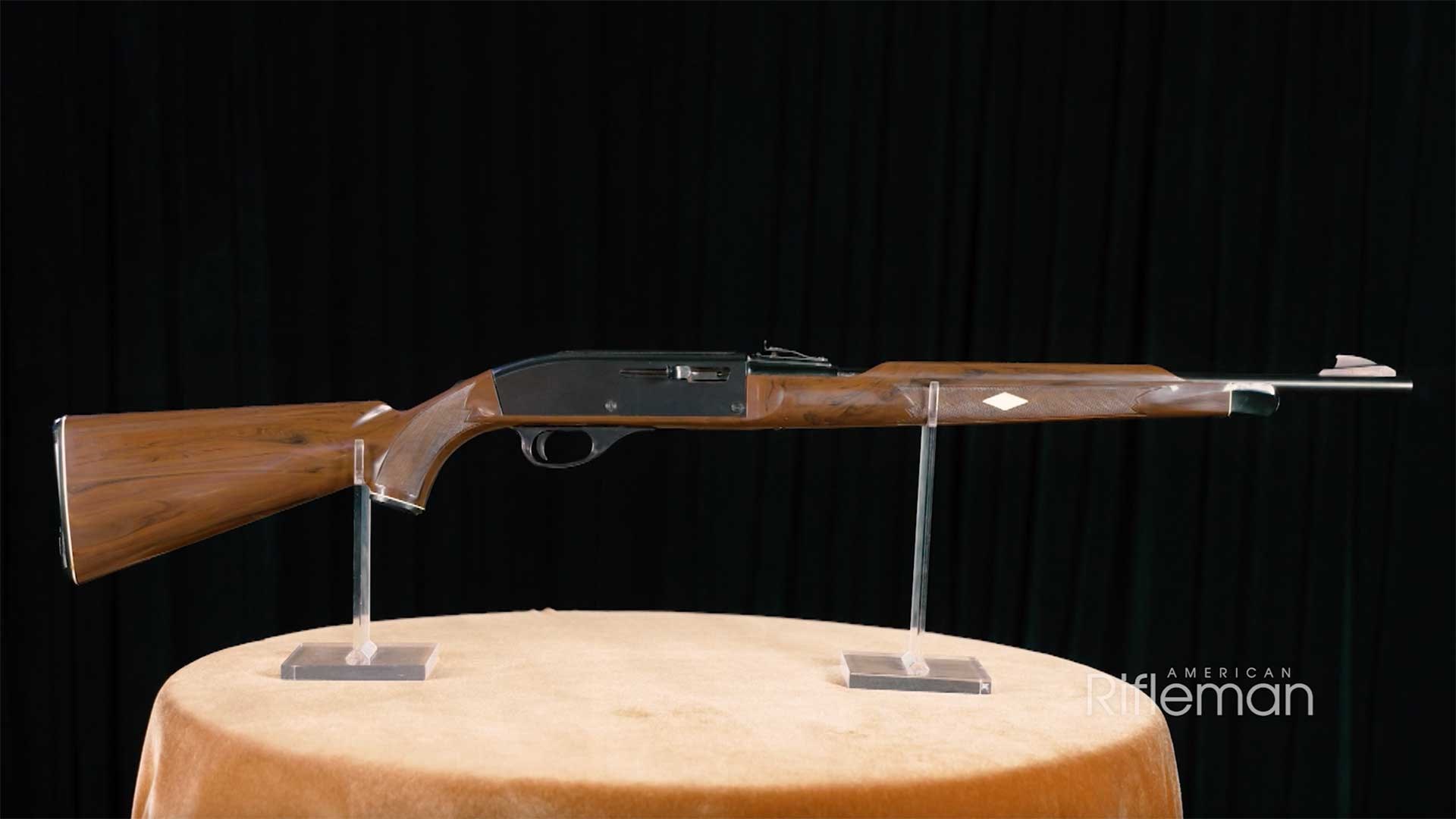
DuPont was a pioneer in the field of polymers, developing Zytel 101, polyamide 66 and other novel materials. Eventually, with the introduction of reinforcement fibers, these plastics evolved into the new material known commercially as "Nylon," and the use of this space-age material in the construction of Remington's new semi-automatic .22 rifle gave the gun its name.
"What's unique about the Nylon 66 is, when you look at the entire length of the gun, virtually the entire gun, from muzzle to heel, is one nylon clamshell molding," Brune said. "Now, supposedly the mold that Remington used to make the Nylon 66 was one of the most intricate and expensive polymer molds made up until that point. And this was a huge gamble for Remington at the time because they weren't sure how people would respond to an all-polymer gun."

In January of 1959, when it was introduced, the Nylon 66 retailed for $49.95, an affordable price for a rimfire semiautomatic at the time. Ultimately, between 1959 and 1991, Remington made more than 1 million Nylon 66s. The design also bridged the gap between the pre- and post-1968 Gun Control Act era, so early Nylon 66 rifles were produced without serial numbers, while guns made after 1967 had a serial number added to its stamped sheet-metal receiver cover.
To watch complete segments of past episodes of American Rifleman TV, go to americanrifleman.org/videos/artv. For all-new episodes of ARTV, tune in Wednesday nights to Outdoor Channel 8:30 p.m. and 11:30 p.m. EST.