The United States Army dates its founding to June 14, 1775, after the Second Continental Congress proclaimed that the 20,000 militiamen arrayed outside of the city of Boston were officially soldiers in the Continental Army. Across 250 years of history, the actions of the Army have been closely intertwined with the direction and growth of the United States as a nation, and at the heart of it all was the soldier and his longarm. Watch our "American Rifleman Television" feature segment above to hear the story of the U.S. military's first longarms, the smoothbore muskets.
"After the events of April 1775, you know, the famous 'shot heard round the world,' things start happening really quickly," American Rifleman Executive Editor Evan Brune said. "All of the militiamen and the minutemen from surrounding towns and counties, and even colonies, are flooding into the outskirts of Boston in response to this alarm, this news that actual fighting has happened. There starts to amass the beginnings of a real military force outside of Boston."
Shortly following the proclamation in June 1775 that the militia outside Boston were officially Continental Army soldiers, there quickly rose questions regarding supply and armament, particularly on the front of how to adequately and consistently arm the haphazardly equipped men currently laying siege to the British army in Massachusetts.
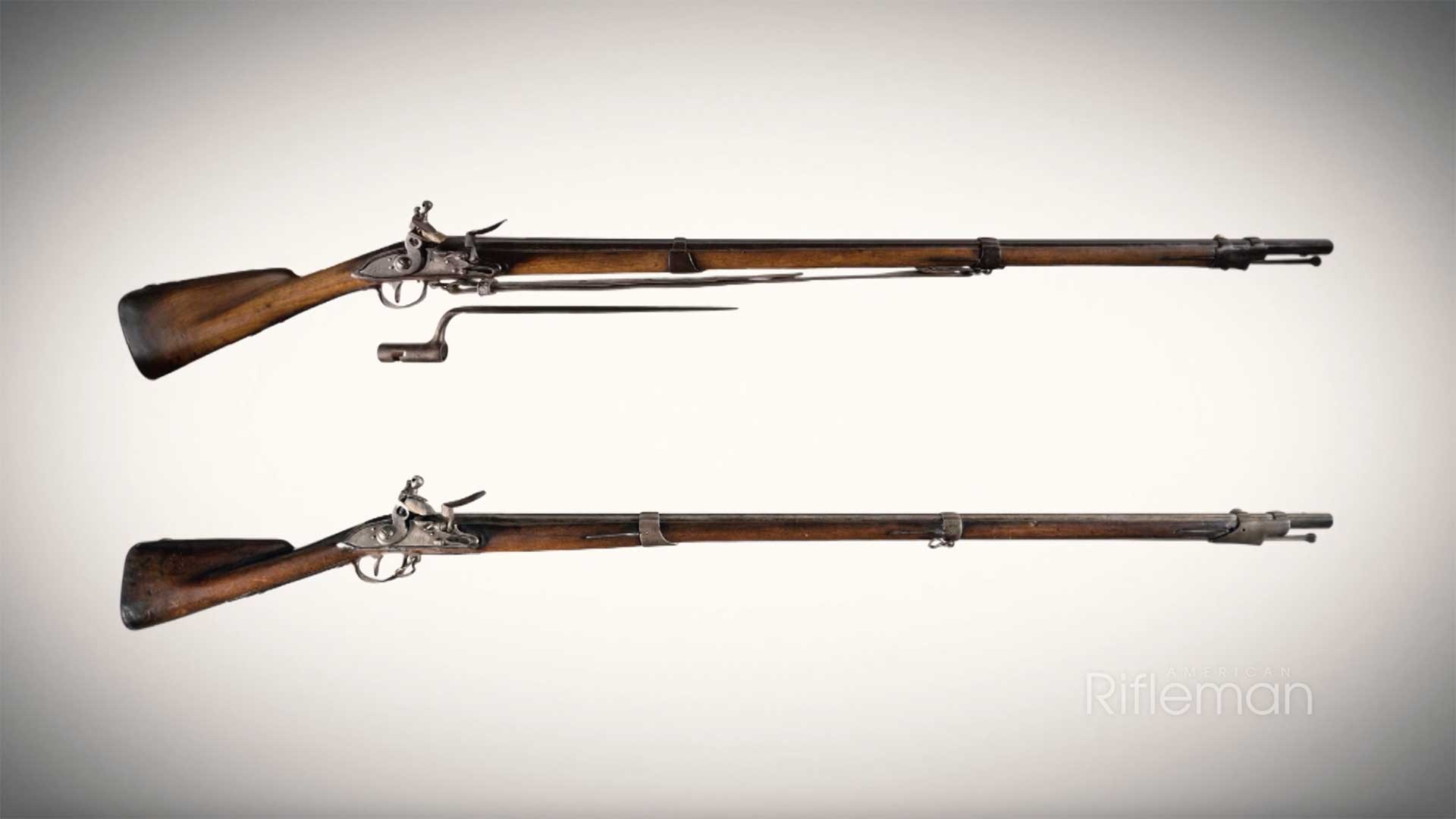
"Really what they needed was lots of Americans armed with smoothbore flintlock muskets. And those guns came from the French," NRA Media Editorial Director Mark Keefe said. "The ‘63, ’66 muskets, again, .69 caliber flintlock, were turned over to the Americans because the French really, really like to see the British lose."
Model 1763 and 1763/66 Charleville muskets arrived from France in their tens and hundreds of thousands, providing Continental Army troops with arms during the American Revolution. So many of these smoothbore, flintlock longarms arrived as French aid that, following the conclusion of the Revolution in 1873 and the subsequent establishment of the United States as a free and independent nation, its fledgling military force continued to be equipped with French-made muskets. But the turmoil of the 1790s highlighted the weaknesses of the U.S. Army's reliance on foreign-made arms.
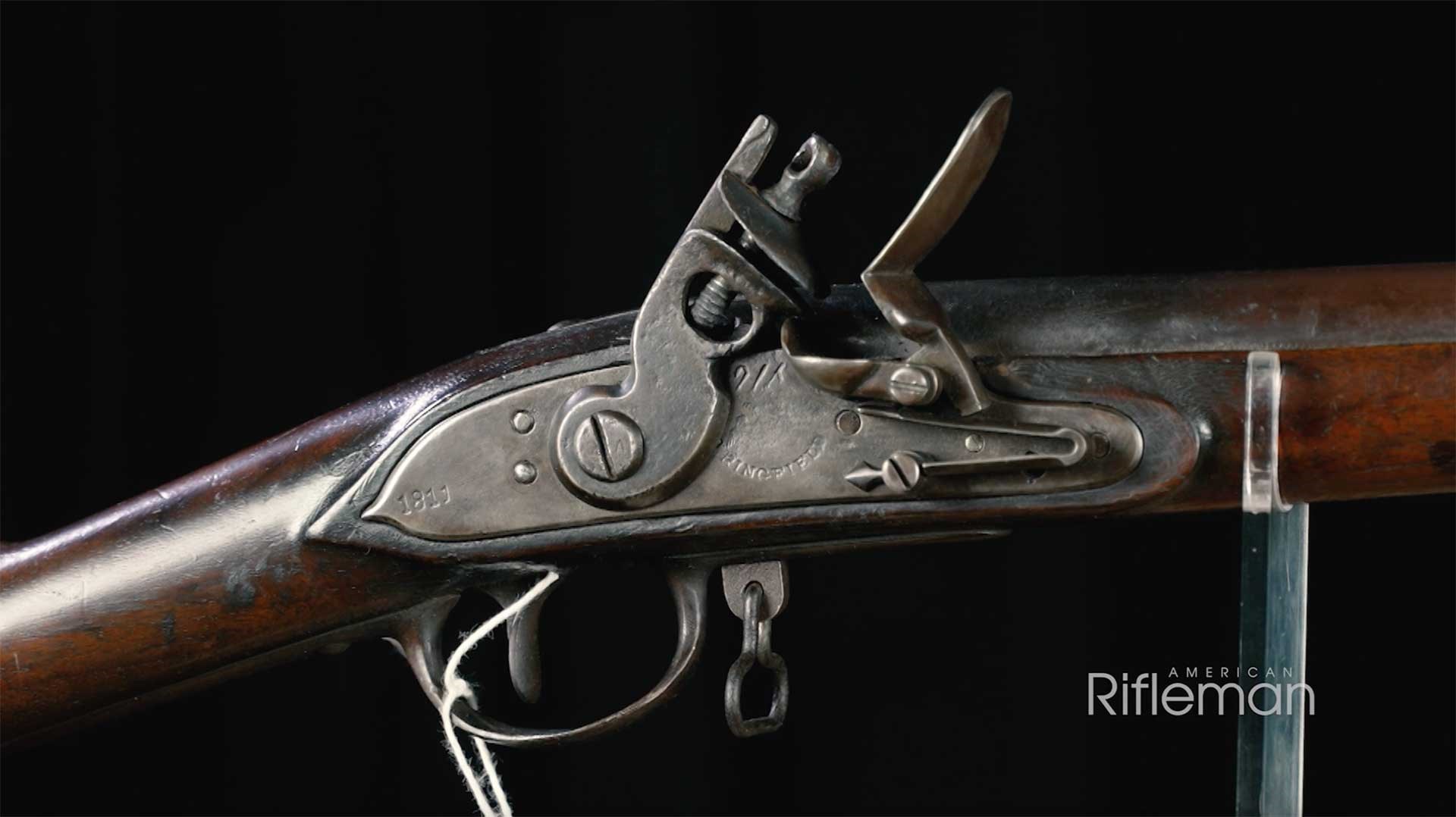
"Now, there was a large demand for muskets at that time, and the different states needed muskets," American Rifleman contributor Kenneth L. Smith-Christmas said. "We had a fear of the British resuming hostilities, we had the French, revolutionary France, was threatening war. And when Springfield Arsenal was established in Massachusetts, it started making this musket. And it very closely resembles the 1763. And so the 1795 pattern was then used by any number of different contractors up and down the eastern seaboard, mainly in the middle of Atlantic and New England,to make copies of the 1795 .69 caliber flintlock musket."
Following the adoption of the Model 1795, manufacturers at Springfield and Harper's Ferry continued to try to refine the manufacturing processes for military small arms, and much of the early efforts toward these ends were spearheaded by Thomas Jefferson and Eli Whitney.
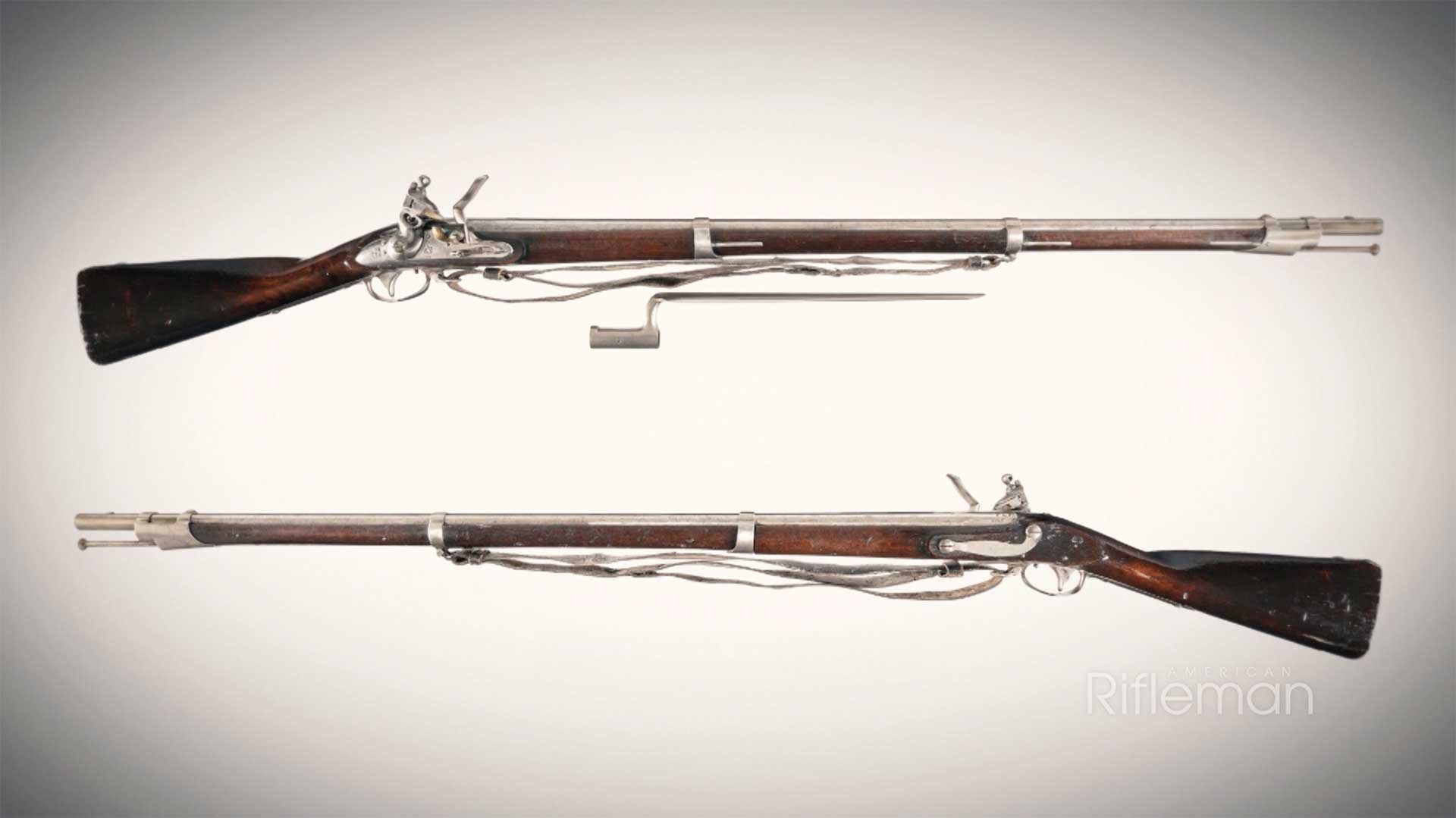
"Jefferson was a big proponent of the use of interchangeable parts, the idea of using machinery to make these parts as interchangeable as possible," Brune said. "And he worked with famed American inventor Eli Whitney in the late 1790s to try to make this a reality. The US Ordnance Department was established officially in 1812, and one of the early missions of the Ordnance Department was to try to promote standardization as much as possible."
Following the War of 1812, the U.S. government prioritized arms production, with a particular eye toward expediency and standardization. These efforts led to the establishment of an entirely new model of U.S. military musket that would combine many features of earlier designs and would be produced in enormous numbers.
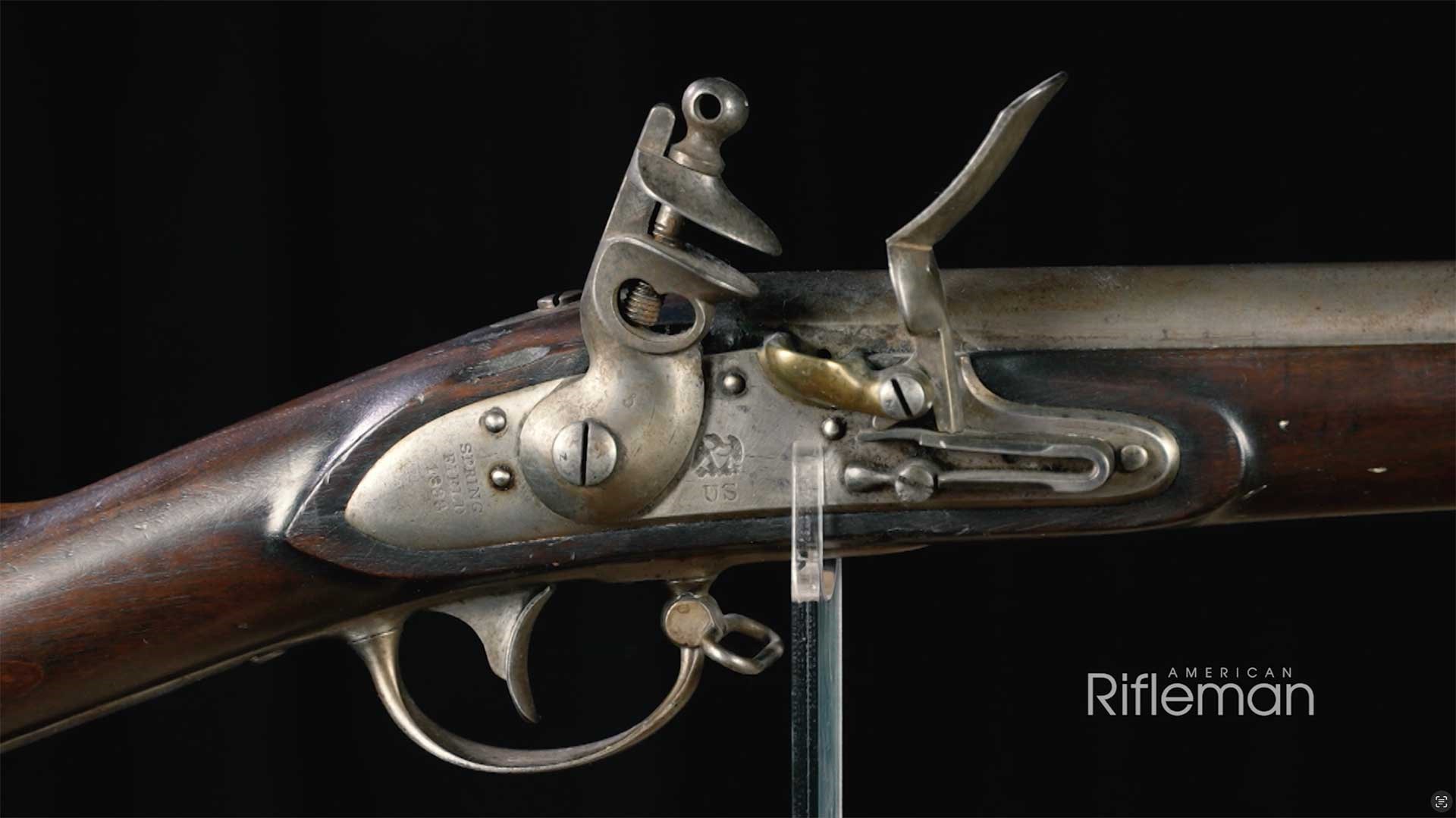
"The gun that they made for long arm use, the musket, was the US Model 1816, and it retained a lot of the features of the earlier 1795. But the difference with the US 1816 was the gauging," Keefe said. "We actually know what those gauges looked like. So instead of just making a part and saying, 'Hey, yeah, you know, that looks pretty good,' they would actually put the gauges on the part and make sure they were within specification. And so you started moving towards what eventually became the American system of manufacture."
While similar to earlier French and American flintlock muskets, the Model 1816 had several signature features. Its barrel was shorter than French Charleville muskets at 42 inches, while still retaining the .69 caliber bore. The design featured a straight stock, as well as an angled brass priming pan.
"The 1816 never quite achieved true parts interchangeability, but it got pretty darn close," Brune said. "Between 1816 and 1840, they made something like 700,000 of them. They made more of the Model 1816 Springfield than they made of any U.S. military flintlock throughout the rest of the 18th or 19th century.
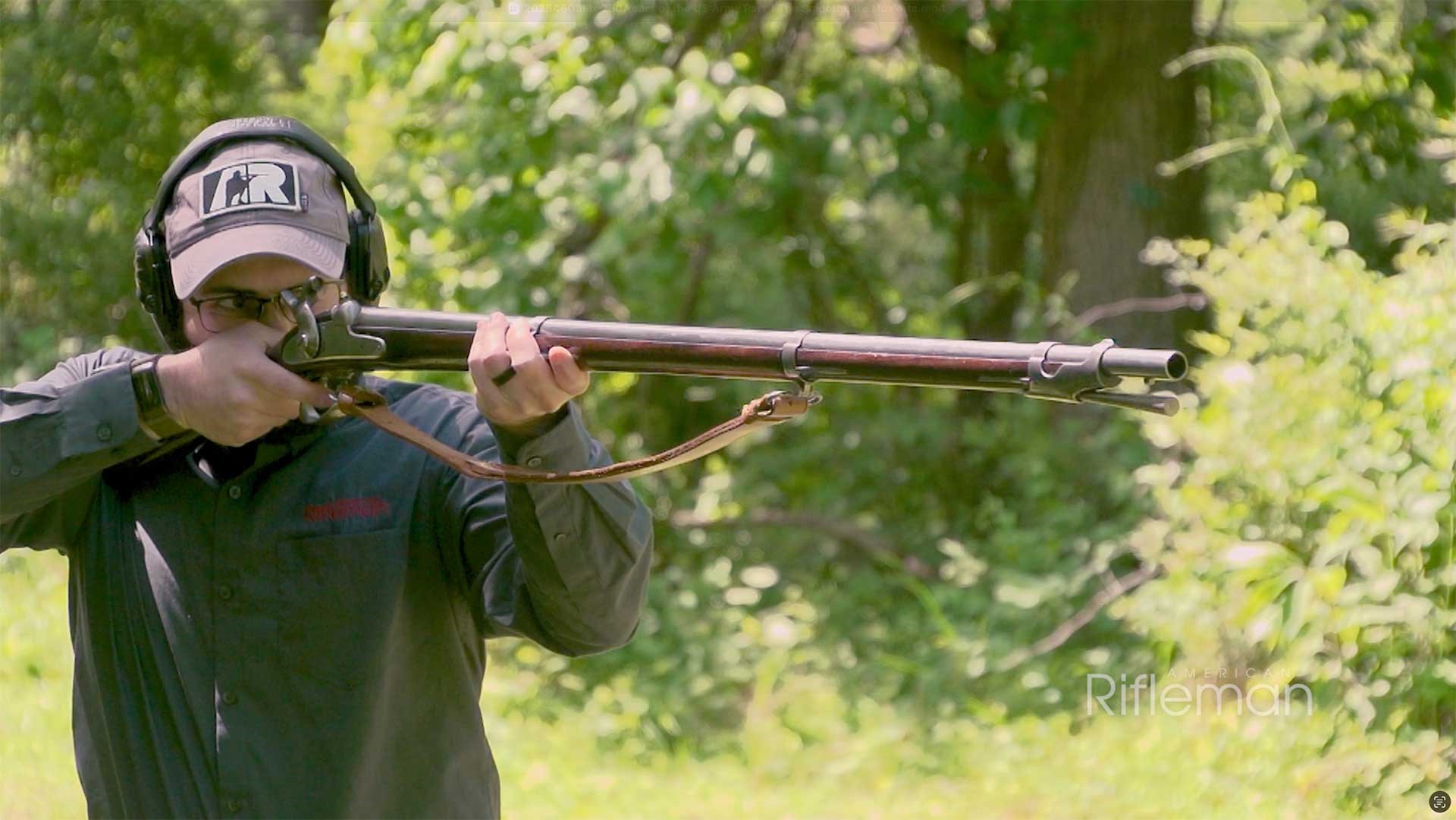
The advent of the percussion cap in the early 19th century spelled the end of the flintlock musket, and the dawn of the percussion era for the U.S. Army arrived with the Model 1841 Mississippi Rifle and Model 1842 Springfield musket.
"The U.S. Model 1842 musket is an interesting gun," American Rifleman Field Editor Garry James said. "Extremely well-made, beautifully made, smoothbore, really had no rear sights, manufactured at Springfield and Harpers Ferry and also by a couple three contractors. It's used from 1842 right up through the Civil War. A few of them were used in the Mexican-American War. However, the difficulty in obtaining percussion caps made the 1816 musket the most widely used gun by American troops during the Mexican War."
To watch complete segments of past episodes of American Rifleman TV, go to americanrifleman.org/videos/artv. For all-new episodes of ARTV, tune in Wednesday nights to Outdoor Channel 8:30 p.m. and 11:30 p.m. EST.