Rifleman Q & A: M1 Carbine Pouches

by
posted on August 2, 2019
** When you buy products through the links on our site, we may earn a commission that supports NRA's mission to protect, preserve and defend the Second Amendment. **
poucg.jpg

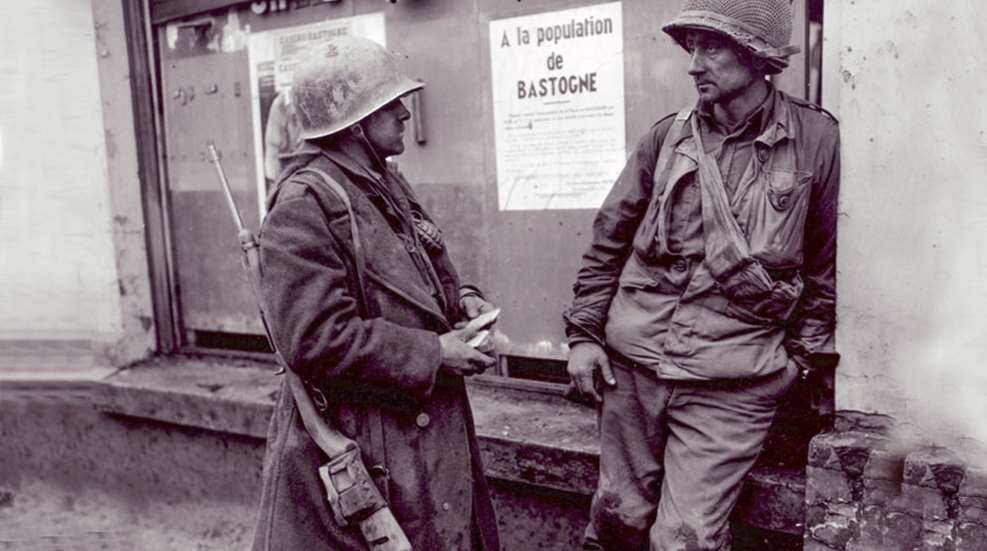
The American infantryman at left is armed with an M1 carbine that has a magazine pouch attached to its stock.

Q: I recently started collecting U.S. M1 carbines and accessories and have a question regarding a magazine stock pouch I purchased at a gun show. The pouch has a metal snap inside of the portion that fits over the stock. The snap seems to have no purpose and I am wondering what it was for.

A: Actually, the pouch to which you refer was not originally designed, nor intended, to be attached to the stock. The M1 carbine was conceived and designed to give military personnel, who would otherwise be armed with handguns, an arm with greater range and accuracy than a pistol. Since it was envisioned that the carbine would take the place of the .45-cal. pistol in such instances, the magazine pouch designed for the new gun was to be carried on the standard pistol belt. The metal snap on back of the pouch would mate with the fastener on the pistol belt that was intended for use with the pistol magazine pouch. It was soon discovered by enterprising G.I.s that the pouch could be attached to the stock and provided a ready means to carry two extra 15-round magazines on the carbine at all times. This became a rather common practice, as evidenced by numerous World War II-era photos depicting the use of such pouches in all theaters of the war. A similar pouch, having two narrow belt loops rather than the single wide loop and pistol belt snap, began to be issued later in the war. This pouch would not fit on the carbine stock, but large numbers of the earlier pouches remained in use through the end of the conflict. --Bruce N. Canfield
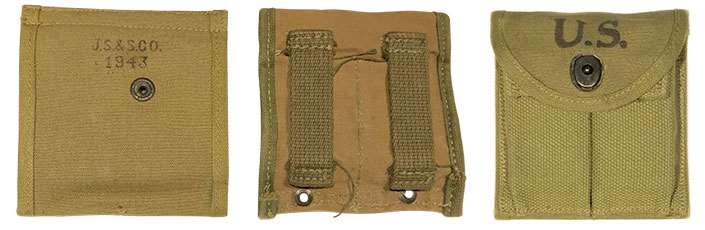
Early M1 carbine magazine pouches (l.) had metal snaps on their backs for fastening to a pistol belt. The later pouch had two narrow belt loops (ctr.).

Latest

Colt Detective Special Ihtog 1

I Have This Old Gun: Colt Detective Special

One of the iconic revolvers of the early 20th century is Colt's compact Detective Special, which became popular on the commercial market and was featured widely in film noir from the 1930s until the 1950s. But the road to the Detective Special wasn't the typical route for a new firearm.

The Real Deal: Mauser's M98 Das Original

In a world of modularity and strict cost-cutting, fine wood and machined steel firearms like the Mauser 98 are disappearing. The Mauser company is making sure the design lives on with the M98 Das Original.

’Merica! | America 250th Products from the Firearm Industry

From guns to knives to storage and beyond, show how your heart beats true for the red, white and blue as we celebrate 250 years of independence, liberty and patriotism with this assortment of commemorative products.

I Have This Old Gun: Witness to the Revolution

It is likely this Long Land Pattern Brown Bess was surrendered by British troops at Saratoga, then used to arm Americans in their fight for liberty before subsequently falling into private hands. Today, it remains as one of a scant few British muskets with a direct tie to the events of the American Revolution.

Rideout Arsenal Leaves Virginia

Rideout Arsenal recently announced it would be leaving the hostile political environment of Virginia for the Second Amendment-friendly state of Georgia.

The Guns of the American Revolution

Contrary to popular perception, the American Revolution wasn’t all muskets, bayonets and Mel Gibson running around with a tomahawk.
Interests


Get the best of American Rifleman delivered to your inbox.