** When you buy products through the links on our site, we may earn a commission that supports NRA's mission to protect, preserve and defend the Second Amendment. **
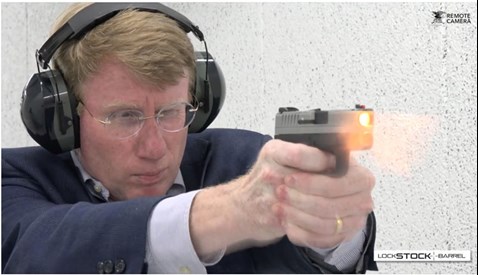
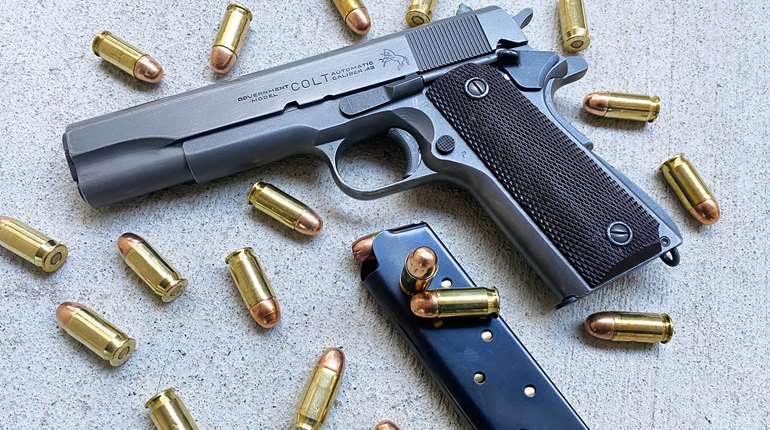
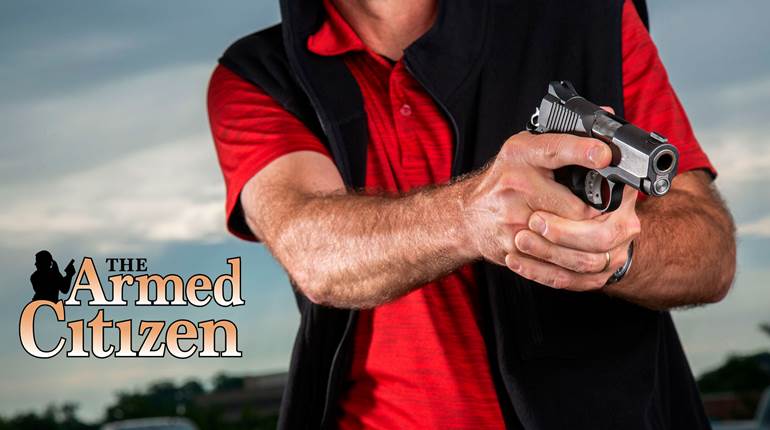
Ideally, most of us would carry a full-size pistol with a standard-capacity (15 rounds or higher) magazine, but such guns are often heavy and bulky. So when it comes to carry guns—guns that are carried every day—there has to be compromise, be it in size, power or capacity. Little guns typically get carried when you need them, big guns may be left at home. This week, American Rifleman’s Mark Keefe talks about carry guns with one of the greatest professional shooters of all time—Rob Leatham. Nicknamed “TGO” for “The Great One,” Leatham has notched more 60 world and national championships. And Leatham has trained some of the most elite military and law enforcement agencies in the world in how to shoot a handgun—and shoot it well. Not only is Leatham a serious and veteran competitor, he’s a guy who carries a self-defense gun every day. What does he think about what makes carry guns different? Watch this week's NRA Gun Gear video and find out.