by
Support NRA American Rifleman
DONATE
** When you buy products through the links on our site, we may earn a commission that supports NRA's mission to protect, preserve and defend the Second Amendment. **
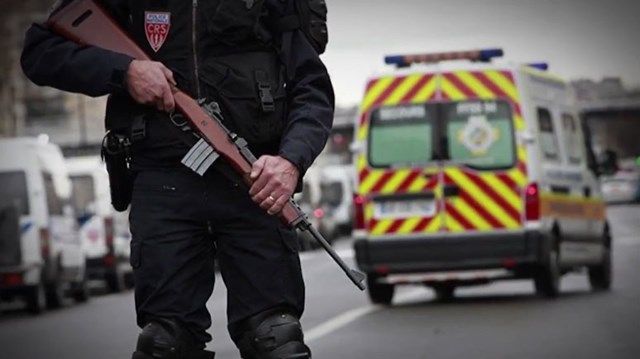
The Ruger Mini-14 never gained much traction as a military rifle, but instead was adopted by police forces all over the world, including France. The Mousqueston A.M.D. rifle—a nearly 30-year-old variant of the Ruger Mini-14—stands for “carbine intermediate defense weapon” and is France's version of the Mini-14. A magazine-fed, semi-automatic rifle, it has served France through many tumultuous times. Similar to American versions of the Mini-14, the Mousqueton A.M.D. differs slightly by having a finer detailed stock, as well as the receiver markings located underneath the wood line so they were not immediately visible. Today, the collecting public in France can own the Mousqueton A.M.D., but only as an Arme Neutralisée—or deactivated weapon. For more on the Ruger Mousqueton A.M.D. Rifle, watch this "I Have This Old Gun" segment from a recent episode of American Rifleman TV.
Additional Reading:
Keefe Report: Ruger on the Frontline Against Terror
Additional Reading:
Keefe Report: Ruger on the Frontline Against Terror