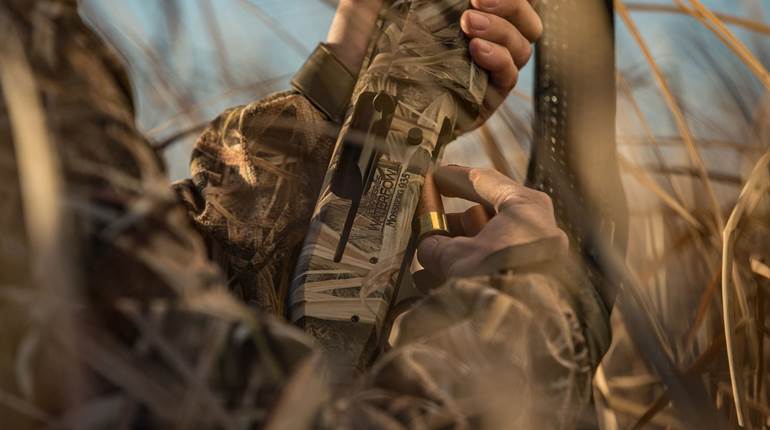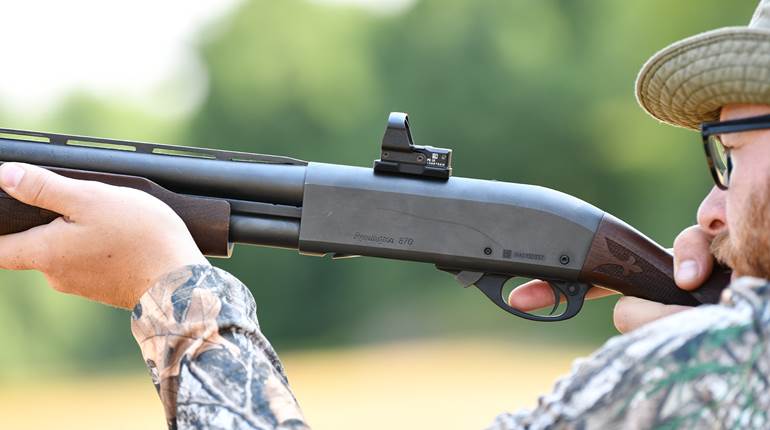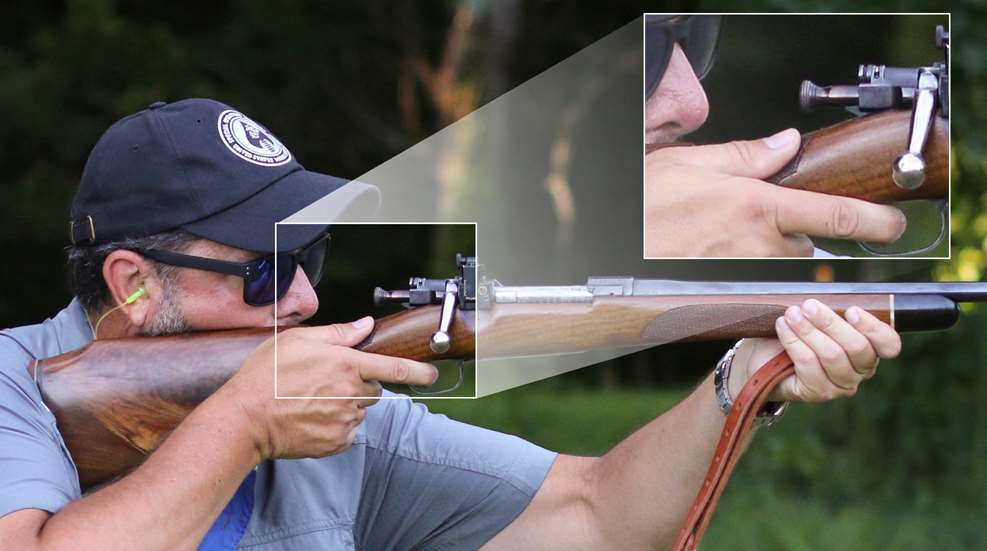
This is one of those cases where what seems most natural—wrapping your thumb around the wrist of the stock—is not necessarily what is best. There are three reasons why you see shooters with their firing-hand thumbs pointed forward along the tang or even resting on the outboard side of the stock’s wrist. These are to counter recoil, aid the trigger break and speed up the working of a rifle’s action.
Recoil: Shooters can go their whole lives with the thumb wrapped tightly around the wrist of the stock without issue … but many won’t. Any combination of a short stock, a hastily mounted rifle or shotgun, or an unexpectedly stout load can drive the knuckle of the firing-hand thumb into the sensitive tip of the shooter’s nose. The shot’s effect is momentarily forgotten as the shooter clears the stars he is seeing and blinks away the water filling his eyes. Simply moving the thumb to the top of the tang usually provides the needed clearance to avoid this.
Trigger Control: For most of our lives, benchrest and Olympic match rifles have had nearly vertical pistol grips with thumb rests on the outboard side of the rifle to keep the firing-hand thumb high and relaxed; this is by design. When the thumb is wrapped tightly over and locked down on a stock, there is corresponding tension in the muscles of the trigger finger. Keeping that thumb high and more relaxed instantly boosts sensitivity and control in the trigger finger. Having the thumb floating high or lightly resting aside the tang may very well feel awkward initially; however, a modest amount of dry-fire practice will typically show immediate improvement in control of the trigger and lead to cleaner breaks and better hits.
Speed: Having the thumb on the same side of the stock as the bolt knob is more efficient and can cut quite a bit of time from cycling the action and being ready for a follow-up shot. With a lever-action, the rifle is ready to fire essentially as the lever closes rather than waiting for the thumb to cross over and re-grasp the stock wrist.
Most Popular