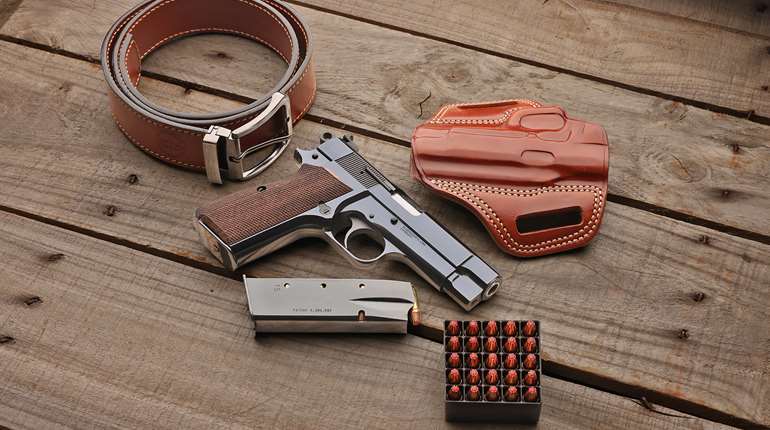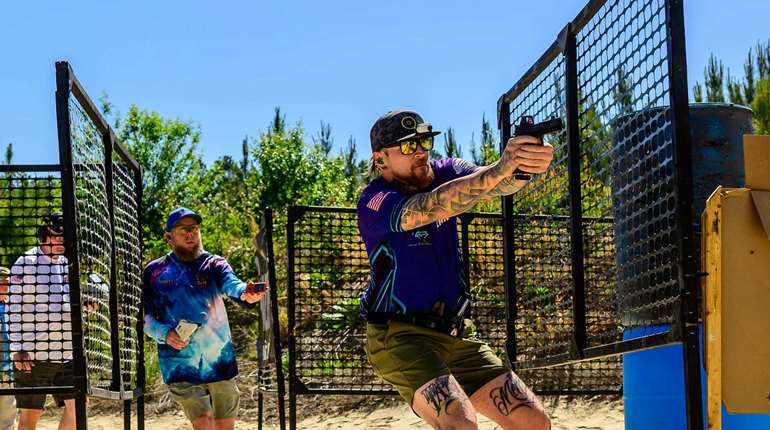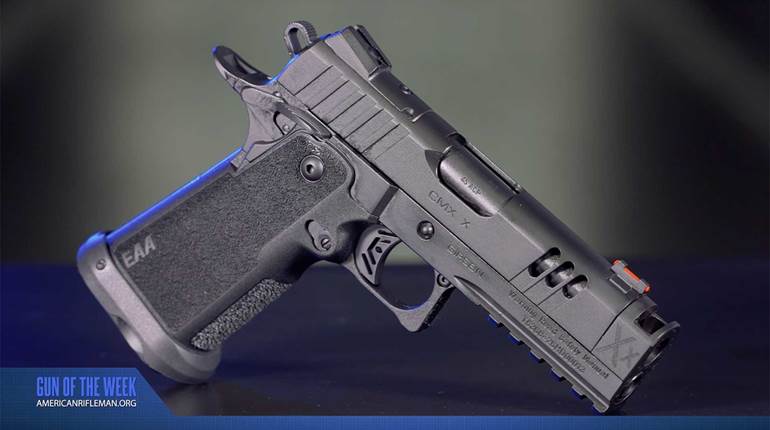
For as long as automatic pistols have been in existence, designers have come up with many different ways to make them work. And by “work,” I mean handle or operate. Another term that I have often used is lockwork, which is the functional relationship between the various components of the action—hammer, trigger, sear, etc. Basically, we are talking about a series of hand motions or manipulations that make the gun shoot, reload and return to a safe, carrying condition. When it all started, the guns were almost always pure single-action, where the hammer was cocked by the movement of a recoiling slide, then released to fire by a crisp single-action trigger. Since the hammer was cocked, the designers usually provided a manual safety. This is the system used on the enduring Model 1911 and the one preferred by many professionally trained pistoleros.
But another system came along in shortly before World War II, and grew to considerable prominence in the 1960s. This one used a trigger-cocking (double-action) pull for the first shot, after which the recoiling slide cocked the hammer for following shots in single-action. Invariably, there was a lever on the gun that permitted the shooter to safely lower a cocked hammer. Most of these guns also incorporated a safety function into this lever. At this point, the tactical logic of the system began to dissolve. If the basic purpose of the DA/SA system was to provide a safe, revolver-like means of carrying the pistol, why does it need something that revolvers don’t have?
A better means of making the DA/SA auto work is the one pioneered by SIG Sauer. In this system, the gun has a lever that serves only to decock the handgun. Better yet, it's mounted on the frame, right under the shooter's thumb. If the need to decock comes along, a quick downward flip of the lever drops the hammer and returns the pistol to the carry mode. The lever automatically snaps back to the up position. It is a safe and simple way to use a pistol as a tactical firearm. I have personally run through a number of Gunsite and Thunder Ranch courses with a SIG P226 and strongly endorse the system. As things continue to evolve, we are seeing a number of newer semi-auto pistol designs that use some form of DAO trigger. These can be very workable, as evidenced by the success of the Glock system, but they give up that sweet, single-action pull that comes with SA and DA/SA designs.