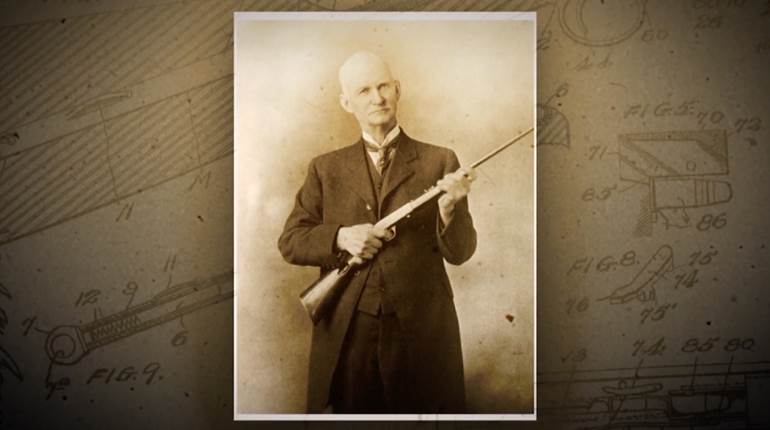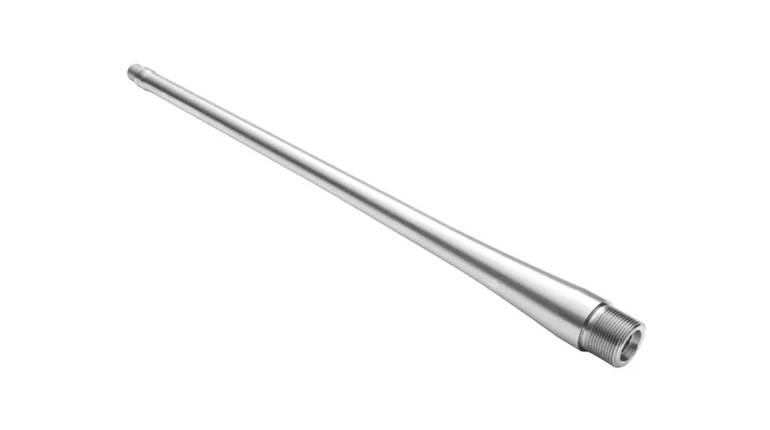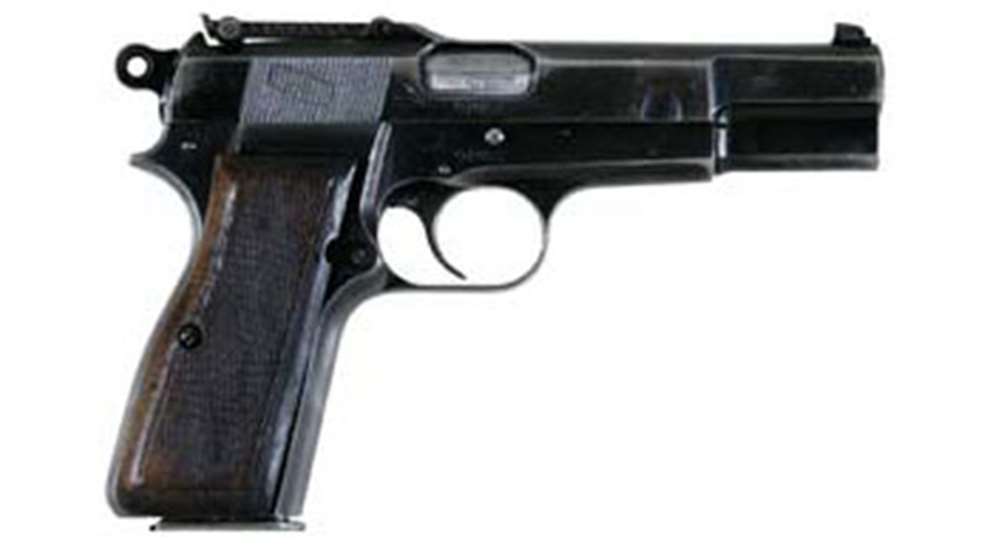
In 1922, when the French put out the call for a new military pistol chambered in 9 mm Parabellum, Belgium’s Fabrique Nationale (FN) answered with firearm titan John Moses Browning and a little-known Belgian designer named Dieudonné Saive. The American-born Browning had a long working relationship with FN, and his firearm designs were already the stuff of legend.
Browning started by creating a staggered double-column magazine that held 16 rounds, unheard of for a flush-fitting unit. As development progressed, Browning conceived of the basic shape of the pistol and its breech locking system in which the rear of the barrel cammed down to disengage dorsal lugs from recesses in the slide.
Working with an FN design team that included Saive, Browning ultimately produced a pistol called the Model 1927 Grande Rendement. However, Browning passed away in 1926 still awaiting the pistol’s patent, which was not issued until the next year. Despite Browning’s and FN’s efforts, the Model 27 Grande Rendement was found wanting. It was considered too large and heavy for its intended purpose. It fell to Dieudonné Saive to rework the design and produce a gun that satisfied the desires of the military.
Saive made numerous crucial changes to the pistol, dispensing with its complicated contours, removable plate-mounted lockwork, interrupted screw breech bolt and internal striker. He also reduced the dimensions of the gun and the capacity of the magazine. The new magazine held a still-considerable 13 rounds. Dubbed the M35 or Hi Power, the final version of the pistol was not finished until 1935, but it was a design so sound that it has remained virtually unchanged to this day.
Strangely, the French military—the original catalyst for the Hi Power’s creation—chose not to buy the gun, adopting a lesser-chambered pistol of French design. Other nations, however, immediately recognized the numerous benefits of the Hi Power, and a great many adopted it as their standard-issue service pistol. These benefits include reliability, generous magazine capacity, excellent ergonomics and the fact that it is chambered for the ubiquitous 9 mm Luger cartridge.
The FN plant was seized by the Germans during World War II, and the Nazis produced the Hi Power for their own troops. Meanwhile, Dieudonné Saive fled Belgium and eventually settled in Toronto, Canada, helping the John Inglis Co. produce Hi Powers there for Nationalist Chinese, British, Canadian and Greek forces. Thus, both sides made use of the P35 pistol during the war. A well-known variation of the gun was the Capitan model that incorporated tangent sights graduated to 500 meters and a detachable wooden combination holster/shoulder stock.
Still in production in 2004, the Hi Power remains in use by militaries and citizenries around the world and, despite myriad new designs, maintains favor for those same qualities that drew acclaim initially. While many may contend that this venerable single-action gun has been equaled, few will say that it has ever been surpassed.
Disassembly
Safety glasses should be worn when performing the assembly/disassembly procedure. Be sure the pistol is unloaded before beginning. Remove the magazine from the magazine well. Pull back the slide and push the safety catch into the second notch. Then push out the slide stop from right to left, as shown. Now release the safety catch and permit the slide to go forward and off the receiver.
Push the safety catch down to the “fire” position, then push the sear pin out from right to left. Allow the ejector to pivot down until it stops. With the ejector in this position, the safety catch can now be pushed out.
Hold the gun in your left hand and push in the magazine catch until it is flush with the frame. Using a 1/8-inch wide screwdriver, turn the magazine catch spring guide one-quarter turn counterclockwise. This will lock the spring guide to the magazine catch. Then lift out the unit.
Push the trigger pin out from right to left. Hold the gun with the right side up. With your right hand, pull the trigger forward and upward; this will allow the removal of it and related parts, and as a unit. They must be replaced as a unit when reassembling the gun. To remove the firing pin and spring, hold the slide so that the rear is facing you. With a 1/8-inch punch, push in the end of the firing pin; at the same time, push down on the firing pin retainer plate. After the firing pin and spring have been removed, pry out the extractor.
To remove the sear lever, hold the slide upside down in the right hand. Making sure the extractor has been removed, pry up the end of the sear lever retainer. When the head of the retainer is clear of the slide, pry it the rest of the way from the outside of the slide. Reassembly is in the reverse order.
Most Popular