Semi-automatic pistols seem to be firmly entrenched as king in the defensive handgun market these days. They certainly do dominate, especially as the number of models designed for comfortable concealment continues to grow. Some folks may go so far as to say the defensive revolver has gone the way of the Dodo, but that would be an incorrect assumption. Wheelguns continue to have a quiet but loyal following among modern handgun owners—and for good reasons.
At the top of the list of reasons for recommending revolvers for personal protection is their simplicity of operation. In a self-defense situation, fine motor skills, memory and the ability to focus can go right out the window. Modern double-action revolvers lack the buttons and levers that can get in the way of bringing a handgun into action. Take aim and pull the trigger to fire, that's all there is to it.
Also, malfunction drills developed for handguns over the years were worked out for semi-autos, not revolvers. This is because the reliable function of a semi-auto is significantly influenced by ammunition selection. The action of the pistol is cycled by the energy released from a fired cartridge. If the pressure levels are not high enough, the pistol can jam. If the dimensions of the cartridge are off a bit, then the gun can fail to eject or have a spent case catch in the ejection port. If the cartridge is faulty, and does not fire, then the gun has to be cycled manually to resolve the problem. Semi-autos are also susceptible to "limp wristing," which is a jam induced by the shooter having too weak of a grip when firing the pistol.
Revolvers, on the other hand, do not rely on ammunition to operate the mechanism. Ammunition pressure levels are irrelevant for the most part, so a revolver can operate with a wide variety of mild, moderate and hot loads. This gives the added bonus of being able to change ammunition to suit a shooter's needs, such as boosting penetration for dangerous animals or reducing power for those who are sensitive to recoil. In some situations it may be useful to mix the types and power levels of cartridges loaded in your handgun. This is not a problem with a wheelgun.
The minor variations in cartridge dimensions that occur in different ammunition brands are unlikely to cause malfunctions in revolvers. If a cartridge fails to ignite, instead of having to tap and rack the revolver to get it back into action, the operator simply pulls the trigger to cycle the cylinder to the next live cartridge. Since recoil is irrelevant to revolver function, they’re also completely free from limp-wrist related problems. This comes in very handy if the revolver must be fired under adverse conditions, such as when the operator has to work the revolver with one hand.
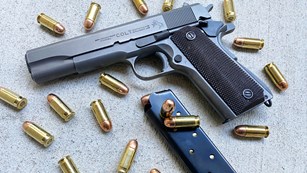
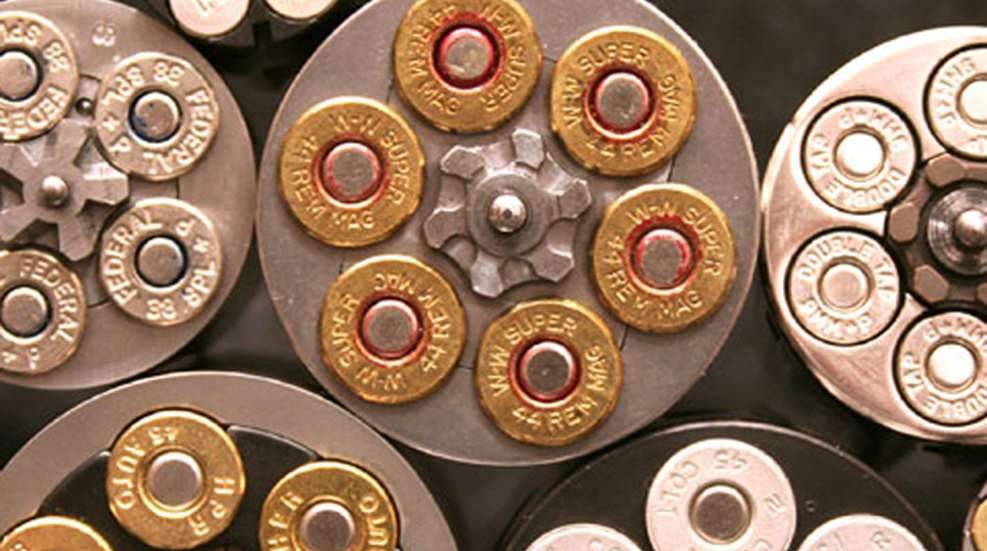
Fans of semi-autos enjoy the benefit of reloading their pistols quickly with removable box magazines. It's a good system, but not a perfect one. Magazines can be a source of malfunctions just as much as ammunition. Slam the magazine in too hard and the gun may malfunction, not tightly enough and the magazine may fall out or fail to feed. Cheap, damaged or worn out magazines can make an excellent pistol run poorly. If the magazines are dropped or lost, then the pistol is out of action. A revolver's ammunition containment system, meaning the cylinder, takes a bit more time to open, eject spent cases and reload, but it’s firmly attached to the frame. Cylinders do not have springs or followers, like magazines, to wear out and cause jams. Reload times can also be improved by using speed loaders, like those available from HKS and Safariland.
Working with the cylinder in a revolver has some additional advantages worth mentioning. When a defensive handgun comes into play in a home-defense situation, it's important to verify if the handgun is properly loaded. This is easy to do with a revolver, even in complete darkness. Carefully open the cylinder and run a finger tip across the primers of the cartridges to verify their presence, and then close the action. It's just as easy to verify that the revolver is completely unloaded for cleaning or storage: just swing the cylinder out. Removing the magazine from a semi-auto does not remove a round from the chamber, whereas opening the cylinder of a revolver guarantees no rounds are in line with the barrel.
Shooters should also never underestimate the importance of a good grip-to-hand fit with a defensive handgun, as the grip shape and material can make a huge difference in how a handgun shoots for you. Revolvers offer removable grips allowing the shooter to change the size, configuration and the material of the grip. Slip on a compact grip to make the revolver more comfortable to conceal, or attach a hand-filling full-size grip to help tame the recoil. While semi-autos are pretty much as-is in the grip department, revolvers can fit any hand that wants to fire them.
The last consideration of the never-ending revolver versus semi-auto debate is ammunition capacity. Today’s semi-autos tend to hold somewhere around 10 to 18 rounds of ammunition, compared to a revolver's typical five to six rounds. This is a personal preference. Some people feel more comfortable carrying more rounds. Others will argue that most self-defense shootings are usually over within a few rounds, so a revolver has enough capacity for them. The truth is tactics, training and situational awareness will always be more important than the gun you choose to use.
The debate over which handgun design is "best," the semi-auto or the revolver, is likely to continue until firearms become obsolete. Choosing a handgun should always involve research, evaluation and some time to actually fire the guns you are considering before buying one. Semi-autos may claim to be king, but the revolver's simplicity, reliability and ammunition flexibility ensure that it will be useful as a self-defense handgun for some time to come.
Most Popular