For almost 55 years, the Carcano served the Kingdom of Italy. When it was adopted in 1891 as the country’s first smokeless-powder firearm, it was a cutting-edge design that defined the modern service rifle. It went on to fight in World War I, and it carried the country from the disaster of Caporetto in 1917 to the triumph of Vittorio Veneto in 1918. A generation later, Carcano-equipped Italian troops fought for the Axis. Then, after the Armistice of Cassibile and the Badoglio Proclamation in September 1943, the Italians did some fighting for the Allied cause. Through it all, the Carcano provided the Kingdom of Italy with an effective bolt-action magazine repeater that evolved over the course of the half century it served.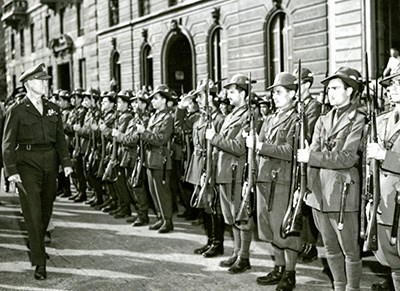 Production began in 1891 with the 50.6"-long Fucile di Fanteria (infantry rifle), but then in July 1893 the much handier 36.25"-long Moschetto Modello 1891 was adopted. Easily recognizable by virtue of its folding spike bayonet and side-mounted sling attachment points, this Carcano is sometimes referred to as the “cavalry carbine,” even though that is not its official designation. Nevertheless, it was intended to be used by cavalry and bicycle infantry units. In 1898, the state arsenal at Brescia introduced another Carcano model in the form of the Moschetto Modello 1891 per Truppe Speciali—sometimes referred to as the “TS” carbine. With the same mass and overall length as the standard Moschetto Modello 1891, the TS differed mainly because of its full-length stock and handguard, as well as a distinctive transverse bayonet lug on the stock endcap. These guns were issued to non-infantry troops who did not have a pressing need for a full-length rifle. Brescia concluded production of the TS carbine in 1904 but then resumed it in 1911. By the time that production block reached its end in 1920, the transverse bayonet lug had been replaced by a conventional bayonet lug designed to accommodate the 11.5" Model 1891 bayonet.
In the years immediately following the First World War, with demand for the lightweight and handy TS carbine at an all-time high, the state arsenals began cutting down full-length 1891 rifles to the shorter barrel length as a stopgap measure to increase the inventory of TS carbines. This would ultimately lead to the state arsenals at Fabbrica d’Armi R.E. Gardone Val Trompia and Fabbrica d’Armi R.E. Terni commencing new production of a modified TS in 1928—one equipped with the short carbine adjustable rear sight assembly and the standard bayonet lug. Soon thereafter, production of the modified TS carbine expanded when five private enterprises began manufacturing it. Beretta led the way in 1929, and then the following year Fabbrica Bresciana d’Armi Lorenzotti Pietro, Napoleone E Vittorio Castelli Brescia and Manifattura Bresciana Tempini (MBT) entered production. In 1931, so did Fabbrica Nationale d’Armi - Brescia. Out of the five private manufacturers, Beretta made the largest number of TS carbines at 108,000, with MBT turning out the smallest number with a mere 3,700—all of which came off the assembly line in 1930.
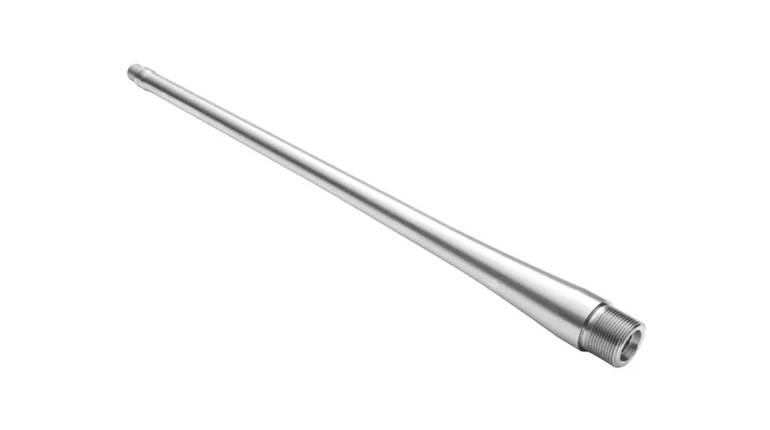
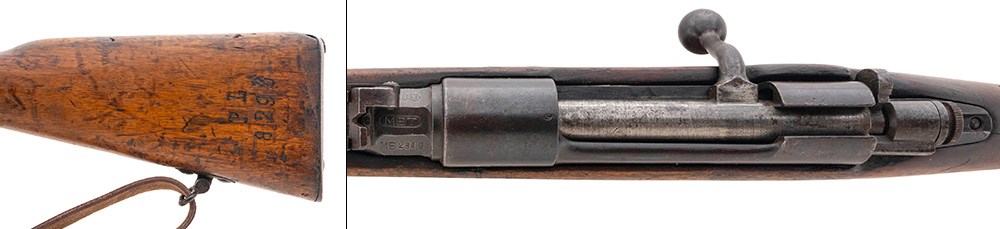
Like the examples that came from the other commercial manufacturers, MBT’s TS carbine incorporates all the features that made Salvatore Carcano’s original design so successful. It is a cock-on-open, manually operated bolt-action repeater with a split receiver bridge that utilizes the Mannlicher-style internal magazine and an omnidirectional six-round en bloc clip. It also uses a one-piece bolt body with two horizontally opposed locking lugs and a thumb-actuated manual safety that de-cocks the striker. It weighs 6 lbs., 13 ozs., and is equipped with a 17.95" barrel chambered for the 6.5x52 mm Italian rimless, bottleneck cartridge. It is equipped with the short carbine rear sight assembly that provides a fixed 300-meter battle sight and a tangent adjustable from 600 to 1,500 meters. After World War II, these guns continued to serve the Italian military for many years and then armed the Carabinieri national paramilitary police. Before COVID, thousands of former Carabinieri TS carbines were imported into the United States for sale to collectors. The 1930-made example shown here, in its current condition, would fetch about $700 on the collector market.
Gun: Carcano Moschetto Modello 1891 per Truppe Speciali (TS) Carbine
Manufacturer: Manifattura Bresciana Tempini (MBT)
Chambering: 6.5x52 mm Italian
Serial No.: MB2949
Manufactured: 1930
Condition: NRA Very Good (Modern Gun Standards)
Value: $700
Most Popular