by
Support NRA American Rifleman
DONATE
** When you buy products through the links on our site, we may earn a commission that supports NRA's mission to protect, preserve and defend the Second Amendment. **
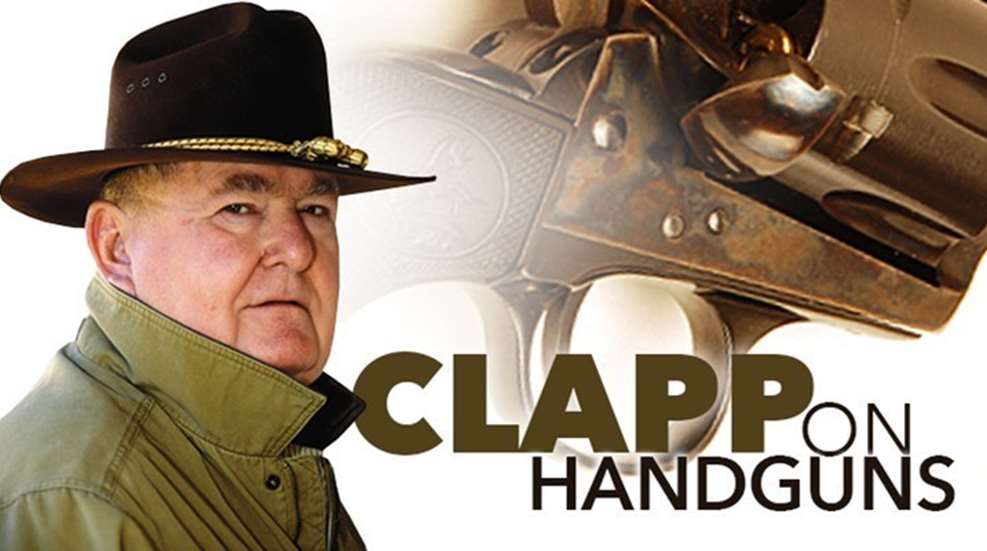
For years of writing about firearms, I have been working under an erroneous impression about the origins of the revolver. Like a number of other writers, I have several times stated that the first workable and widely used repeater—a revolver with multiple chambers—was the Paterson Colt of 1836. I knew of the Collier revolver, but dismissed it as a seldom encountered novelty. In researching another point, I got off on a track that ended up with a better look at that Collier. It was designed and patented by a New England inventor named Elisha Collier in 1818. At this point in the history of arms and ammunition, the ignition system of necessity was the flintlock. It all changed for the better a decade or so later when the pressure-sensitive percussion cap began to, ah ... light our fires. 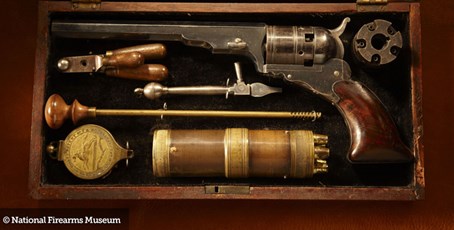
But the early 19th century saw most shooters using flintlock system guns. As complicated and unreliable as the flintlock was, it served armed men around the world. In a flintlock, an external hammer had a bit of flint securely fastened to the tip of the hammer nose. When the hammer fell, the flint hit a metal surface and produced a spark. The spark dropped into a little metal pan which held a small amount of fine gunpowder and set it burning. The flame ran down through a flash hole into the closed rear end of the barrel, igniting the main powder charge to produce gas that drove a bullet out of the barrel. It was a bulky, awkward system that was almost impossible to make as a repeater.
Collier managed to do it by building a gun that had a single barrel, but also a cylinder containing six or more firing chambers. Each was manually loaded with powder and bullet and each was manually rotated into index with the rear end of the barrel. There was an internal device that maintained that alignment. Collier may have done a fair amount of experimental shooting before he applied for the patent. Certainly he was aware of the problem with the barrel-to-cylinder gap, because he engineered a system that reminds us of the later Nagant revolver. He managed to seal off the rear end of the barrel where it joined the cylinder and therefore didn't have that ring of fire when he capped one off. He also took steps to increase a shooter's rate of fire. When the shooter cocked the hammer (manually), he also tripped a little lever that dispenses a charge of fine powder from a reservoir in the gun into the priming pan. I have never had a Collier to examine, much less fire, but I'd love to handle one and its interesting mechanism.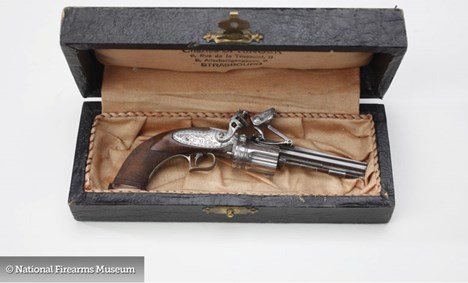
Elisha Collier obtained a U.S. patent on the gun in 1818, but was unable to get it made in the United States. He moved to England and lived there for a bit more than 30 years. In this time, he was able to interest an English maker to take on the project and eventually that lead to some 10,000 guns in handgun, rifle and shotgun variations. They were used in the time of Colonial expansion for the British Empire. By any standard, this is enough production to make “Collier” a name worthy of attention in the ongoing history of firearms.
Meanwhile, a young American with an eye for interesting systems came into the picture. Sam Colt was born in 1814 and grew up around his father's machinery. At the age of 15, he was aboard a sailing ship learning the seaman's trade. This is allegedly where he noticed the relationship between the spokes of the ship wheel and the pillar that supported it. Young Colt made a wooden model of a revolving cylinder handgun. As he also visited British ports where Collier revolving firearms may have been in use, it is impossible to determine if he saw the Collier before or after he made the model. In later conversations, he was said to have conceded the Collier influence. At the age of 22, Colt was able to marry the basic revolver concept to the newly developed percussion cap. The result was the Paterson Colt revolver of 1836. Unquestionably, this was the first widely used successful revolver.
In time, Sam Colt grew into one of America's first successful manufacturers. If anything, he is remembered for his drive, willingness to innovate and incredible marketing skills. That first cap and ball Paterson lead to a string of other milestone firearms—Dragoons, '51 Navy, Peacemaker, 1911 Auto, Python and AR-15. Old Sam really started something and if he did not truly invent the revolver, he certainly made his guns a virtual necessity for Americans at war. It is an ironic coincidence that I just noticed that the I wrote this—July 19—is the man's birthday.
But the early 19th century saw most shooters using flintlock system guns. As complicated and unreliable as the flintlock was, it served armed men around the world. In a flintlock, an external hammer had a bit of flint securely fastened to the tip of the hammer nose. When the hammer fell, the flint hit a metal surface and produced a spark. The spark dropped into a little metal pan which held a small amount of fine gunpowder and set it burning. The flame ran down through a flash hole into the closed rear end of the barrel, igniting the main powder charge to produce gas that drove a bullet out of the barrel. It was a bulky, awkward system that was almost impossible to make as a repeater.
Collier managed to do it by building a gun that had a single barrel, but also a cylinder containing six or more firing chambers. Each was manually loaded with powder and bullet and each was manually rotated into index with the rear end of the barrel. There was an internal device that maintained that alignment. Collier may have done a fair amount of experimental shooting before he applied for the patent. Certainly he was aware of the problem with the barrel-to-cylinder gap, because he engineered a system that reminds us of the later Nagant revolver. He managed to seal off the rear end of the barrel where it joined the cylinder and therefore didn't have that ring of fire when he capped one off. He also took steps to increase a shooter's rate of fire. When the shooter cocked the hammer (manually), he also tripped a little lever that dispenses a charge of fine powder from a reservoir in the gun into the priming pan. I have never had a Collier to examine, much less fire, but I'd love to handle one and its interesting mechanism.
Elisha Collier obtained a U.S. patent on the gun in 1818, but was unable to get it made in the United States. He moved to England and lived there for a bit more than 30 years. In this time, he was able to interest an English maker to take on the project and eventually that lead to some 10,000 guns in handgun, rifle and shotgun variations. They were used in the time of Colonial expansion for the British Empire. By any standard, this is enough production to make “Collier” a name worthy of attention in the ongoing history of firearms.
Meanwhile, a young American with an eye for interesting systems came into the picture. Sam Colt was born in 1814 and grew up around his father's machinery. At the age of 15, he was aboard a sailing ship learning the seaman's trade. This is allegedly where he noticed the relationship between the spokes of the ship wheel and the pillar that supported it. Young Colt made a wooden model of a revolving cylinder handgun. As he also visited British ports where Collier revolving firearms may have been in use, it is impossible to determine if he saw the Collier before or after he made the model. In later conversations, he was said to have conceded the Collier influence. At the age of 22, Colt was able to marry the basic revolver concept to the newly developed percussion cap. The result was the Paterson Colt revolver of 1836. Unquestionably, this was the first widely used successful revolver.
In time, Sam Colt grew into one of America's first successful manufacturers. If anything, he is remembered for his drive, willingness to innovate and incredible marketing skills. That first cap and ball Paterson lead to a string of other milestone firearms—Dragoons, '51 Navy, Peacemaker, 1911 Auto, Python and AR-15. Old Sam really started something and if he did not truly invent the revolver, he certainly made his guns a virtual necessity for Americans at war. It is an ironic coincidence that I just noticed that the I wrote this—July 19—is the man's birthday.
Most Popular