If you say “personal defense” to most people I expect they would immediately start thinking about guns. Now, don't get excited, I'm not knocking guns. I like guns and have made my living for my entire adult life with guns, one way or another. But let me suggest a few things, in no particular order, that might be just as important as guns for personal defense.
1. Situational Awareness
How much time do you spend training your eyes and ears to be alert for what is going on around you? It really does take training and practice. Just yesterday I saw a big, strapping young man walking his dog right down the middle of the street. His ear buds were in and he was bopping to the music. More importantly, he didn't have a clue that anyone was anywhere around until I drove my car right past him. Once you begin to really see and hear the things that are going on around you, you will begin to see and hear those things that just don't fit and have the potential for danger. Why does that person asking you for the time have to come within touching distance to hear the answer? Why has the same car driven down your street for the third time in an hour? Why does that person approaching your cash register look so nervous?
2. The Body Language of Anger
People who are overcome with an unreasonable anger, a rage, nearly always give off body language that will clue you in to the danger. Clenching and unclenching the fists, an unwavering stare, rapid, shallow breathing, all may be signs of impending violence. And there are many other such characteristics of a person about to commit violence. Numerous books and online articles have been written about this. Have you read any? Right in line with this is developing skills to diffuse an argument, or confrontation, that is headed south. One of the techniques is called Transactional Analysis. The entire topic is worth studying in depth and will give you tools that you can use to stop a problem before it ever starts.
3. Harden the Target
There are a number of things that can be done to make the average home a harder target for home invasions. And most of them don't cost a lot of money, while some don't cost anything at all. All of your exterior doors should be solid and have good quality locks on them. But even good locks don't work unless you take the time to actually lock them. And it is an absolutely superb idea to lock your exterior doors while you are in the house. The last thing you do before bedtime is to make sure that all of your exterior doors and windows are locked. This won't keep a crook out, but it will take time and he will have to make noise to get in.
Another excellent idea is to have good lights installed on the exterior of your house. Many bad guys like to work in the dark and may not be interested if your home is well lit. In line with that, it would be great to have a master light switch in your bedroom that will turn on all of those outside lights. As a matter of fact, you need another switch right beside it to turn on all of the lights inside the house, too. I have friends who turn off their cell phones when they go to bed. I guess it is because they don't it waking them up if it rings. I leave my cell phone on and have it on the nightstand right next to my flashlight and pistol. Should the home invaders cut your phone lines, you can still quickly call 9-1-1 for help.
4. Study Reports of Actual Criminal Attacks
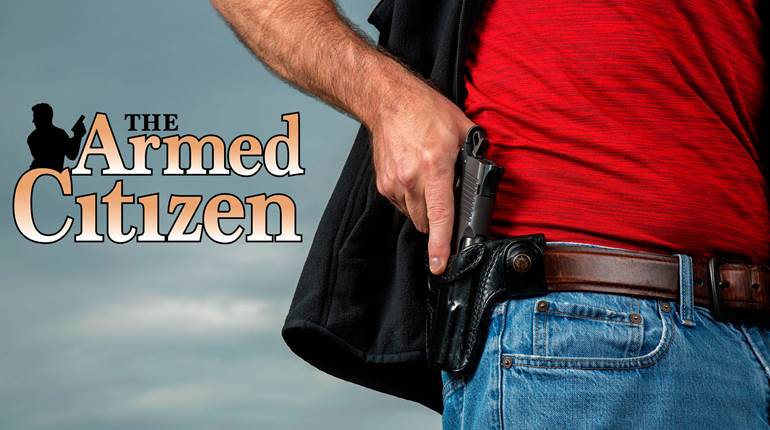
Read the Armed Citizen® columns and study newspaper articles. The important thing is to critique those reports. What did they do right? What did they do wrong? What could have happened? What should have happened? And, by all means, have discussions with your family members about these events. Through these discussions you will begin to develop a defensive plan that suits you and yours. So, by all means, keep going to the range and practicing with your defensive firearms. Sign up for that defensive shooting class, too. But understand that personal defense is about a lot more things than just guns. The most important defensive tool? It is right between your ears.
Most Popular