When Ted Torbeck, CEO of Freedom Group, Inc. (FGI), welcomed Randy Brooks and his team from Barnes Bullets to FGI following an agreement to purchase the famed bullet company in December of last year, many did not immediately know the full impact of the announcement. Count me among them.
“With the acquisition of Barnes, the Freedom Group continues to demonstrate our commitment to the ammunition business. We are excited about their research and development capabilities and the breadth of the products they bring to our portfolio,” said Torbeck.
Re-reading Torbeck’s quotes, “the writing was on the wall,” so to speak. FGI’s intentions were to leverage the might of its Remington ammunition manufacturing capability (at least initially) with Barnes’ renowned copper bullets to bring an all-new brand of ammunition into the marketplace.
No longer mere words, Barnes Bullets’ VOR-TX ammunition is a reality.
Barnes Bullets … And Again Ammunition
According to the company, the name of the new ammunition comes from “The whirling, destructive power of Barnes’ all-copper bullets,” i.e. the Triple-Shock X-Bullet (TSX) and the Tipped Triple-Shock X-Bullet (TTSX), along with the company’s signature “X,” a Barnes trademark for nearly 25 years, and “TX” being applicable as a moniker for many of the TTSX stock-keeping units (SKUs). Whether or not it’s akin to the natural phenomena its name closely resembles, though, remains questionable. Regardless, the field-proven performance of the TSX and the TTSX projectiles is undeniable.
Although VOR-TX is new, factory-production ammunition from Barnes Bullets isn’t. In the early 1980s, owners Randy and Coni Brooks introduced Barnes Supreme ammunition—the name followed suit with that of Barnes Bullets founder and prolific wildcatter Fred Barnes’ proprietary line of cartridges, “Barnes Supreme”—which offered consumers handgun and rifles lines in popular chamberings. In its rifle line, the company loaded a host of cartridges from .223 Rem. to .458 Lott, and in handgun ammunition, the .44 Rem. Mag. especially found favor with those living in, or destined for, Alaska.
According to Jessica Brooks, product manager for Barnes Bullets and daughter of Randy and Coni, “The lines did well for a number of years, but the company redirected its focus solely to bullets, and the ammunition line was discontinued.” Since then, consumers have been limited to those loads made available by ammunition manufacturers, both small- and large-scale, or have had to handload their preferred Barnes product. Now, with VOR-TX, the offerings are even more diverse.
“We are servicing a portion of the market that, for years now, has specifically requested Barnes projectiles be loaded in Barnes ammunition,” explained Brooks. “This is a great way to ensure that the consumers who don’t handload have access to our products … . It’s really all about giving the consumer what they want, and making sure they have access to what they need in as many options and configurations as possible.” A case in point: The company is offering 15 loadings this year alone, with more slated for 2011.
In many ways, Barnes Bullets’ procurement by FGI breathed new life, and certainly capital, into the forward-thinking company. “The acquisition of Barnes Bullets by FGI allowed Barnes once again to pursue this opportunity,” explained Brooks. “It is part of the business we were anxious to rebuild, while it strengthens the company’s brand and position in the marketplace.”
So, will the move affect the company’s sales of bullets to those in competition with its new ammunition? Not so, according to Brooks, who said, “Barnes will continue to build and strengthen relationships with current customers … and partner with them on initiatives to build their businesses.”
Inside VOR-TX
Although VOR-TX will be manufactured at Barnes Bullets’ Mona, Utah, plant once expansion and tooling requirements are completed in 2011, it is currently produced at Remington’s Lonoke, Ark., facility. “This is a great example of how FGI companies leverage resources and assist one another in their business initiatives,” Brooks said. Despite VOR-TX currently being manufactured by Remington, it will not replace the company’s Premier offerings; instead, it is a Barnes Bullets’ product. Interestingly, both Remington and Barnes are involved in load development and testing.
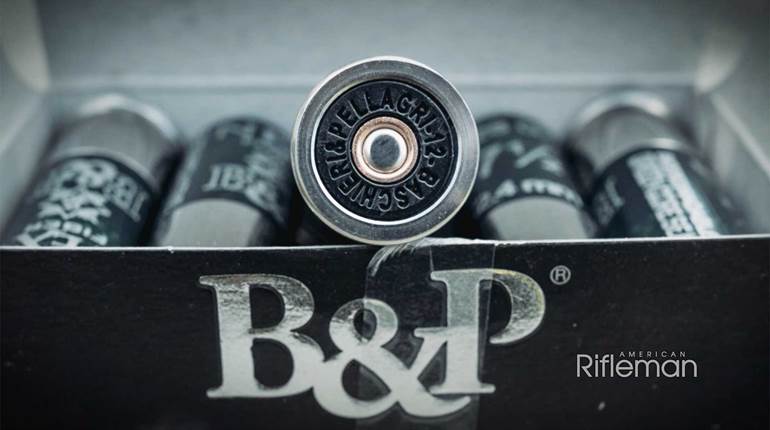
Foremost considerations in the production of VOR-TX are, as explained by Brooks, “accuracy, precision and performance.” To improve downrange results requires optimal component selection and assembly practices, and Barnes Bullets has responded accordingly. VOR-TX features Remington-produced and Barnes-headstamped brass that is cosmetically different and manufactured to Barnes’ specifications. Propellants are selected to meet desired performance objectives with TSX and TTSX projectiles, and naturally the ammunition features Remington primers. Additionally, VOR-TX is manufactured at a lower production rate, and each round is hand-inspected for consistency.
Weighing 10 random tumbled, de-primed, post-fired .308 Win. cases revealed an average weight of 165.3 grains, with the heaviest case weighing 1.4 grains more, and the lightest two 0.9 grains less. For comparison, 10 unfired pieces of Lapua .308 Win. brass—a popular choice for competition shooters—averaged 173.7 grains, with the heaviest being 174.8 (or 1.1 grains above average), while the lightest case was 173.0 grains (or 0.7 grains below mean). As such, the VOR-TX brass, at least with regard to case-to-case weight, had respectable consistency.
As for projectile selection, “Accuracy and terminal performance were the strongest criteria for bullet choice,” Brooks said. “However, we realize that there are certain bullet weights consumers just expect to see in a given cartridge, and Barnes listens to its consumers.”
Although Barnes Bullets also offers Originals, Multi-Purpose Green (MPG), Maximum Range X-Bullets (MRX), Banded Solids and Varmint Grenades in its rifle lines, only TSX and TTSX bullets will appear in loaded Barnes ammunition—for now. Which bullet is used depends on performance requirements and availability.
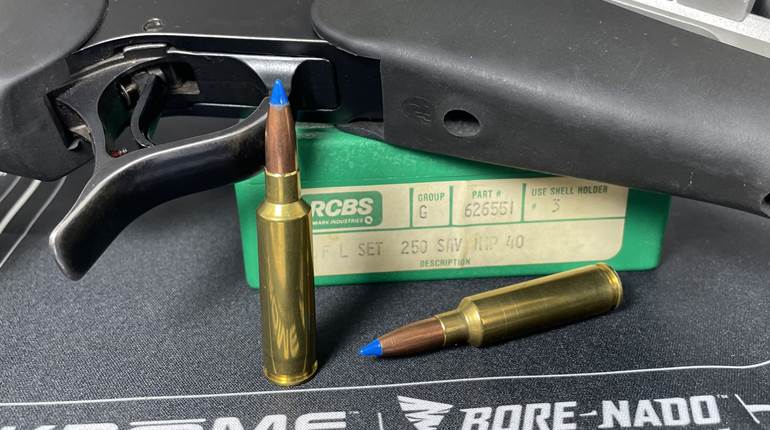
As good as Barnes’ TSXs are, the fact remains that TTSXs are superior for long-range applications, where the light- to mid-weight, tipped boattail bullets’ higher ballistic coefficients (BC) result in flatter trajectories and less wind deflection—when compared to TSXs of identical caliber and weight. Also, the nature of their design—wider meplats, combined with the Delrin tips and larger cavities—enable expansion at lower velocities—a reality at greater distances. Plus, being lighter, TTSXs can be propelled at higher velocities for improved external and terminal ballistics, and since they are 99.95 percent copper, bullet integrity is not compromised. For these reasons, as well as the consumer demand for polymer-tipped projectiles, the majority of the loads feature TTSXs.
But, the tipped, boattail design that makes the TTSX desirable for long-range applications also curtails heavy-for-caliber options, as the bullets’ lengths would intrude too much into usable propellant space; hence part of the reason for the inclusion of TSXs. The other motive is simple: TTSX availability.
Examples of the latter include a 55-grain, 0.224-inch TSX in .223 Rem. and a 150-grain, 0.308-inch TSX flat nose (FN) in .30-30 Win. With regard to the former, at this point no TTSX exists in 0.224-inch diameter, and since the latter is most often associated with tubular-fed-magazine lever-actions, a non-flexible spitzer-profile tip cannot be safely used.
Interestingly, the .30-30 Win. TSX FN load represents one of the few “premium”-types that are available for the aged, yet utterly reliable, cartridge. “The .30-30 Win. is a top seller in terms of ammunition, and is the standard deer cartridge in more households across the country than any other,” commented Brooks. “It makes sense that a number of .30-30 Win. shooters will want a performance round for this classic cartridge, but may not handload.”
Bullet choices in the 7 mm Rem. Mag. loads are especially interesting. “The 150-grain version is the heaviest TTSX that Barnes makes, so we offer a lighter 140-grain TTSX and a heavier 160-grain TSX,” she said. It is worthy of note that the 160-grain TSX used in VOR-TX features a boattail base, and is unavailable to consumers as a component. Why? It was manufactured for an OEM customer years after the flat-base version, and so as not to confuse customers and outlets by offering both flat-base and boattail versions in the same bullet type, weight, and caliber, it has remained unavailable to handloaders.
The list of Barnes VOR-TX offerings stops shy of dangerous-game cartridges, which is among the places the company’s projectiles have made the greatest inroads. Right now the largest cartridge in the series is .338 Win. Mag. loaded with a 225-grain TTSX.
What comes next? “We will be adding more styles and weights to the current calibers being offered in 2011; however, there is no set schedule for new calibers as of yet,” Brooks explained. So what about Originals, MPGs, MRXs, Banded Solids and Varmint Grenades, not to mention the company’s handgun offerings? Only time will tell.
Evaluating VOR-TX
The first two VOR-TX loads were produced in .30-’06 Sprg. and .308 Win. and featured 150- and 168-grain TTSXs, respectively, and I received them for testing concurrent to the ammunition’s June 15 formal announcement. No other offerings were available. To evaluate performance and consistency, including accuracy, velocity, energy, and standard deviation (Sd), and to give a more well-rounded view, each load was fired through two rifles—from different manufacturers—in that chambering.
To evaluate accuracy, each off-the-shelf hunting-grade rifle was fired from the prone position using a Shooter’s Ridge bipod and sandbag (for buttstock support) at 100 yards, with the average representing the American Rifleman protocol of five consecutive, five-shot groups. Velocity was measured for 10 consecutive shots through a Shooting Chrony Alpha Master chronograph and recorded at 10 feet. From these numbers ft.-lbs. of energy and standard deviations (Sds) were calculated.
The .30-’06 Sprg. load was fired in a Remington Model 700 XHR topped with a Bushnell Elite 6500 4.5-30X 50 mm scope and a Thompson/Center (T/C) Venture fitted with a Weaver 3-15X 50 mm Super Slam scope. Although the published velocity for the load is 2970 fps, which is higher than Sporting Arms and Ammunition Manufacturers’ Institute, Inc., (SAAMI)-listed rate (2,900 fps @ 15 ft.) for 150-grain projectiles in the cartridge, both rifles improved upon even that number—no small feat using lead-free bullets—as the Model 700 XHR averaged 3,002 fps, and the Venture achieved 3,009 fps. However, it must be reiterated that the distance I chronographed the rifles was 10 feet, which certainly added to the increase in velocity. Not only did the Venture excel in velocity, and therefore energy levels, but also with regard to accuracy and Sds. For the 25-shot average, the Venture’s mean was 1.29 inches, with the load’s Sd being 14. The Model 700 XHR averaged 1.92 inches, and the load posted an Sd of 19. Not bad, but certainly not match-grade, either.
To test the .308 Win. VOR-TX load, the rifles used were a T/C ICON with a Weaver 2-10X 42 mm Super Slam scope and a Marlin XS7 topped with a Nikon 4-16X 40 mm Monarch scope. Like the .30-’06 Sprg. load, the 168-grain .308 Win. round had a higher published velocity (2,680 fps) than listed by SAAMI (2,670 fps) for bullets of similar weight. And once again, VOR-TX posted an increase in velocity, but only through the ICON’s 24-inch barrel, averaging 2,711 fps; however, as in the previous test, I chronographed the load at 10 feet, not 15 feet, as is specified by SAAMI. The XS7 averaged 2,639 fps from its shorter 22-inch barrel. The most accurate groups came from the ICON, which averaged 1.02 inches for 25 shots, while the XS7’s mean was 1.22 inches. In the ICON the Sd was 12, and in the XS7 the load produced an Sd of 9. Both had markedly better performance with regard to consistency and accuracy when compared to the .30-’06 Sprg. VOR-TX loads.
How much will VOR-TX cost, and when will it be available? According to Brooks, “VOR-TX will be competitively priced with other products in this category,” and she assured me that 13 of 15 SKUs were scheduled to be on shelves by Aug. 1, 2010. The other two—.300 WSM and .300 Rem. Ultra Mag.—can be expected shortly thereafter.
Reading between the lines and, at times, the figurative “writing on the wall,” is a useful ability—as would have proven the case with Barnes Bullets’ VOR-TX. Now, if you’ll excuse me, I have to re-read some past press releases and e-mails.