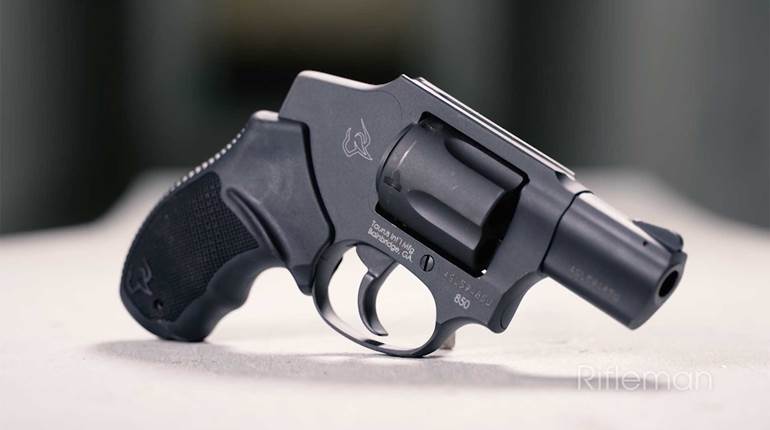
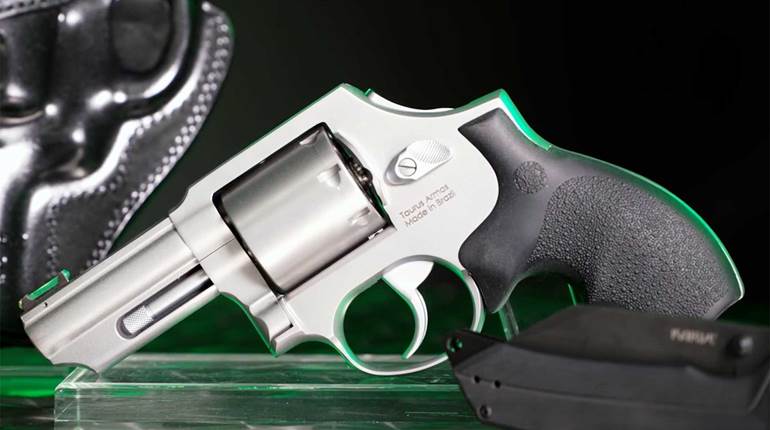
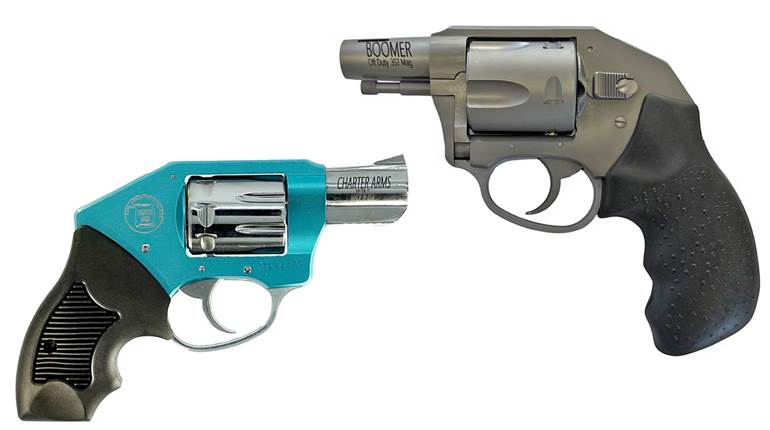
A .357 Mag. revolver, which can chamber .38 Spl. ammunition, offers dual benefits for handgun shooting. A handgunner using .38 Specials is set for targets, plinking and small game while .357 Mag. ammunition in the same gun enables that shooter to hunt larger game and to fend off beasts that snarl in the night.
Creating loads for those separate applications requires some thought and time at the loading bench. The .38 Spl. should be loaded on the light side with accurate and inexpensive target bullets for practice loads. Lead bullets are great for such high-volume shooting. The .38 Spl. can be cranked up a bit in velocity with jacketed bullets for a flatter trajectory in longer-distance shooting and hunting small game. The .357 Mag. picks up the pace with heavier bullets at higher velocities.
Loading The .38 Spl.
Lead bullets work best when loading standard .38 Spl. cartridges. Swaged lead bullets or cast lead-alloy bullets easily drive through a revolver’s bore with a minimum amount of propellant. On the other hand, jacketed bullets build more resistance in the rifling and may lodge in the bore if propellant charges are too light. In fact, “The Speer Bullets Reloading Manual No. 14” includes loading data for only 110- and 125-grain jacketed bullets for standard-pressure .38 Spl. loads to avoid the problem of bullets lodging in the bore.
I like to squeeze real hard when pinching pennies. Loading swaged lead bullets in .38 Spl. helps those bent pennies add up, because they cost about half as much as similar-weight jacketed bullets. About a half-grain less propellant is needed for lead bullets to reach the same velocity as jacketed bullets. That doesn’t sound like a lot. But if you load 500 rounds, you save 250 grains of propellant. That is enough to load an additional 83 cartridges if you’re using 3.0 grains of Hodgdon Titegroup with a 150-grain lead wadcutter.
Bullets cast by your own hand are even cheaper. I can make hundreds of bullets an hour casting with a four-cavity NEI 150 358WC mold. The wadcutters drop from the mold with a diameter of 0.358 inches. That’s a perfect diameter, so there is no sense in sizing them. To finish the bullets I roll them in a jar with Lee Liquid Alox to lubricate them and put them in the sun to dry. Then I load them and shoot away. Loaded with 3.0 grains of Titegroup, a pound of the propellant loads 2,333 rounds. That totals up to .38s costing nearly the same as some .22 Long Rifle rounds.
The additional cost of jacketed bullets pays off with a flatter trajectory. A 110- or 125-grain bullet at 1,100 fps sighted on the mark at 25 yards drops only 1.5 inches at 50 yards. A steady aim at the top of a marmot’s head at 75 yards will roll the hay hog off its mound.
With their light recoil and low cost, .38s are made for shooting, which means high-production loading. The .38 Spl. was originally loaded with blackpowder, and the case is much larger than necessary to hold today’s propellants. So care must be taken to prevent a double charge of propellant from making it into a case during loading. I load propellant dispensed from a powder measure into 50 cases held in a tray. Then I take a moment to look into each charged case beneath a strong light to ensure the propellant is at the correct level. When I really get going with my RCBS Piggyback 4 progressive press, I make sure the press handle is fully lowered to dispense propellant. A Powder Checker or Lock-Out die is installed after the charging station to ensure that.
A load’s accuracy has everything to do with how precisely a propellant charge is dispensed from a powder measure. Several times when shooting the .38 Spl. loads listed in the accompanying table, a bullet hit several inches low, ruining an otherwise tight group. A glance at the chronograph display showed those bullets were up to 200 fps slower than others in the string. Varying weights dispensed from the powder measure caused those velocity spreads. A few propellants that weighed precisely from a measure include Alliant Unique and Ramshot True Blue, with a spread of 28 fps, and Alliant Power Pistol, with a spread of 23 fps.
Moving Up To .357 Mag.
After shooting several hundred .38s through the Smith & Wesson Model 686 Plus, a ring of fouling started to build up just short of the cylinder throats. Left uncleaned, that fouling can be difficult to remove, and it keeps .357 Mag. cartridges from dropping freely into the chambers. I’m going to keep shooting .38s in the revolver because the cases are plentiful and inexpensive, but if you have a lot of .357 Mag. cases, they can be loaded with target and plinking loads that duplicate the .38 Spl. and eliminate those fouling rings. The NEI 150 358 wadcutter bullet loaded in .357 Mag. cases shot very well through the Model 686, and with 3.5 grains of Hodgdon Universal recoil was light.
The .357 Magnum’s purpose, though, is to shoot heavy bullets at high speeds. A firm roll crimp of the case mouth in the bullet cannelure or crimping groove is essential to keep the sharp recoil of these magnum loads from partially pulling the bullets out of the remaining cartridges in the cylinder. I measured a bunch of sized .357 Mag. cases and they varied quite a bit in length. Cases that have been fired numerous times also show thinning of the mouth rims. Those variations are not conducive to a strong and even crimp. Trimming cases to 1.280 inches in length removes that thinning for a strong crimp of uniform depth on bullets.
A .357 Mag. is ready for deer-size game when it’s loaded with cast lead-alloy Lyman 358156 bullets or Hornady 158-grain FP XTP bullets at close to 1,200 fps. Add a bunch of .38s for practice and fun, and a .357 Mag. revolver is a sure bet for everyone’s everyday handgun shooting.
Most Popular