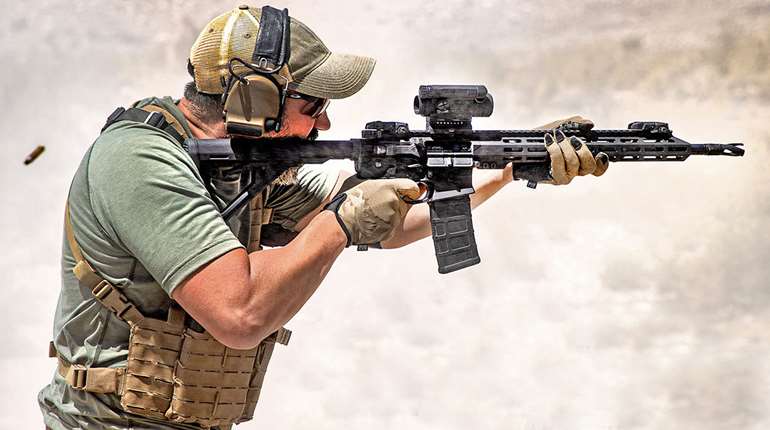
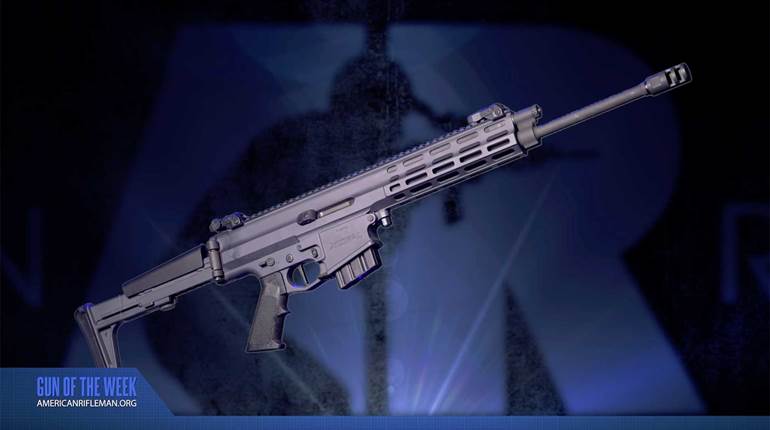
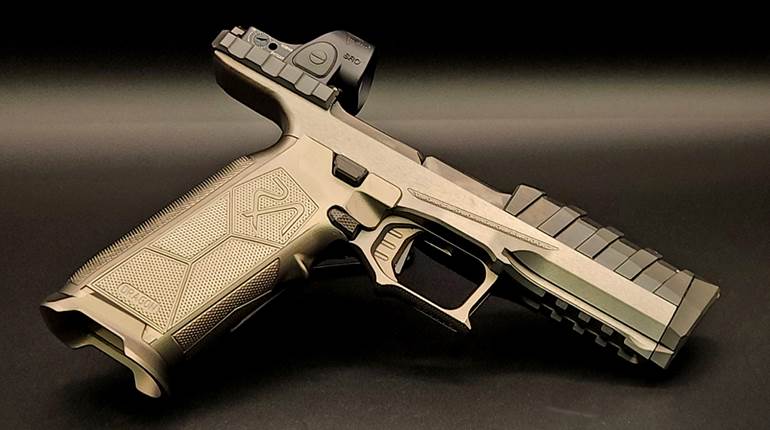
Three-gun shooting matches, in which a rifle, a shotgun and a handgun are employed on a variety of targets at a wide range of distances, are all about speed. Scoring is simple: The shooter who hits the most targets the fastest wins the match. Of the three guns a shooter uses, the rifle is often the most demanding. It must be able to double-tap multiple targets so close that they are left with greasy, black smears from the muzzle blast, and then without hesitation, transition to a precision target several hundred yards downrange.
The ideal 3-gun rifle has to be capable of speed and precision. It has to digest hundreds of rounds without a problem and deliver the last shot as accurately as the first. A top-tier 3-gun rifle must be as accurate as a sniper rifle and as lively as a CQB carbine. The rifle must balance like a shotgun, must be light enough for rapid target transitions, and for shooting moving targets, but it must also be able to disperse and dampen recoil for quick follow-up shots.
The rifle’s trigger must be fast and precise for the rapid-fire stages. It can never double, and the shooter must be able to discern the reset. But the trigger must also be light and consistent for precision shooting.
The best 3-gun competition rifle’s barrel must disperse heat well so it will maintain the same point of impact and retain its accuracy whether the bore is ice-cold or red-hot.
The rifle must cycle quickly. In this division the AR-type rifle in .223 Rem. dominates, and some of the best shooters can actually pull the trigger faster than a typical semi-automatic AR-type gun will cycle. It’s obvious why they need a fast cyclic rate, but even beginning competitors can benefit from shooting a rifle that cycles faster. After all, the faster the gun cycles, the faster it settles for the next shot.
In the Tactical Optics division only one optical sight is allowed per shooter, so almost all competitors mount them on their rifles. That single optic must be able to handle the “in your face” close and fast targets, the ultra-long range targets and everything in between. The scope must be mounted so that the shooter’s eye picks up the reticle as soon as his cheek hits the stock.
The competition rifle is a complex beast with many parts that unite to help the shooter move fast and shoot straight. I decided that the best way to get exactly what I was looking for was to build the rifle from scratch.
The process required careful planning, quality parts and attention to craftsmanship. Through trial and error (more error than trial, I suppose), I now have the 3-gun rifle I wanted and needed. For this project I turned to MidwayUSA for many of the parts and tools needed to put it together, including DPMS receivers, both upper and lower.
The All-Important Lower Receiver
The key to building anything that works well is to start with a solid foundation. You can have the best barrel and optics on your upper, but a poor-quality lower receiver will hinder their performance.
When I built my first AR some time ago, DPMS founder Randy Luth told me to start with the trigger. “The alignment of the trigger or fire control pins is critical to how well that receiver is going to work. If they are off, even a little bit, you have a problem. It’s a lot better to find out first thing than to do all that work on the other parts, only to tear them down if the action is not true.”
I strongly believe that a rifle lacking a good trigger can never reach its potential, so this is no place to compromise. I installed the modular AR Gold trigger from American Trigger Corp. The AR-15 Gold feels like a top-shelf M1911 pistol trigger with a light first stage followed by a well-defined, crisp second stage. It also has some excellent safety features built in and is simple to install using the pins that come with it. Simply drop it in place, push in the back pin and install the safety and then the front pin. There are a few important safety checks to make, which are explained in a video on the company’s website. Once it passes all the safety checks, you are done.
After some personal debate, I chose the DPMS Oversized Safety Selector Switch. The larger lever makes it much easier to find and operate in a hurry. I considered using an ambidextrous safety, but it comes only with the standard-size levers.
Even in a “no-compromise” rifle, the best choice is not always the most expensive. For a buttstock I picked the simple ACE AR15 Skelton Stock. The simple, inexpensive unit is lightweight, durable and easy to install. It uses a standard buffer tube with a foam cover to protect the shooter’s face.
The pistol grip is important because the shooting hand largely controls the rifle. I prefer a rubber grip with a rough surface for a solid feel with sweaty, slippery hands. I also like finger grooves as they help orient my shooting hand to the correct location each time I pick up the gun. My choice was the Hogue Grip. It’s less expensive than some other rubber grips and seems to work better for me than most.
Some oversize magazine release buttons I have tried are difficult to install properly. The oversize head can hang up on the slot, which prevents screwing the magazine catch stem to the proper depth. As a result, they often will not depress the catch far enough to completely release the magazine. I think “oversize” is a good idea on any operating release on a competition gun, but it has to work. I chose the oversize Arredondo Magazine Release Button because it was easier to install. It uses a standard magazine release button design that can be pushed deep into the receiver when installing the magazine catch. This allows the threaded portion of the catch to screw in far enough so it will release the magazine completely when pushed. An oversize head is then added with a couple of screws.
I also added the oversize Arredondo AR Magwell. This acts like a big funnel for the magazine and reduces the fumble factor when making fast magazine changes. It is incompatible with Beta Mags and most coupled magazines. Nonetheless, Arredondo’s own magazine couplers work well with its oversize magazine well. This is especially useful if I am in a match where I think I’ll need the 100-round Beta Mag or if it is one that does not allow extended magazine wells. It can be removed in a few seconds with just an Allen wrench.
I added the Magpul Battery Assist Device (B.A.D.) lever to the bolt-release catch. This lever simply attaches to a standard bolt release button and extends down and into the trigger guard at the top front. I can pull back on the charging handle with my left hand while my trigger finger pushes up on the B.A.D. lever to lock the bolt open. To release the bolt, I push down on the lever. It’s very fast. Before, to lock the bolt open I had to pull the charging handle back with my right hand while I manipulated the bolt catch lever with my left. That meant changing hands and changing the gun position. Of course coming out of slide lock is much faster now, too. I can slap in a new magazine and hit the release with my trigger finger while I am moving my left hand to the fore-end. Every tenth of a second counts. Of course I have an extended tactical charging handle, which is a must on a 3-gun rifle.
Because I was using the JP High Performance Operating System bolt and bolt carrier, I used the JP Enterprises Low Mass buffer and its extra power buffer spring. I added “The Wedge” from DPMS to take the wiggle out of the two receivers. The rest of the parts in the lower receiver are from a standard DPMS parts kit.
The Upper Receiver
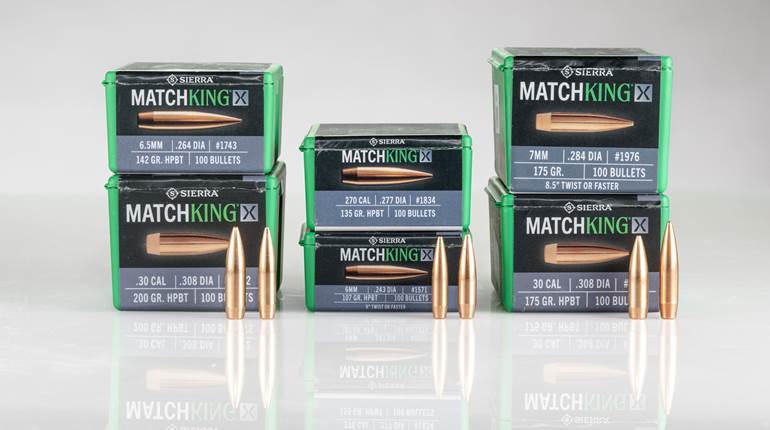
The upper is where the magic happens, so I ordered a JP Barrel and High Performance Operating System from JP Enterprises. I must say it was one of the best moves I ever made. John Paul is an avid 3-gun shooter, and it shows in his designs. On a good day the JP will put five shots into 1/2-inch at 100 yards using Federal Gold Medal Match with the 69-grain Sierra MatchKing bullet. The gun has a slight muzzle-heavy balance for smooth transitions. Recoil is controlled by the muzzle weight and the JP/Bennie Cooley Tactical Compensator.
The 18-inch barrel is 416 stainless alloy, button rifled with a 1:8-inch twist rate. This allows me to use any bullet from 40 to 77 grains The chamber is the .223 Wylde and can handle any .223 Rem. or 5.56x45 mm NATO ammunition, while still producing outstanding accuracy.
One important addition to the barrel is the JP Heat Sink. It attaches between the gas block and receiver and adds 700-percent more surface area under the handguard. This bleeds heat buildup in front of the chamber. It also helps keep the handguard from getting too hot during a long shooting string. JP says it also helps keep the barrel temperature more uniform during sustained fire for better accuracy. The barrel is fitted with a JP adjustable, low-profile gas block and a rifle-length gas tube. It has a full-length Viking Tactics handguard. The long handguard is important, as your support hand should be as far out on the rifle as possible when shooting to aid in controlling the gun during rapid transitions.
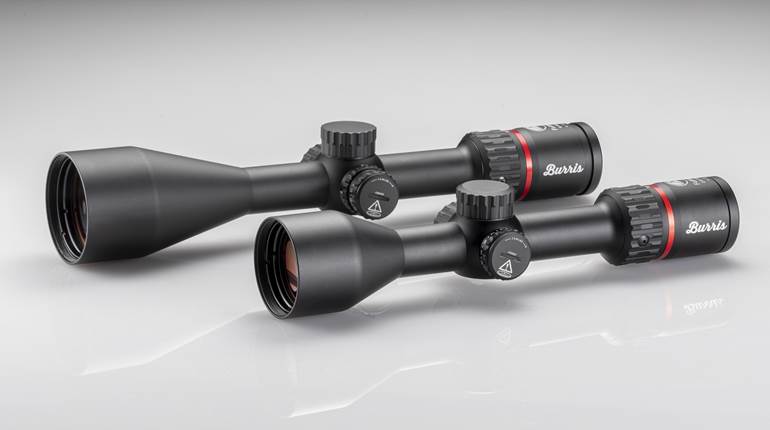
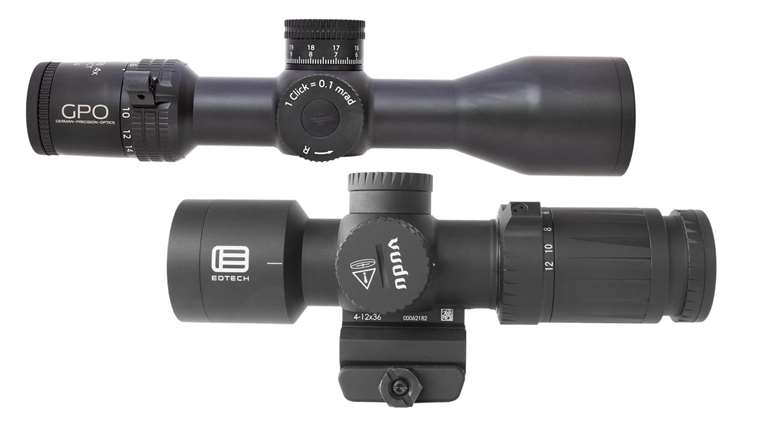
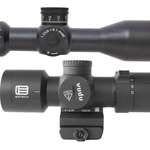
I fitted the rifle with the new Swarovski Z6i BTR 1-6X 24 mm Tactical Scope with the Ballistic Tactical Reticle. This scope has an illuminated dot in the center with two adjustable settings, one for low light and the other for full day light. There are a total of seven fixed aiming points for elevation, including the thick portion of the crosshair. When at 6X, these lines and dots are spaced in one milliradian (mil) increments. The horizontal lines are also used for windage allowance, so they get wider as range increases. The top is one mil each side of the center line, the center line is two mils and the lower line is three mils. These lines also have hash marks on the center for a reference. This scope’s reticle is on the second focal plane. The illuminated orange dot subtends 1.22 inches at 6X and 7.29 inches at 1X at 100 yards.
With the scope on 1X and the dot lit up, this scope functions well for “in your face targets.” I have also used it on targets as far away as 600 yards and never felt the 6X magnification was a compromise. Right now I feel comfortable in saying it is the most versatile optic available for 3-gun shooting.
I mounted the scope in a LaRue Tactical SPR-E Mount, which places the scope well forward of the receiver and correctly positions it for the necessary eye relief. I added an MGM Switchview Lever to the scope. This clamps onto the power adjustment ring for rapid magnification changes.
I used this rifle for a full season of competition, which involved a handful of national 3-gun matches and several local and regional matches. I would not change a thing. It runs flawlessly and handles just right. I usually have a lot of reasons for not winning the Tactical Optics division in the big national matches, but I can assure you this rifle is not one of them.