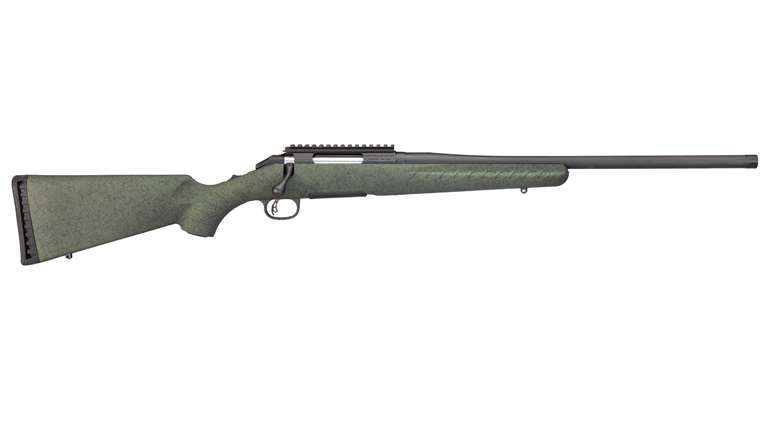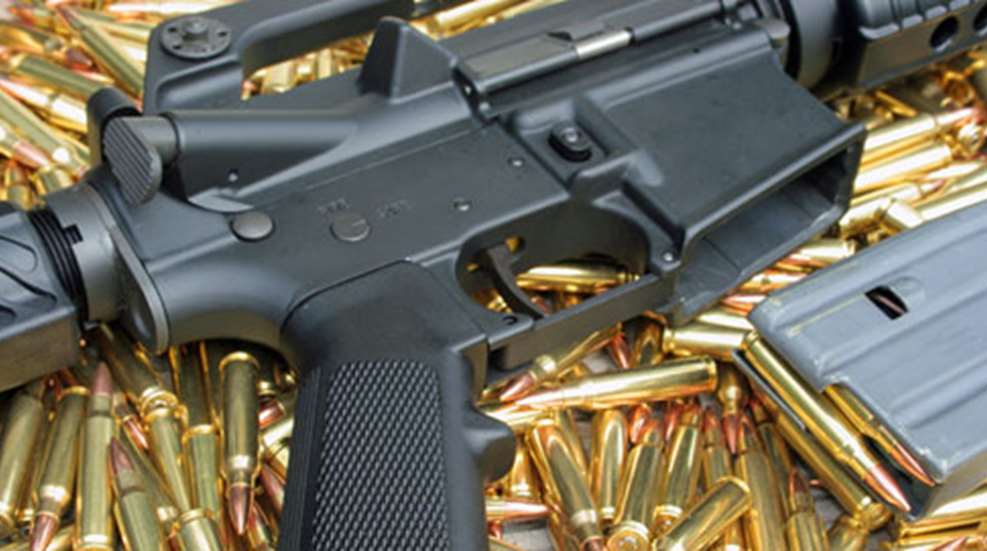
If I could only have a rifle chambered for one cartridge it would be the .223 Remington. With it, I could shoot varmints and deer, I could participate in several forms of competition and just shoot for fun. It has minimal recoil, is affordable to shoot and easy to load for. In addition, it is a cartridge kids take to easily.
The .223 Remington cartridge is the commercial equivalent of the 5.56 X 45 NATO. Some don't understand that from a physical dimension standpoint these cartridges are indeed one in the same. Externally, there is no measurable difference between them. There are, however, two differences in other areas. The first deals with pressure.
Manufacturers load .223 Rem. to 55,000 psi, as established by SAAMI (Sporting Arms & Ammunition Institute). The maximum average pressure for the 5.56 NATO is about 61,600 psi, as established by the U.S. Military. This is 11 percent more than .223 Rem. pressures. Because the 5.56 NATO is a military cartridge, SAAMI hasn’t set pressure limits for it. This is why all handloading data published conforms to SAAMI .223 Rem. pressure limits.
The second difference deals with the way the chamber—more precisely the throat—is cut into the barrel. A barrel chambered for the 5.56 NATO has a longer lead than one chambered for the .223 Rem. This means the distance the rifling begins from the end of the case mouth in a 5.56 chamber is longer than it is in a .223 Rem. chamber. Erring on the side of safety, you can always shoot .223 Rem. ammo in a 5.56 NATO chambered rifle, but should only shoot 5.56 NATO ammo in modern, bolt-action .223 Rem. rifles—never in .223 semi-autos.
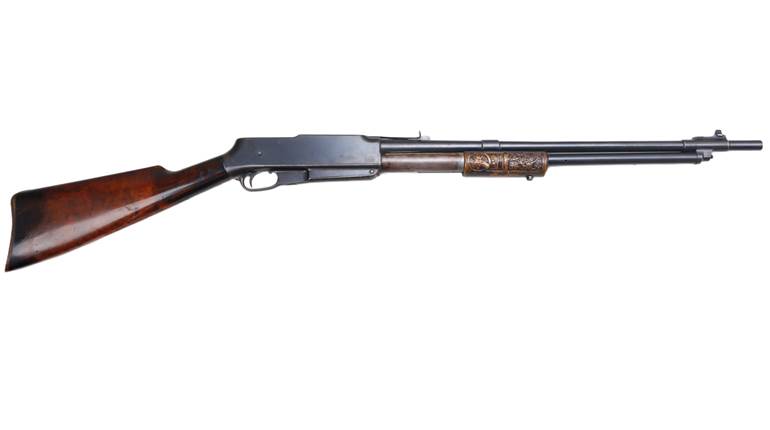
The .223 Rem. was actually an experimental cartridge adapted by the U.S. Military in 1964. It was first offered commercially chambered in a Remington model 760 pump-action rifle and announced to the public in December of 1963. It has since become a go-to cartridge for varmint hunters and 3-gun competitors as well as many deer hunters and AR rifle enthusiasts. There is without question more .223 Rem. ammunition fired every year than any other centerfire cartridge.
With 40- to 50-grain varmint bullets, the .223 Rem. is deadly on prairie dogs, ground squirrels and gophers out past 400 yards. For larger vermin like ground hogs and rock chucks, shooting them inside 300 yards provides a lot more bullet upset due to the higher impact velocities. Though some are quick to point out it's not legal everywhere, deer can cleanly and legally be taken with the .223 Rem. in most states. For deer, it’s best to keep shots inside 150 yards so impact velocities are high enough to cause the tough bullets to open wide.
Both my sons and I have taken many deer with the .223 Rem. using bullets like the Nosler 60-grain Partition, the 55-grain Barnes TSX and the 62-grain Fusion. Just last year I participated in a cull hunt where several other writers and I used Dynamic Research Technology's (DRT) 60-grain, powdered-metal bullet to take 22 whitetails with ARs chambered for the .223 Remington. Shots stretched out to 180 yards. We did not lose a single deer, and several of the bucks were near 200 pounds live weight.
On my second trip to Africa I took two rifles; a .300 Win. Mag. and a .223 Remington. I used the .223 to take my favorite African animal, the bushbuck. My PH's 7-year-old son collected a mature warthog with the same rifle. Both of these so called "tough" African animals were put down with a 60-grain Nosler Partition.
Early on, the .223 Rem. was considered a varmint cartridge. Accordingly, most barrels had a slow rifling twist rate of one turn in 12 inches (1 in 12). This worked fine with most common bullets weighing 55 grains or less. As new bullets emerged for the .223 Rem., shooters found the 1 in 12 twist was lacking in its ability to stabilize heavier bullets for good accuracy. In turn, faster twisted barrels for the .223 Rem. became more popular.
Obviously, heavier bullets are longer but the new breed of mono-metal (all copper) bullets are longer still because copper—by volume—weighs less than lead. Then there are the heavy for caliber match bullets, which can be really long. Berger's 75-grain VLD Target bullet is 1.066 inches long compared to Nosler's 40-grain Ballistic Tip bullet, which is almost a half-inch shorter. The Berger requires a minimum twist rate of 1 in 8 while the Nosler will work with twist rates as slow as 1 in 14.
With sporter-style, bolt-action rifles chambered for the .223 Rem., the most common twist rate is 1 in 12. Tactical style bolt action rifles generally have a twist rate of 1 in 9. Some ARs and other .223 Rem. rifles specially designed for target and long range applications have twist rates as fast as 1 in 7. This is very important because the last thing you want to do is find out your new .223 Rem. rifle will not accurately shoot the bullet you want to use.
As a rule of thumb, if the heaviest bullet you will be shooting is 50 grains or less, the 1 in 12 twist should provide good accuracy. If you want to be able to accurately shoot bullets that weigh at least 60 grains, go with the 1 in 9 twist. And finally, if you plan to shoot the really long and heavy bullets, like the Bergers, a twist rate of 1 in 8 or even 1 in 7 is a good idea. For most common use or hunting applications, the 1 in 9 twist is the way to go and will stabilize the light 35- to 40-grain bullets well enough for you to shoot little groups and hit little targets.
As popular as the .223 Rem. is, there are some subtle nuances about the cartridge that not everyone is aware of. Pay attention to twist rate and use robustly constructed bullets if you're after deer-sized game, and if you're handloading, stick with relatively fast powders with burn rates between Alliant's Reloader 7 and Hodgdon's Varget. Alliant also has a new powder called AR Comp, specifically designed for ARs and the .223 Rem.
The .223 Rem. is a great cartridge. If you understand its limitations and versatility it is indeed a great one-gun choice. I know it's what I would choose. If the situation arose where I needed a bigger gun, I'd just borrow one.
Most Popular