Q. What is the difference between cut rifling, broached rifling and button rifling, and which is the best?
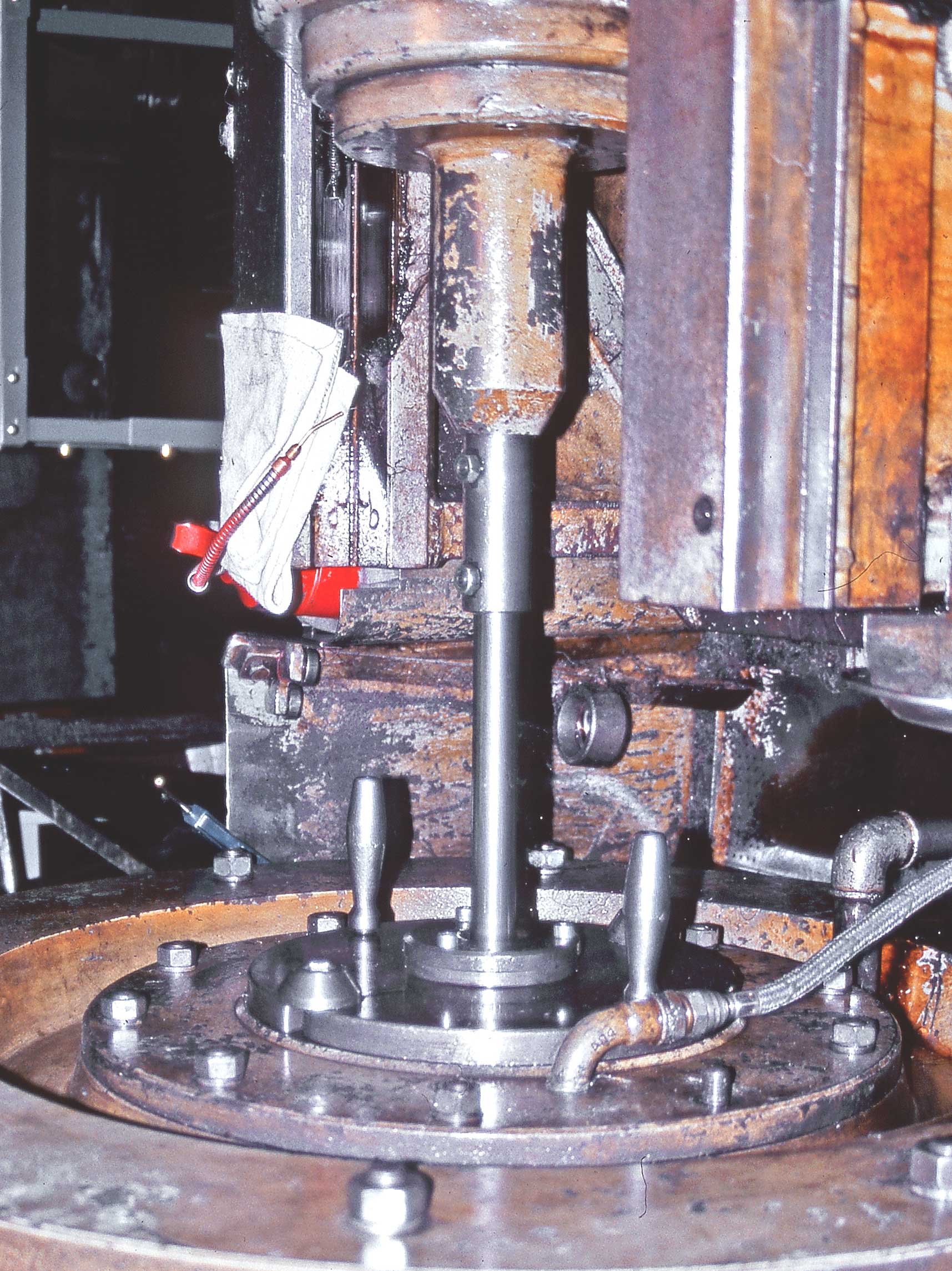
A. The basic methods of rifling a barrel are known as cut, broached, button and hammer forging. Attempting to state which is the best would require a lot more time and space than we have available and would be sure to attract the attention of those who disagree.
The most popular, and by that I mean the most commonly used method, is button rifling. In this process, the barrel-to-be is drilled and reamed to a specific size before a carbide “button” with the negative imprint of the rifling is drawn through it, leaving the bore relatively smooth and “ironed-out.” Properly accomplished, button-rifled barrels are capable of the finest accuracy; they are relatively cheap to produce and the results are repeatable. Detractors say the process induces stresses into the barrel and that the varying thickness of the barrel wall results in a varying bore size.
Many factory-installed barrels are produced by hammer forging. In this process, a mandrel with the reverse image of the rifling cut into it is placed inside a short, oversized “barrel.” The forging apparatus literally pounds the barrel down onto the mandrel, reducing its diameter and lengthening it in the process. The machinery is very expensive but apparently the cost of producing the barrel is about as low as any that exists. Factory barrels can produce amazing accuracy, but no one buys one for a competitive rifle.
Cut rifling and broach rifling both involve removing metal from the inside of the barrel, which produces “grooves” that lie in between uncut areas know as “lands.” In the cut-rifling method one groove is cut, a little at a time, until full depth is reached, then another is cut, etc.
The broach system cuts all of the grooves at the same time with stepped cutters. The fabrication process usually requires lapping to smooth out tool marks. Some of the most accurate and expensive barrels made are rifled by this process.
Polygonal rifling does not look like conventional rifling with lands and grooves. Instead the bore is made of a series of flats, which still provide a stabilizing twist to the projectile, but without the deformation and distortion of conventional rifling. At least that’s the claim of its protagonists.
This “Questions & Answers” was featured in the May 2005 issue of American Rifleman. At time of publication, "Questions & Answers" was compiled by Staff, Ballistics Editor William C. Davis, Jr., and Contributing Editors: David Andrews, Hugh C. Birnbaum, Bruce N. Canfield, O. Reid Coffield, Charles Q. Cutshaw, Charles M. Fagg, Angus Laidlaw, Evan P. Marshall, Charles E. Petty, Robert B. Pomeranz, O.D., Jon R. Sundra, Jim Supica, A.W.F. Taylerson, John M. Taylor and John W. Treakle.
Most Popular