Trigger Guard Shape

When the service pistol began to evolve widely in the 1960s, many of the guns were completely new designs. The ones that succeeded almost always attempted to meet three criteria that came from the military pistols of World War II. This fact was most eloquently recalled by the late Chuck Karwan in “Combat Handgunnery” over 20 years ago. The criteria were (1) a DA (or DA/SA) trigger system, (2) a high-capacity magazine and (3) a more powerful cartridge. There were a lot of new semi-auto pistols in an America poised to hang up its wheelguns. Many of these new police and military service pistols had a feature that apparently came out of thin air, because I can’t find anyone willing to take the credit (blame?) for it.

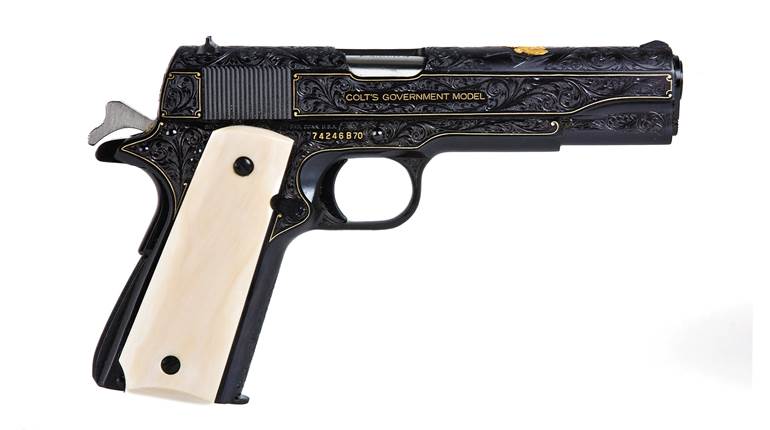
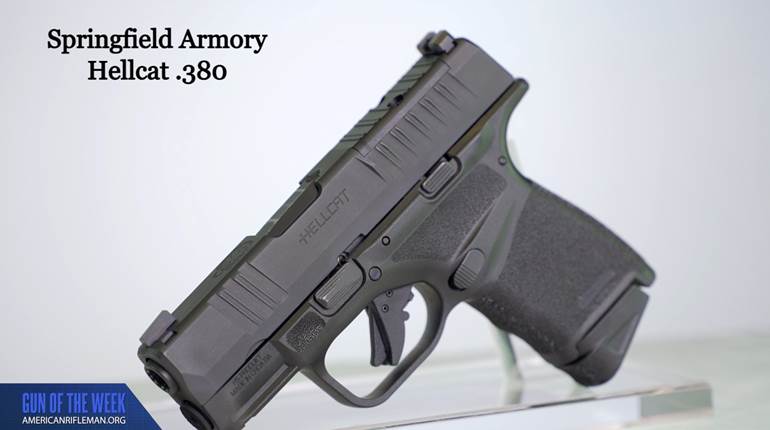
The feature was a unique trigger guard shape, which had either a flat face or a sharp hook on the front edge.  A few pistolsmiths had been modifying 1911 pistols to have this contour. That is somewhat understandable in an atmosphere where combat shooting was growing in popularity and the Weaver stance was coming into vogue. In a two-handed stance, the non-shooting (support) hand wraps around the shooting hand, which is pushing the gun forward. The support hand pulls back and the resulting push-pull effect stabilizes the gun nicely. Some shooters started using the support hand trigger finger to reach up and pull back on the trigger guard. To make it just a little easier, designers began to flatten or hook the trigger guard and before you could say Jack Weaver, it was there for keeps.

Then a bunch of hard-core handgunners who ran serious evaluation of every technique, tactic and tool they could find, discovered that this finger forward business didn’t work. In fact, holding a pistol in this grip often caused interference with the real trigger finger. Also, the finger-forward position is not as strong as you might think. The rearward pulling effort is actually somewhat divided and while the effect might be acceptable for a first single shot, it is not for multiples. Combat shooting involves managing the recoil of a hard kicking service handgun for as many shots as it takes to resolve a serious threat. Fortunately the trigger guard shape, developed to facilitate this ill-advised shooting technique, is easy to deal with. You just ignore it.

Share |

Comments

ADD YOUR COMMENT

Enter your comments below, they will appear within 24 hours


Your Name


Your Email


Your Comment

5 Responses to Trigger Guard Shape

Rich wrote:
December 05, 2013

Shooting full size 1911 .45 auto, and compact sized auto in .357sig in combat mode is preferential for me. An 8 inch target at 15 yards... acquire target, aim and shoot, quickly re-acquire and continue. No need to mess around with groupings! Handling is with strong hold, as knowledge and comfort come with practice.

AMU_Vet wrote:
November 28, 2013

I think the finger on trigger guard hold is for the most part obsolete, but not quite outmoded yet. There is still a place for it, depending on your shooting stance. As a young shooter, I once used it quite happily, but eventually grew out of it like the above hard core handgunners. But back then, I favored an Isosceles stance, which I’ll bet these handgunners used to base their opinions. With your gun way out there and elbows locked, then yes, it feels more natural and stronger not to use it. But as I’m getting older now and my eyes less sharp, I’ve been migrating more toward a traditional combat Weaver stance. Body slightly canted, with the gun a bit closer to better acquire my sights, and elbows not locked. In this position, it actually feels more natural to want to rest your finger on the trigger guard, and is less of a strain on your wrist. For me, this translates into guiding my sight alignment to a much quicker first shot on target. If you believe the first accurately placed shot is the most critical one to quickly ending a gunfight with a Weaver stance, then a finger on trigger guard hold can still make sense even in this day and age. But at the same time, I’ve also found that precious space in front of the trigger guard is also quite useful to mount a flashlight/laser nowadays. Something my tired eyes also need. And that also translates into that first accurate shot on target at night. But with that mounted, there’s once again no place for your index finger to rest anymore. It’s a matter of personal choice of shooting stance and accessory placement that dictate its use. So for a small percentage of shooters, it can still make sense to use it for a tactical advantage. Here’s a previous AR reference article on various shooting stances, if anyone’s interested: http://www.americanrifleman.org/articles/choosing-a-handgun-shooting-stance/

Jeff wrote:
November 27, 2013

There isn't one 'right' way to do everything. For me, putting my off-side index finger on the trigger guard works well. I intend to continue using this method...even though I'm a steadfast revolver guy.

Vinnie wrote:
November 26, 2013

And if like me you shoot revolvers, you want to avoid finger forward unless you like picking lead out of you finger, if it's still there!

ben nimaj wrote:
November 26, 2013

Not to mention how bad an idea it is for the off-hand 'trigger' finger to pull anything near the trigger rearward!