Terminology: Trigger Shoe

A trigger shoe is a block of metal configured to fit snugly on the front face of the trigger of a designated firearm. 1911 Match pistols often had trigger shoes installed, as did many types of Smith & Wesson revolvers. Usually held in place with a couple of Allen screws, the trigger shoe is wider than the original trigger and extends a little farther forward. In use, the shooter places the trigger finger on the shoe and gets contact over a wider area. This tends to make the trigger pull feel a little lighter.

He or she can also get a little better placement of the trigger finger on the trigger for a straight back pull. Trigger shoes were popular in the Golden Age of bullseye work and I can recall several variations in that great old Gil Hebard catalog. They helped many shooters, including this one, to improve their scores.

However, I would caution all shooters to avoid using them in any type of shooting involving speed or where the gun must be manipulated quickly. These are not devices for combat shooters. For that matter, I don’t like target triggers on combat guns. Both are intended to make the trigger easier to pull. Under stress, this might seem to be a good idea, but it really is not.

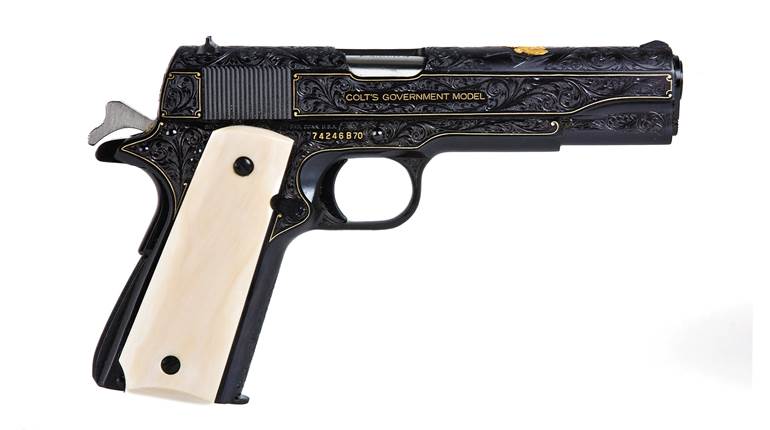
I once built up a fighting 1911 on a Gold Cup frame, with that gun’s characteristic wide target trigger. Being familiar to a regular long trigger, I got a couple of down range AD’s and it scared the devil out of me. Anything that increases trigger surface or materially lowers trigger pull weight is poison for a gun that is to be used fast.

Share |

Comments

ADD YOUR COMMENT

Enter your comments below, they will appear within 24 hours


Your Name


Your Email


Your Comment

2 Responses to Terminology: Trigger Shoe

Chuck wrote:
August 19, 2013

I started my pistol shooting life using a S&W .38 sp at the old Orange County Sheriff's range back in the early '60 and a trigger shoe was de rigueur for guns that did not have a target trigger. As soon as I had enough money for the work I had a real target trigger installed. I still have the gun and it is the most accurate, sweetest shooting gun I own. I wouldn't hesitate to use it in a confrontation. Even with these old eyes I can still put 48 out of 50 in the 25 yard slow fire bull. I agree with AMU Vet, I think it is trigger weight rather than trigger width that results in most negligent (not accidental) discharges. Sorry, Wiley, 'accidental' is a whiner's cop-out much like 'I was cleaning my pistol.'

AMU_Vet wrote:
August 14, 2013

Wiley, with great respect I'm sure you wrote this knowing it might be controversial to some, including the many Gold Cup loyalists out there. All my life I've cherished the feel of the Gold Cup's trigger, far superior to any add-on trigger shoe you can buy, and so I must beg to differ on its feel as being a problem. You are correct to err on the side of caution on any safety issues, and I'm in complete agreement that a light trigger has no place in stressful or combat scenarios. And perhaps having an old school add-on trigger shoe might not be appropriate for self defense. But I believe its more proper to blame an accidental discharge on a light trigger weight, rather than trigger feel. I owned a Gold Cup for many years, think very highly of its wide trigger design, and I doubt Colt has had many complaints or lawsuits from it. Its a handgun's trigger weight at real issue here, and not necessarily its width or feel if not excessive. Have the trigger weight adjusted a little heavier if you can't handle it, and the problem will completely go away, that's all. Everything else you say, fine. But I wouldn't quite blame a trigger's width or feel as a root cause. And the Gold Cup's is certainly not excessive.