Aiming

This question came up in a combat range discussion not long ago. Indeed, when does the aiming process begin? Most present said something about aiming beginning when the gun is at the full extension of the arm and the front sight is visible. Possibly, but I think it happens earlier in the sequence. As a matter of fact, I can make a pretty good argument for aiming beginning at the moment you realize you need to shoot. 


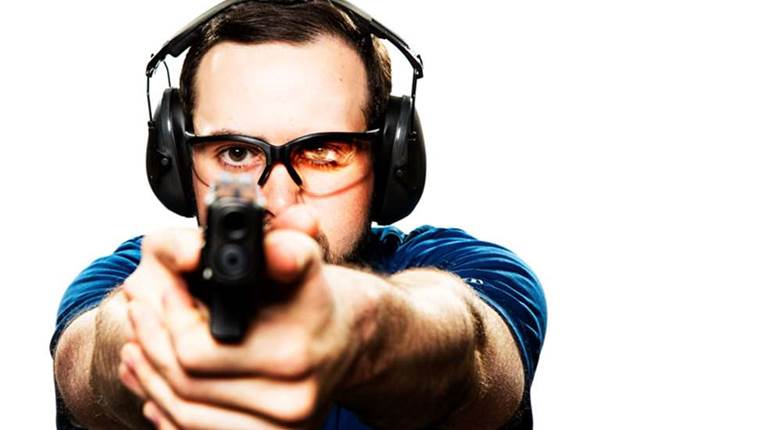
In this sense, aiming begins wherever your gun might be on your person and a threat presents itself. It can include the draw if the gun is holstered, but either way, you must establish a positive firing grip. Without a proper grip, which aligns the handgun correctly in the hand, you cannot get a proper view of the sight system.


Hopefully, you will get level ground without obstacles around wherever the fight starts on which to get your stance, but hopefully I will also start getting younger any day now (not going to happen). The point is that good training will create good tactical and gunhandling skills that become habit. And they are part of the procedure that happens in a flash under stress and leads to the quick sight picture—the aim—that saves your bacon. This only comes with training.


Share |

Comments

ADD YOUR COMMENT

Enter your comments below, they will appear within 24 hours


Your Name


Your Email


Your Comment

4 Responses to Aiming

Harry P wrote:
September 14, 2012

3/3 In either response (driving the aligned front sight to the threat or merely placing it between the threat and the shooter’s eyes), I fully believe that anything from the first “awareness” of the danger to an outright “focus” on it is what actually starts the ball rolling: the true start of the aiming process you mention above. After that, it is combination of one’s equipment (equipment that works with the way the body functions under stress like the sights that I have mentioned) and a lot of practice with it that can ultimately help the individual successfully survive the encounter.

Harry P wrote:
September 14, 2012

2/3 Traditionally, we are taught (and continue to be reminded of) a “front sight, press” approach to successfully engaging a target. And while I personally don’t dispute or disagree with that technique and still find myself using it (in one form or another) to this day, one has to be realistic about the fact that, very understandably, most people tend to look at the threat that that is intending them harm and not at the narrow blade of metal at the tip of the gun they are attempting to use against it. I believe that from the moment we become aware of some danger, our brain (through our eyes) attempts to seek it out so that we can better understand and deal with it. Some of that is because of how we are wired as human beings and some of it is based on past experience; generally, a lot more experience in dealing with problems without a gun than with one. For some of us, training with firearms has allowed us to modify those unarmed life lessons into something more beneficial to our survival. This is part of that “habit” you mention: a skill and/or a learned response acquired or developed through repetitive training. Traditional training/ thinking would tend to put an emphasis on the front sight and its relationship to the rear sight as both are driven to the threat; something that those two oversize front sight systems I mentioned earlier should facilitate. But for others (oftentimes the lesser trained, the inexperienced or the overwhelmed), whose eyes will be all-but-glued to the danger that requires the gun as a response and oblivious to most else, those same large front aiming points might just serve them well too: as they are both referenced to whatever serves as a rear “notch” and are brought up to the threat in a manner more interrupting of their line-of-sight with it, instead of being trained on it or driven to it.

Harry P wrote:
September 14, 2012

1/3 Mr. Clapp: It still amazes me how vocal people get in their arguing about “sighted” shooting (using whatever is installed on the gun to aim it in a traditional manner toward the desired direction) vs. some version of “point” shooting (where generally those sighting devices are not used in directing the gun to the target or threat), rather than taking a step back & realizing that not everybody fights or reacts to danger in ways these folks would like them to. In their arguments with each other & their attempts to thrust their beliefs upon the shooting public, they often overlook how (and when) people actually perceive a threat & begin to react to it. So I was glad to see you bring up at least of part of that in your more observations here. While I fully agree with you that “a positive firing grip” is necessary (and someday I will write back about it & the need for consistency regarding it), I have argued against the still heavily weighted emphasis on stance (at least the traditional concept of stance) ever since I first attended Ray Chapman’s Academy 30 years ago. But as you focused on “aiming” in your post, I appreciate this opportunity to make a few comments & personal observations about that subject here today. While in my limited circle of influence, I am beginning to experiment (a lot) with some of the miniaturized “Red Dots” pioneered by Docter & now offered by a number of other manufacturers, I have long been a big proponent of things like XS Sights “Big Dot” front sight & their referencing wide “V” rear and things like your own & Wayne Novak’s Large Gold Bead front sight & even Wider Square Notch rear as two fast-to-acquire, fast-to-bring-to-bear means of addressing a threat with a handgun. And that’s probably because I find myself agreeing with you here about the idea of addressing a threat with a handgun (aiming) “earlier in the sequence” than most people realize and about the need for a “quick sight picture – the aim” that “only comes with training”.

Walkin trails wrote:
August 09, 2012

Very good article putting a new perspective on the critical fundamentals. I would like to comment on training as something that can be done alone, but best undertaken with a partner, coach, or trainer. Even an experienced firearms instructor will appreciate the watchful eye and critique of another professional shooter.