9x23 mm & .357 Sig

I watched Sheriff Jim Wilson fire the first round of 9x23 mm JHP ammo into a defenseless block of ordnance gelatin. It was at a writer’s seminar where the gun and cartridge were introduced to the shooting world. Jim may also have been present when another maker brought out its version of ammo for the .357 Sig cartridge. I can’t recall what the good sheriff had to say about these two rounds, but I’ll bet that he has observed the same thing that I have—one made it, one didn’t.

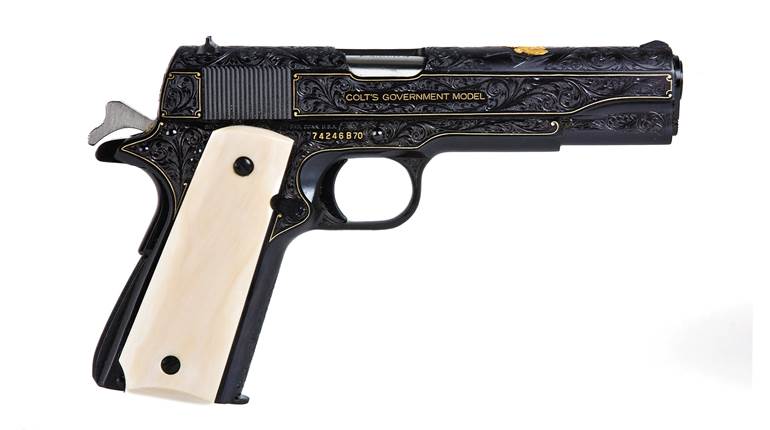
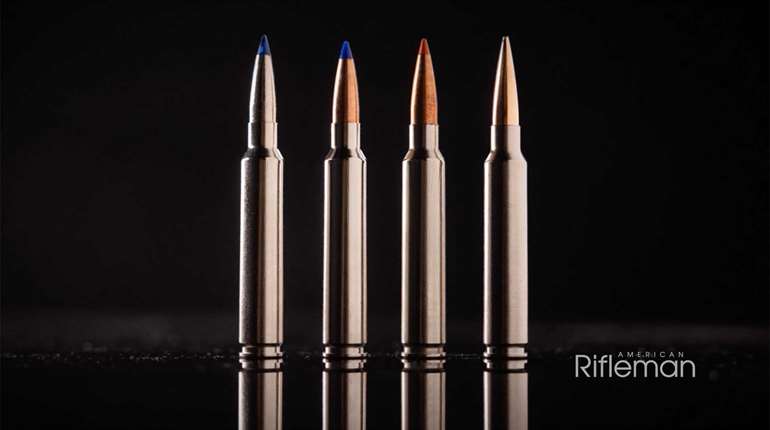
Both calibers were intended to bump up the ballistic performance level of mid-bore pistol cartridges. The 9x23 mm was a .45 ACP-length round intended for single-column M1911-style pistols. Approximately the same length as the .38 Super, the 9x23 was essentially a lengthened 9 mm Luger cartridge. Actually, it had another characteristic that was new to auto pistol design. In order to better handle the higher pressure that would make this so-called “long nine” perform, the case head was deliberately thickened. This gave the base of this cartridge greater mass and strength. It was an approach once tried in Jeff Cooper’s early SWPL days. Initial offerings in 1996 were Colt 1911 pistols, which fired the round with accuracy and power. Colt and Winchester Ammunition wanted a gun for the IPSC circuit.

In 1994, SIG collaborated with Federal to develop the .357 Sig cartridge. This redoubtable Swiss-German-American firm wanted a powerful medium-bore automatic pistol round that was short enough to comfortably fit in the double-wide magazines of.40 S&W-sized autos. They weren’t going after the gamesmen, but rather the warriors. Working from the already successful .40 S&W case, they necked it down to take 9 mm (not .357 inch) bullets of medium weight. It was a resounding success, achieving velocities in the mid 1,300 fps range. The forgoing description admittedly oversimplifies the cartridge development just a bit. The .357 Sig cartridge works in 9 mm-size pistols, where the bottlenecked case spells ultra-reliable feeding. The cartridge simply works.

Comparing the two is something of an apples-and-oranges thing in the sense that they were really intended for different roles. Whatever the intent, the fact is the 9x23 flopped and is now almost forgotten. And while it is used by a number of prestigious police agencies, the .357 Sig does not enjoy the wide success its designer/developers were seeking.

Share |

Comments

ADD YOUR COMMENT

Enter your comments below, they will appear within 24 hours


Your Name


Your Email


Your Comment

3 Responses to 9x23 mm & .357 Sig

Western wrote:
November 15, 2013

The 9x23 was a good idea, but why didn't they just take something like 38 SuperComp, make it better so it could be a drop-in replacement for traditional semi-rimed 38 Super, and release it to the market? I like rimless 38 Super, but the options for shooting it are very limited. To get an inexpensive high capacity model there's pretty much one choice, an EAA Witness. All the other options are custom made 2011s and those are a bit more than the average person is willing to spend. While there are a few things I don't like about the Witness (Tanfoglio) pistols, their drop-in caliber conversions are awesome. You can get them in 22LR, 9x19, 40S&W, 38Super, 10mm, and 45ACP and they slide onto your existing pistol frame (slide to frame fitting and barrel diameter is same for all calibers). These conversions allow you to use calibers like 9x23 and .357 Sig, even though they're not officially offered by the manufacturer, in most cases you just need to ream the barrel and replace the recoil spring. In contrast, most new pistol offerings brought to market are Glock clones that all shoot the same 9/40/45 with very limit options for converting to another caliber, 40S&W/357Sig being the lone exception. This is due to each pistol being specially designed for each caliber, unlike the “lego” mix and match of the Tanfoglio design. If manufactures keep with the current trend, the market will look pretty stagnant and any new cartridge will probably flop because no one wants to buy a new gun specifically designed for a caliber that might not catch on. If only a new barrel was required, then you might be on to something. There aren't many interesting calibers that you can stuff into a small-framed pistol that haven't already been brought to market, non 1911 large-framed pistols is a different story.

Reloder wrote:
November 06, 2013

Yes, winning hearts and minds over an already accepted cartridge was the story here. The tried and true 38 Super was what these newcomers could only equal, yet couldn’t quite beat. So why change? And so that’s why the action pistol crowd stuck with it to this day. The main factors to consider were recoil, max pressures, magazine capacity, reliability of feeding, and of course stopping power. Its a big challenge for any newcomer to optimize all this, and come out on top. I remember how the same concept was also tried in the .40 caliber class with 400 Corbon, which is also very good, but couldn’t quite grab a good market share either. I have one, and can attest its every bit as good as my 45ACP. Both the 357 Sig and 400 Corbon are a reloader’s dream, not to mention an easy barrel swap in 1911s, which makes them quite versatile. That plus their ultra reliability of feeding should have easily won them a niche of acceptance. But in the end, what seems like common sense doesn’t always pan out. So 38 Super and 10mm Auto still rule the roost performance wise, in their class. But hey, what can you say. They were here first, and have the home advantage. Cartridge development, just like firearms, is an evolutionary process. You have to try something new to see what works, and hope it takes off in the public’s eye. One thing for sure, all of these were well thought out, and worth trying.

BigFoot wrote:
October 31, 2013

Shooters are hesitant to buy 'new' cartridges because they might not be around in a few years. And besides, as long as we have the .380, the 9mm, the .40, and the .45, our auto cartridge needs are pretty well covered. Now while that would be the philosophy of our soft-core trigger pullers, the hard-core folks would look to the ballistics for an advantage over the plain-vanilla offerings. The 9x23 and .357 SIG certainly provide more zip than the 9mm but I don't think 9mm fans were ever into power. The .40 shooters can improve their position by going to the full-power version of the 10mm but there's not much choice in guns. And sadly, the .45 Super is all but obsolete. What we need is a new selection of quality pistols chambered in 10mm and .45 Super so that more power is available to those that want it and appreciate it.