Rifles > News

Trial Lawyers, Guns, Money & Ratings

CNBC’s “Remington Under Fire” made for dramatic television, but only told half the story.

12/20/2010


On Oct. 20, 2010, CNBC aired a much-promoted broadcast, “Remington Under Fire,” in which CNBC’s Scott Cohn “documents” unintentional discharges with the Remington Model 700’s “Walker” trigger after “a 10-month investigation.” Much of the show was built around the heartbreaking story of the Barber family of Montana. The death of 9-year-old Gus Barber, shot by his mother as she was unloading her rifle, is the most horrible tragedy a parent and a shooter could ever, ever experience. Mere words cannot describe the loss of such a promising boy.


The CNBC piece was compelling, but told only one side of the story. Essentially it put forward an hour of plaintiff’s evidence from a forthcoming class-action lawsuit. And lawyers who have filed suit or are preparing to sue Remington Arms took leading roles in the show.


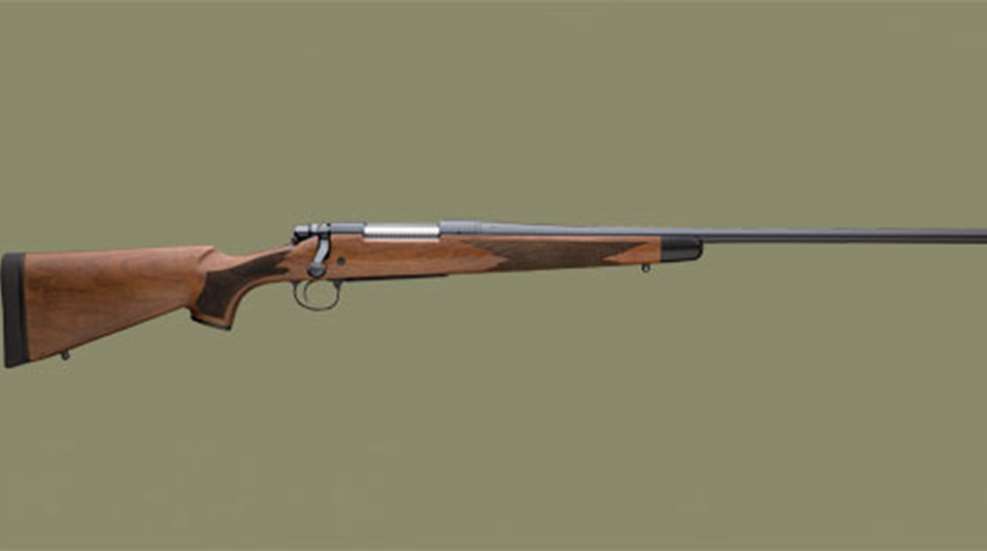
Since its introduction in 1962, more than 5 million Remington Model 700s have been sold, and that doesn’t include the earlier Model 721 and 722 or other variants that employ the same trigger design. Made in hundreds of variations, the Model 700 has become extremely popular among hunters, competitive shooters, and military and police organizations. Literally billions of rounds have been fired through Model 700s.


“Investigative journalism” programs of this sort have become rather formulaic. A symbiotic relationship between producers and trial lawyers seeking to profit from an “exposé” based solely on the plaintiff’s side of the story has become the norm. As legal system watchdog Walter K. Olson details in his 2003 book, “The Rule of Lawyers,” this type of programming often plays a key role in mass litigation, both by recruiting plaintiffs and by attacking the defendant’s reputation.


In the quest for ratings, news organizations have taken shortcuts and abandoned the tenets that every freshman in journalism school should know. Such programming contributes to the current widespread distrust of the national media, and though some shows fairly identify real problems, the offerings frequently amount to little more than tort-lawyer-induced smear jobs. Where “Remington Under Fire” falls on that spectrum remains to be seen.


Remington chose not to go before the cameras, as the company contended it could not get a fair shake. The company decided to supply only a written statement to CNBC, which can be viewed at www.remington700.tv, and it reportedly supplied the network with “a great deal of factual information and background materials, including the Model 700’s decades long record of safety and reliability.”


Given the track record of parent company NBC News’ coverage of firearms and product liability cases, Remington’s decision not to participate came as no surprise. This is the same news organization once run by Michael Gartner, who stated: “There is no reason for anyone in this country, anyone except a police officer or a military person, to buy, to own, to have, to use a handgun. … I now think the only way to control handgun use in this country is to prohibit the guns.” Gartner, you might recall, lost his job as president of NBC News when “Dateline” rigged Chevy trucks to explode for the camera. The producers couldn’t get the visual result they wanted—a fiery conflagration, despite numerous attempts—so they rigged and ignited model rocket engines under the sidesaddle fuel tanks before the on-screen impact. It made for riveting, if dishonest, television. The Los Angeles Times’ Howard Rosenberg called “Dateline’s” Chevy truck report “an unprecedented disaster in the annals of network news and perhaps the biggest TV scam since the Quiz Scandals.”


On the gun issue, NBC News repeatedly and unrepentantly aired footage of fully automatic “machine guns” firing while discussing semi-automatic rifles in the months before the enactment of Bill Clinton’s gun ban, playing into a plan put forth by the Violence Policy Center’s Josh Sugarmann to deceive the American public about the difference between semi-automatic rifles and fully automatic firearms. In one instance, NRA Executive Vice President Wayne LaPierre had just spent hours at a range with an NBC News reporter, yet the network still aired “machine gun” footage mere hours later during its evening newscast.


Basic questions that should leap out at a trained journalist with even a modicum of firearm knowledge were left unanswered by CNBC’s Cohn. What was the vintage of the guns involved? Did Remington or impartial, knowledgeable third parties ever examine the rifles shown on video? Had they been modified in any way since leaving the factory?


Sear engagement is a serious thing in any rifle, and those not properly trained should not undertake a “trigger job.” I have firsthand experience with just one Model 700 trigger that malfunctioned as described on the show, and its connector was filed down so that less than a quarter of its original contact surface actually engaged the front face of the sear. Forcefully closing the bolt would allow the sear to move out of engagement, thus allowing the firing pin to travel forward. Of the dozens of Model 700s I have fired in the course of a 20-year career of testing guns for a living, never has such a discharge occurred from an unmodified rifle.


Remington has fired back with its website—Remington700.tv—designed specifically to address accusations leveled in the CNBC report. The site includes interviews with prominent hunters and shooters who have had no issues with the Model 700 and stand behind the safety of the rifle. Notable commentators include legendary Marine snipers Chuck Mawhinney and Edward J. Land, and noted competitor, professional hunter and outdoor writer Ross Seyfried.


As a matter of fact, of all the bolt-action rifles available, the U.S. military has consistently chosen the Model 700. The U.S. Marine Corps has used a variant of the Model 700 as its primary sniper rifle for decades, starting with the 700-based Model 40 adopted in 1966, continuing through the M40A3 produced today. Remington also builds the Model 24 Sniper Weapon System (SWS) first adopted by the U.S. Army in 1987, and it awarded a contract for up to an additional 3,600 M24E1 rifles earlier this year. According to Remington, both the M40 and M24 specifications call for the “Walker” trigger.


Despite the fact that firearm accidents are at an all-time low, one of the longtime goals of the anti-gun movement is to place guns under the control of the Consumer Product Safety Commission (CPSC), and the CNBC report plays into that agenda. It repeated the gun ban lobby’s longstanding complaint that the CPSC doesn’t have the power to order recalls of firearms and ammunition. Congress’ wisdom in refusing to give CPSC that power was proven in the 1990s, when a CPSC staffer told the Clinton White House that the agency “would love to get into the gun regulation business” and anti-gun Sen. Howard Metzenbaum (D-Ohio) introduced legislation to remove the restriction. That kind of power would give faceless bureaucrats the opportunity to short-circuit the Second Amendment. CNBC also bemoaned, “The Bureau of Alcohol, Tobacco and Firearms licenses gun manufacturers, but the agency has no authority to recall defective firearms,” which, again, would give federal bureaucrats the power to ban guns regardless if they are—or are not—actually defective.


What does CNBC hope to get out of airing such a report? In a word, viewers, something it is woefully short of when compared to other cable networks. Ratings are how television networks charge their advertisers, thus make a profit, and CNBC usually runs dead last in the ratings in its category. With all the hype around “Remington Under Fire,” CNBC pulled 345,000 viewers the first night the show aired on Oct. 20, as compared to a mere 133,000 for the same time slot the week before. According to www.tvbythenumbers.com, Fox News Channel routinely delivers more than 2 million viewers in the same time slot.

1   2    NEXT >>

Share |

Comments

ADD YOUR COMMENT

Enter your comments below, they will appear within 24 hours


Your Name


Your Email


Your Comment

14 Responses to Trial Lawyers, Guns, Money & Ratings

Brad wrote:
January 31, 2011

Why do people not learn to NEVER line up a gunbarrel w/people, pets, gas cans, etc? Oh, so hard to remember? Not a great critique, this article. How should we handle factual, though rare defects and resulting losses? Much of your argumnt reminds me of the guys who believe lightning strike risk, if they fish thru a distant t-storm, is small and acceptable. Isn't about the odds? We should choose our own risk limits. I want safety/quality info w/o goin' to court to get it. AND I've been ripped off enuff to know the "market" won't always protect me. Remington maybe doesn't mind losing an occasnl or rare lawsuit- but people should be allowed to quit fishing if they hear thunder. We have a right to know if there MAY be a problem. You yourself wrote, "Where “Remington Under Fire” falls on that spectrum [of real problems and smear jobs] remains to be seen." On tv ratings. If that story was such a ratings getter, given the chance, Fox or somebody woulda aired it too. It's not like Remington's a big ad client. Hail to the $$$$ Truth is, thunder alone usually doesn't keep me from another cast either.

MIKE MORITZ wrote:
January 21, 2011

I have one at home bought it in the late eighties. Went of at the Range scarded me . never got around to have it fixed. Remington calculated the cost of saving their Customers lives and were came up short... Love my Winchesters and Savages Think about that.

reader wrote:
January 04, 2011

You guys keep condeeming Remington and Mark Keefe, but the story was about the coverage by CNBC, not Remington. How they have attacked guns in the past and we should ask a few questions about their report. You might also go look at Remington's response. It shows the main guy in the report admiting that he couldn't reproduce the incident on a Remington rifle on the stand.

Terry Davis wrote:
January 02, 2011

I am very disappointed in this article. Is CNBC left leaning, YES. Should people always practice proper firearm safety, YES. Does either of these facts change the fact that there is a problem with the walker trigger, NO. Instead of writing an article about whats wrong with journalism, you should practice what you preach. Either investigate the story or change your story to an editorial. To quote a line from your story "Since 1962, more than 5 million Remington Model 700s have been made. They are used by the US military and are extremely popular with hunters and shooters." My response to this quote is, Since 2006, more than 8 million Toyota Camry's have been made. They are used by the US military and are extremely popular with hunters and shooters. However they still needed to be recalled.

John Pluta wrote:
January 01, 2011

Mark, I was a bit disappointed with the NRA coverage of this story. I read about sear engagement, trigger jobs and other technical epemera, but not one word about how the child was shot in the first place! Unloading a rifle should not kill anyone. What about our emphasis on safety and the 10 rules of gun safety? I am really sick and tired when people say that a shooting was accidental. When I taught firearms safety, the first thing mentioned was not to point at anything you do not wish to shoot. Even with a loaded gun that you are unloading, if it is not pointed at anybody, then no harm can occur. Just my 2 cents.

Norman Solberg wrote:
January 01, 2011

Mark, you seem to be a good guy and I wish you were right, but the fact is that Remington has covered up many defects for years with hold-secret settlements, including one I know caused a serious injury with an 1100 shotgun that blew up. I am a Life Member, by the way. Your point about military use is specious, because Rem took advantage of a bad decision by Win in 1963-64 to go with a dumbed-down Model 70, which otherwise would have gotten the nod.

Art Buikema wrote:
December 24, 2010

I read this article with great interest. I own three 700s and recently I had all three triggers replaced with more reliable, non-Remington, mechanisms. Why? This past summer I was hunting in Namibia and I had a 300 UM go off when I least expected it. I was ready to take a second shot at a wildebeest and when I realized that I did not need to shoot, I took my finger off the trigger, put on the safety and shouldered the rifle. As I shouldered the rifle, the gun went off into the air. There was nothing for the trigger to snag onto. I shutter to think what could have happened to my PH, trackers or the dogs; I still get uneasy thinking about it. The gun smith who replaced the trigger mechanisms told me that he had been complaining about the trigger/safety mechanism to Remington for about 40 years but to no avail. He showed me some that he had taken off Remingtons in the past and I had to agree with his conclusion. I also told my son to get his Remington 700 fixed before he has an accident. No life is worth hunting with an accident waiting to happen!

Guy Wolcott wrote:
December 24, 2010

As much as it pains me to admit it, I think that the TV report was accurate - more so than this article. They never claimed that all the rifles were defective, they said approximately 1%. (My personal experience with Remington 700s would lead me to conclude that roughly 20% are defective.) I understand that every company occassionally ships a "defective" product, so I took the time to write Remington and tell them about the two rifles I had seen fail in the same hunting season. They sent me back a letter essentially claiming to be incapable of making a mistake and sent me a copy of the "Ten Commandments of Gun Safety". They even accused me of not properly maintaining the rifle - which was two weeks old. It was a slap in the face. The sad truth is this: If you shoot a Remington 700 you need an 11th commandment of gun safety. Always wear hearing protection ANYTIME there is ammo in the chamber, you never know when it will go off. The muzzle blast is deafening when the muzzle is not pointed exactly straight away. It does not bother me at all that Remington occasionally ships a defect. Everyone does. What is horrible is the way they have handled it. If the NRA doesn't want the goverment forcing oversight of gun safety, I suggest we hold companies like Remington accountable ourselves rather than defend the undefendable just because they are "one of ours". Remington has been covering this up for a long time. I personally told them about the problem in the late 90's and it is still going on. I expect better reporting from the NRA. Come on guys.

Dennis Quilio wrote:
December 24, 2010

Let me add my voice to those condemning the NRA's shameless support of Remington and their defective products. As a firearms instructor, I have seen seen a number of these safeties malfunction (fortunately, on the range with no injuries or damage resulting), and I can personally vouch for the the fact that several of those rifles were clean and unaltered; all were post-1982 models. If the NRA doesn't want to alienate an advertiser, do it by not taking sides, but don't provide free advertising for a defective product that has contributed to the death and injury of many of the very sportsmen you claim to be dedicated to serving. I don't know about Mr. Keefe's claim that the CNBC special "put forward an hour of plaintiff’s evidence from a forthcoming class-action lawsuit", but I do know the information came from previous lawsuits against Remington where Remington lost. To use Mr. Keefe's own words, the information from the CNBC special came from "the only place the “truth” will be exposed": "the courtroom".

fzr1kg wrote:
December 23, 2010

My mates near mint condition model 700 thats only a few years old has a faulty trigger. Luckily I emailed him the day after the report and he checked it. 1 in 100 times it fires without the trigger. As we all know, you can have millions of people claiming there is nothing wrong with their rifles and it is meaningless. It the people who have the faulty rifles that need to be listened to rather than ignored. I'm disappointed that simple logic is thrown aside in the defense of this issue. There are people with faults. They are being dismissed in favour of anyone who says they don't or have never seen one. Excellent, what we have now is ignorance of the fault (due to lack of seeing it in person) being used to suppress those who have experience with the fault because they have observed it. Ignorance wins every time vs experience as can be seen here. This article is basically supporting ignorance over experience. May as well start convincing us how those golden rules of gun safety work too. Hit a home run with more ignorance.

Eugene Johnson wrote:
December 23, 2010

I purchased my .30-06 700 new in Oct. 1974 and never had a major problem untill Nov. 1998. In order to unload the weapon the safety had to be off to operate the bolt to unload. As I slid the safety off the gun fired. Remington of course said that I had my finger on the trigger. I have practised safe gun operation my whole life and police officer carerer and there is no way I could have made a mistake like that. I had my head down and looking at exactly what I was doing. Remington had me ship the gun to them and when it was returned, I could now operate the bolt in the safe position. Remington made no mention of modifying the weapon. They are not going to admit anything. I have and will continue to use the gun and have no qualms about doing so. Practise good gun safety and even with a discharge, hopefully, there is no injury. Just my two cents. Gene Johnson member 131094144

Mike Moyle wrote:
December 22, 2010

After watching the so-called "news report" and reading the article in the American Rifleman, it has led me to ask two questions? 1. Did someone alter the trigger settings on those rifles? 2. What ever happened to controlling the muzzle and not allowing it to sweep anyone or anything that you are not willing to destroy? Lives destroyed are needless and when a firearm is pointed at someone; don't blame the rifle or manufacture, blame the person holding onto the firearm.

bob hindermyer wrote:
December 21, 2010

The reporting of Mark Keefe was as one sided as the CNBC report.I have first hand knowledge of 3 700's that malfunctioned. One belonged to my son & another to a brother-in-law. No injuries resulted due to safe gun handlng.So there is a broblem & the public should be made aware.As Mark states, Journalism should be about getting the facts correct.

Terry Carr wrote:
December 20, 2010

It's articles like this that make me reconsider NRA membership every year. The sin of omision make you just a big of a liar as anyone else. The comment regarding lawyers is laughable given your proclivity to use them. But the omision of fact that the developer and designer of the 700 Remington was interviewed, along with another long time employee, even stated he was aware of the design flaw and tried to get Remington to correct it and they refused time and time again due to the cost factor. It is also not lost on me that you folks depend on a great deal of your advertising revenue from Remington, so a grain of salt in your defense of their company is probably something worth consideration.