8/21/2012
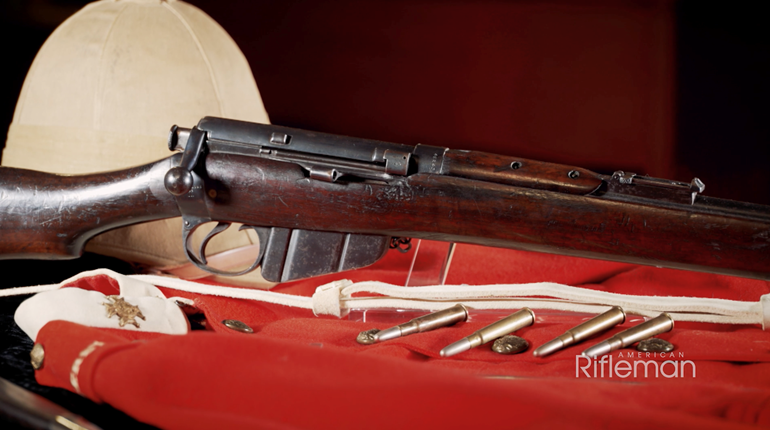
At first glance, a brawny, classic African express rifle emanates an aura of power and old-time African adventure. Grasping its bolt and shoving a cigar-sized cartridge up the spout only reinforces the magic. As you lift the rifle, it nestles—balanced perfectly—between your hands, ready to stop the charge of a huge, angry beast.
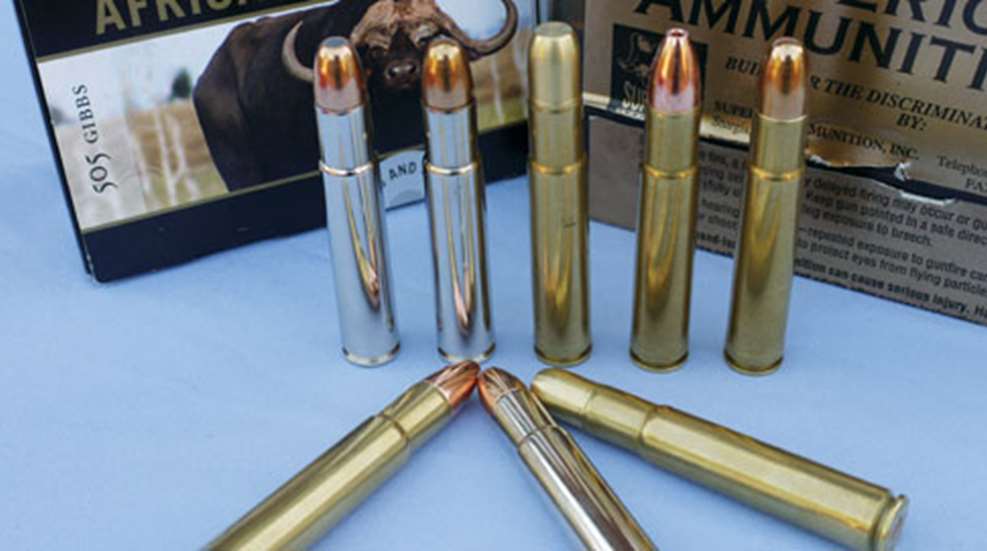
One of the biggest cartridges chambered in African express rifles is the .505 Gibbs, which was developed in 1911 by riflemaker George Gibbs of Bristol, England. Originally, the .505 Gibbs was designed as a rimmed cartridge for use in a double rifle. Changing direction, Gibbs redesigned it as a rimless round to be used in more affordable and increasingly popular bolt-action express rifles. The cartridge soon earned a reputation as being unsurpassed in bringing down unsociable heavyweights, such as wounded Cape buffalo and enraged elephant. In addition, many of the old-time ivory hunters preferred the four-shot firepower of a drop-magazine, bolt-action rifle chambered for .505 Gibbs to the somewhat quicker second shot of a double rifle chambered for anything else.
Published ballistics data shows the .505 Gibbs delivers significantly more muzzle energy than the .416 Rigby, .458 Win. Mag. or .470 Nitro Express. Only when you move up to the .460 Wby. Mag. do you find a cartridge with as much devastating power as the .505 Gibbs.
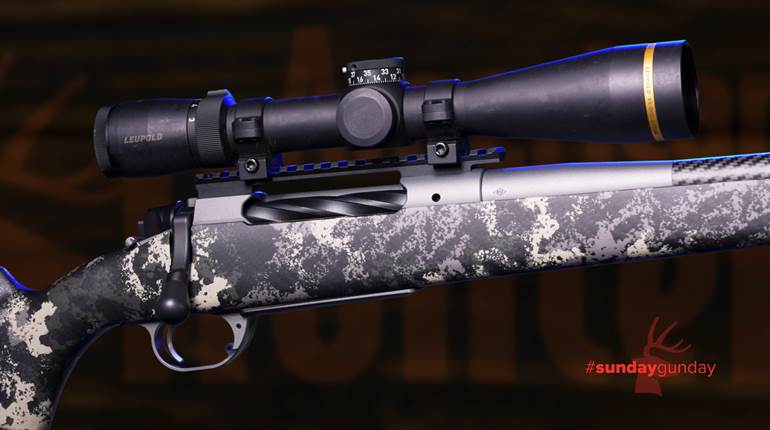
The test gun was a CZ 550 American Safari Magnum express rifle, a variant of the classic magnum Mauser action with a 22-inch hammer-forged barrel. A Leupold 1.5-5X riflescope was mounted on quick-detachable rings designed for the double-square-bridge’s dovetail bases. That lasted for 11 shots, which included a 2-inch, five-shot group fired at 100 yards with Superior Ammo factory loads. On the 11th shot, the scope flew off and hit me on the forehead before clattering to the ground. Did I mention that the .505 Gibbs has substantial recoil?
Ruined scope rings underscored the evident folly of mounting a scope on a rifle chambered for the .505. Besides, the .505 Gibbs is designed to disrupt the plans of an angry behemoth approaching at close range—not to snipe him from long distance. So, subsequent groups were fired using only the express iron sights at 50 yards instead of 100 yards. The results were gratifying.
Recoil of a .505 Gibbs or any of its peers is something a normal adult human can handle if one uses correct technique. I was, however, not nutty enough to shoot 100 rounds from the bench without some means of mitigating the recoil. The answer was a Caldwell Lead Sled, loaded with four 25-pound bags of shot, which tamed the recoil to an easily managed level. Even then, the .505 Gibbs leaped and bucked as it moved the Lead Sled backward nearly 2 inches on every shot.
To record range data, the test rifle was wired with a strain gauge connected to an Oehler Model 43 Personal Ballistics Lab, which gives peak chamber pressure and related pressure data as well as muzzle velocity via Skyscreens. Initial test groups were fired with factory ammunition from Superior and Norma to reinforce handload pressure limits and factory load accuracy. Moving to handloads, I tested three powders—Accurate Arms MagPro, Hodgdon H1000 and IMR 7828SC—with Barnes and Wood-leigh .505-inch-diameter bullets weighing either 525 grains or 600 grains.
The .505 Gibbs requires a lot of propellant to nudge such heavy bullets to working velocities. Powder charges ranged from 134 grains to about 144 grains, which equates to 50 loads or fewer per pound of propellant. It is not unusual for a big-bore chambering to exhibit gilt-edged accuracy, and the .505 Gibbs is no different. Several loads grouped under 2 inches at 50 yards, despite iron sights and my aging, presbyopic eyesight.
When you uncase a .505 at your local gun club and unleash its thunder downrange, you’ll quickly draw the attention of other shooters who are eager to see and fondle the huge, blunt-nosed cartridges. And, if offered, they will doubtless take the opportunity to touch off a round and feel the pulse-quickening power of one of the most serious sporting cartridges the world has even seen.
Most Popular