There is no doubt that movement is critical to surviving a gunfight. Standing still and facing a violent criminal attack is just not a good idea. Movement creates distance from the threat, allows the shooter to move to cover and forces the attacker to alter his or her point of aim.
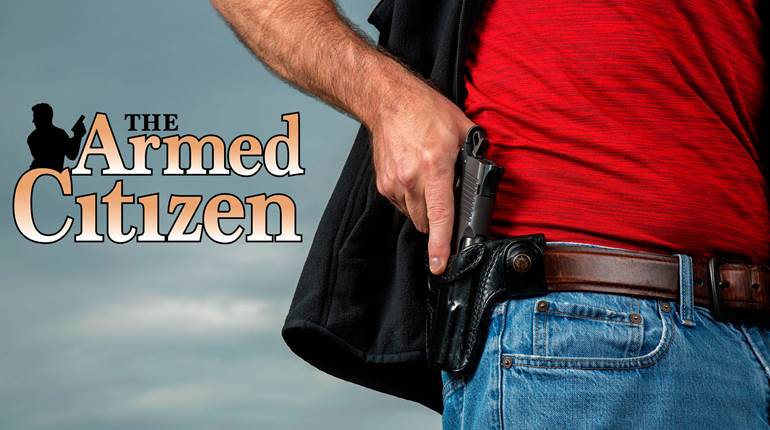
No matter how much we try to stay alert, violent attacks often occur at very close range, often within a few feet. Checking the true stories in the NRA's Armed Citizen column bear this out over and over again. The sad fact is that within a few feet everyone has a chance of making successful, fight-stopping hits. The defensive shooter is advised to create distance from his or her attacker so that superior marksmanship can overcome the threat. For this reason, movement should be part of every defensive shooter's practice.
However, the defensive shooter should first have a well-grounded foundation in safety and marksmanship. To do otherwise creates unsafe situations and leads to negligent discharges. One should learn the basics before adding movement as part of the regular practice sessions, both at the range and in dry practice at home.
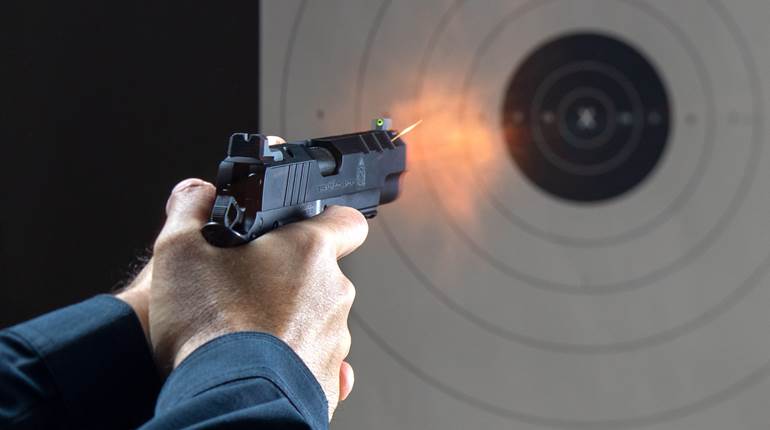
Once the basics are well learned, the defensive shooter begins movement practice by stepping to one side or the other, while making a pistol presentation. Once the step has been completed, you may make the shot. This shows that you don’t have to be standing squared away to a target in order to get good center hits. In addition to stepping to one side or the other, you should also practice moving on the diagonal, angling slightly away from the target.
Moving to the side or the diagonal are both better tactics than moving straight back. Of course, in the real world you don't have the smooth footing that is found on most shooting ranges. Instead, the real world creates all sorts of little obstacles that can get in the way. If you move straight back, you will probably find yourself lying flat on your back.
However, the greatest problem with moving straight back is that the attacker does not have to alter his sight picture to make a hit. If his sights are on you and you back up six paces, his sights are still on you. Moving straight back is not a good idea unless that is the only direction that you can move.
One of the biggest concerns is the ability to move and still maintain a fighting stance. The tendency is to cross the legs during a move, or to end up with the feet together, causing an unbalanced body position. This can easily result in you tripping or falling.
The proper technique for moving is what we call “the big steplittle step” move. The lead foot (the foot in the direction one is wanting to move) takes a normal step. The other foot then moves about a half step. In this way, the feet are always separated and the body remains generally balanced. When moving on the diagonal, it is a good idea to drag the toe of the lead foot just a bit to make sure of what is behind you. The middle of a gunfight is not a good time to step backward off of a curb that you didn't know was there.
Moving to the side, or to the diagonal, also forces the attacker to have to move his gun to keep up with you. He may even have to realign his sights. All of these things take time and give you a chance to stop the fight before the attacker can get off a well-aimed shot.
In addition, the attacker will have to move his weapon on a horizontal line in order to stay up with his target. This almost always causes one to swing past the intended target and results in a miss. In short, movement can create an unexpected surprise for an attacker and buy the defensive shooter the time needed to overcome the criminal threat.
Finally, movement allows the defensive shooter to take advantage of nearby cover. One has only to look around to see that there is nearly always something close by that will stop bullets. The smart defensive shooter always wants to take advantage of such opportunities. Standing out in the open and shooting it out is not a good idea.
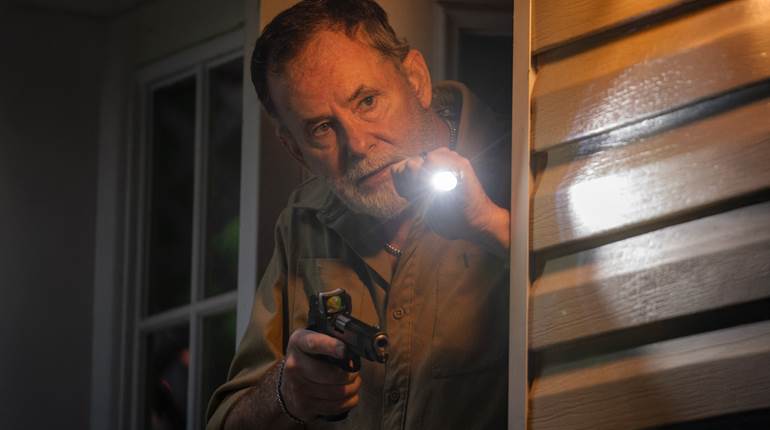
Imagine that you answer the front door to find an armed criminal standing on your doorstep. A simple step to the side puts the exterior wall of the house between you and the threat. You now have the option of drawing and firing, if that is appropriate. You can also slam the door, take better cover elsewhere in the house and await the results of your 911 call.
Similarly, a person walking down the sidewalk may be accosted by some bad people. A diagonal movement may put the corner of a brick building in between the two parties and allow time to make the appropriate response.
In a gunfight, distance and cover are your friends. Movement is what helps you take advantage of them. Practicing movement helps you stay in a balanced, fighting stance and more able to deal with the threat of a violent criminal attack.