A few months back, I walked into a gun store in California that I frequented in the early 1970s. It hasn’t changed very much—same large log building with no change in floor space or show cases. This is a full-service gun shop that is deep into everything available. In the old days, there was room for several samples of everything current in handguns. Today, there are so many kinds of competing handguns that usually there is one example of each on display with more under the counter. In essence, that’s the difference between then and now—there is a lot more from which to choose. That is particularly true in the field of automatic pistols. For reasons that don’t seem to make much sense now, in those days everybody was mad for pistols with DA/SA triggers, particularly .45s. They were perceived to be somehow “safer.” Many current 21st century models fill the bill, but there weren’t that many in the 70s.
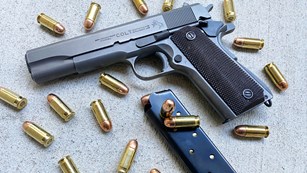
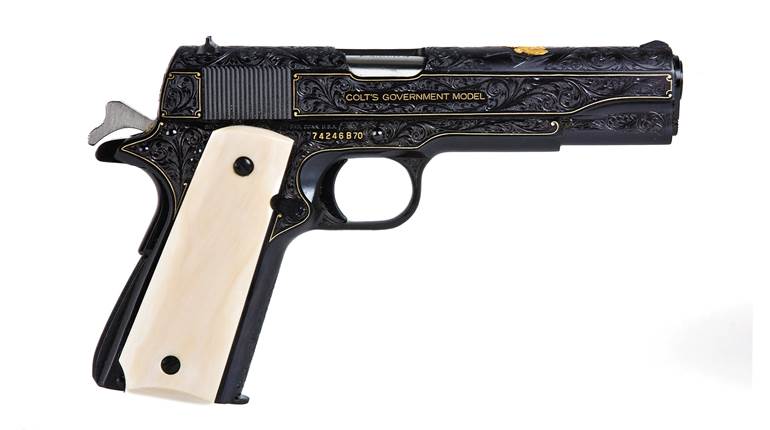
So an ingenious gunsmith named Louis Seecamp took up the complex problem of making DA/SA .45s, using Colt Government Models as a starting point. Looking at one of these pistols years after the fact and you realize how complex the procedure that made it happen actually was. It involved a great deal of machining on the right side of the 1911 receiver in order to make a channel for a draw bar.
This part internally contacts the bottom end of the hammer and draws it rearward to a cocked position. This happens just as a new pivoting trigger contacts the stub of the old SA trigger and fires the gun. A few brief sentences cannot possibly describe how precisely these various part must be shaped and positioned in order to make the system work.
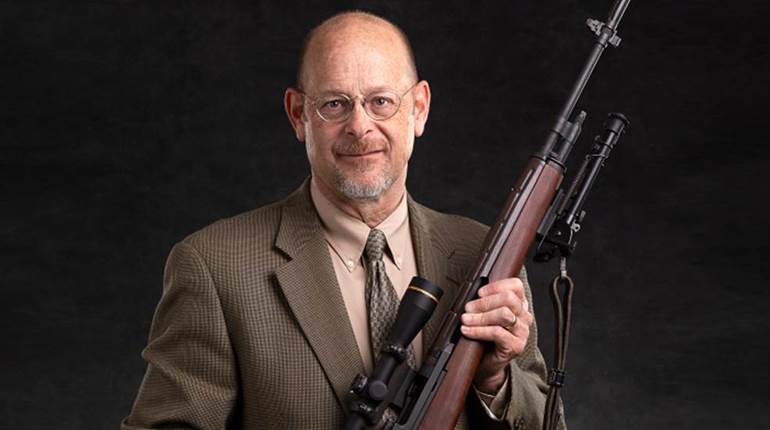
Initially, Seecamp converted individual pistols sent to him by their owners. Word of the system’s efficiency spread by magazine article and word of mouth, so Mr. Seecamp entered into some kind of arrangement with Colt and modified an unknown number of 1911s for sale via Colt’s distribution network. I saw several in that old time gun store. Although the DA conversion is probably his best known innovation, it is not his only one. He came up with several other pistol products, as well as a unique rifle. Master of the combat sight and 1911 guru Wayne Novak recent commented to me that Louie Seecamp was easily the most underrated and overlooked of the great 1911 pioneering pistolsmiths.
Most Popular