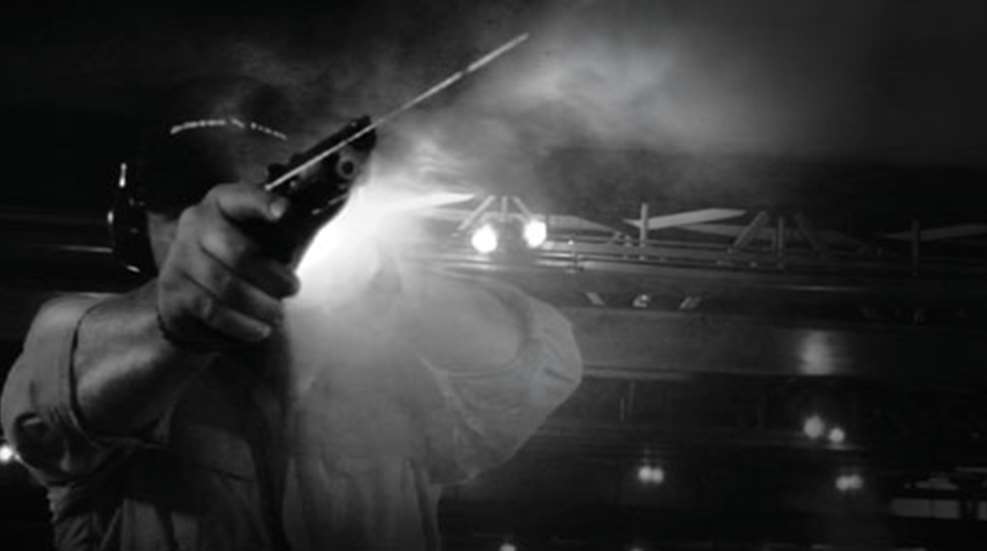
Lasers have long been a part of the science fiction movie scene, but in 1984, Ed Reynolds of SureFire—the company was called Laser Products Corp. at the time—gave the idea of a functional laser sight a big push forward into shooting accessory fact. Reynolds was asked to build a laser sight to be mounted on an AMT Hardballer Long-Slide .45 ACP pistol as a movie prop. With the long sight attached to the even longer pistol, a body-builder-turned-actor used an external power supply in his coat pocket to activate the laser and make movie history. In fact, this pistol and sight combination became so iconic in the course of filming “The Terminator,” it was included in the final movie poster.
In the years since, laser sights have continued to appear in film after film, and they continue to grow in popularity with users of defensive handguns. As the technology has improved, the sights themselves have become smaller, lighter and more reliable. Battery life has been extended from just minutes to hours, and manufacturers have been clever in designing a variety of affordable configurations to allow laser sights to move from military inventory and movie prop rooms to gun dealers' shelves. But, is a laser sight a practical investment for your shooting needs?
The Beam
Without getting overly technical, all the gadgetry of a laser sight is devoted to creating a visible dot of colored light on the intended target surface. Two colors of lasers dominate the market—red and green—each with its advantages and disadvantages. Red lasers are the most common. They require a relatively low level of energy to run, and they are comparatively simple to build. As a result, they are less expensive and compact in size. The drawback of red lasers is that they are difficult to see in bright sun light, only being visible out to 20-30 feet. Some models offer a pulsing beam, one that flashes on and off, to make the target point easier to spot.
Green lasers offer a brighter, easier-to-see target point. Because the human eye is more receptive to this color, some green lasers can be seen in bright sunlight out to 100 yards, as well as in dim and dark situations. However, green lasers are more complicated to construct and they drain battery power more quickly. As a result, they tend to be bulkier and more expensive.
The color of beam you choose, therefore, will be driven by a cost/ benefit comparison. Red is at its best at relatively close ranges in moderate and low light situations. Since these are the likely to be the conditions when the average person will probably need to use self-defense, the more affordable red laser is still sufficient for most defensive applications. Green lasers, due to their greater range and flexibility, have been readily adopted and adapted for military and law enforcement applications despite the added expense. This means the market will benefit from a trickledown effect. Since everyone wants the best laser possible, developers are striving to build green beams in more compact and affordable formats, but it will take some time for them to arrive.
Before moving on, it's important to mention that lasers are dangerous in and of themselves. The bright, focused beam of the laser can cause permanent eye damage. Never look directly into the laser when it's activated, and do not point it at people’s eyes or faces. Just like the gun and ammunition it will be used with, a laser sight should be stored securely to prevent unauthorized access.
The Housing
The laser sight housing serves two purposes. First, it acts as the structure to hold all of the laser's components together. The second function of the housing is to allow the laser to be mounted to the firearm it's designed for. Since guns come in a variety of shapes and sizes, so do the housings.
A few years ago, the trend of adding accessory rails, or tactical rails, to handguns became all the rage. Part of this movement was to enable buyers to easily install rail-mounted laser sights to their guns without any permanent alterations to the pistol. The downside of rail-mounted lasers is they add bulk and weight to a gun. Depending on your rig, you may need to buy a holster designed to accommodate the laser.
Guide rod systems, as the name implies, replace the guide rod of a semi-auto pistol. The downside of this system is that if the laser housing breaks, so does the whole pistol. Another popular system is laser grips, which replace the factory grips on semi-autos or revolvers. The switch to activate the laser is set in such a way that the laser is activated when the handgun is held in the shooting hand. If there is a downside to this arrangement, it's that the position of the shooting or support hand may obscure the path of the laser beam if the shooter is not paying attention.
The Pros & Cons of Laser Sights
The positives of the laser sights are obvious. They allow the shooter to get the gun on target quickly, even in low light, without having to spend much time lining up the iron sights. The laser can help to get the gun back on target for accurate follow-up shots. Outside of defensive situations, lasers are useful training aids. They help the shooter to see how the gun is moving during target practice. They are useful for dry-fire exercise as well, since you can see if you are slapping the trigger and pulling your shots.
But the laser's greatest strength is also its greatest weakness. The focused beam produces a perfectly straight line from Point A to Point B. Unfortunately, the world is not made of straight lines. Bullets do not always fly in a straight path from the muzzle to the target, lasers do not always stay sighted in properly and a flinch of the wrist or trigger finger will wave that straight beam around like a conductor’s baton, with the shot landing off-target, even though the laser indicated you were on-target just a moment before. Also, just like a tactical light, the laser can give away the location of the shooter in low-light conditions.
Modern laser sights built by reputable companies are rugged and reliable. They should give the user reliable results during regular use. But, they are still electronic devices. It's easy to forget to change the batteries. Whereas the mechanisms that fire your handgun may survive and function after a drop onto concrete or a dip in a puddle of water, be prepared for the laser's possible demise.
Final Thoughts
Lasers are a useful addition to the modern handgun accessory set. They can give shooters distinct advantages under the right circumstances. However, just as a seat belt in a vehicle is not intended to replace good driving habits, a laser is meant to assist the shooter, not to replace proper shooting technique and mindset. Train with and take good care of your equipment and it will take care of you. But always be ready for things to not go as you planned. If you add a laser sight to your defensive equipment, be prepared to fall back on your iron sights in case it doesn't work.
Most Popular