5/24/2013
Geography has not been particularly kind to Poland. Being sandwiched between Germany and Russia, one of the first things The Second Polish Republic did after being guaranteed sovereignty following World War I was to get its military on a sound footing.
In 1925 an arms factory was set up at Radom in Central Poland to produce Mauser-style rifles. Five years later, it was decided to build a proprietary service sidearm, and all of the currently available arms were tested with the goal of adopting one—or of developing a pistol of its own. At the trials held in 1935 one gun came out on top: a Browning M1911/Hi-Power variant conceived by designers Piotr Wilniewczvy and Jan Skrzpinski. Undoubtedly nationalism played something of a part in the final decision, but the fact remained that the gun really turned out to be world-class.
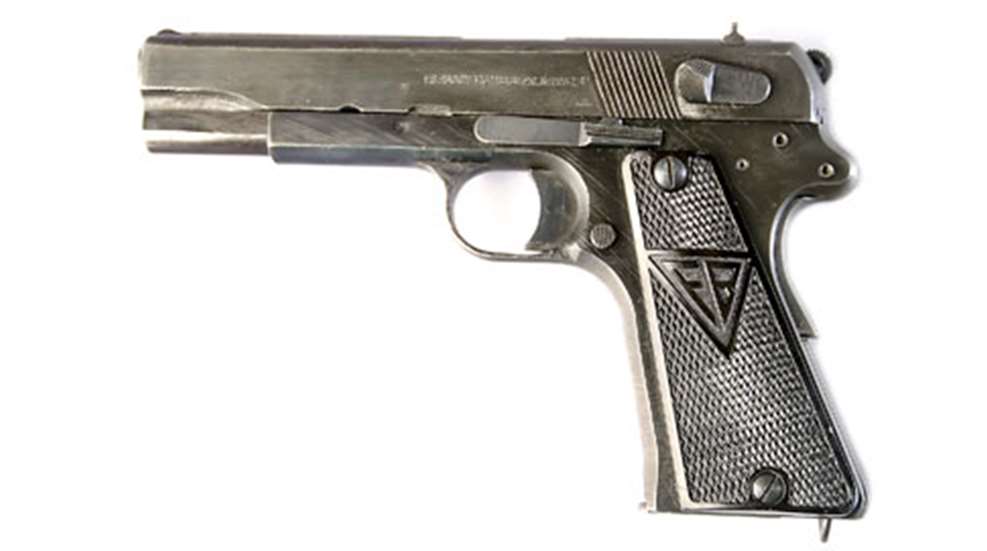
The 9 mm Luger Vis 35 was one of the highest-quality military pistols made before World War II. The materials used were the best, and the fit and finish were commercial-grade. Early guns were marked on the left side of the slide, “F.B. RADOM,” (Fabryka Broni Radom) surrounding the date of manufacture (1936-39) and “VIS-wz.[model] 35/Pat. Nr 15567.” A Polish national eagle emblem divided the two markings. The brown checkered plastic stocks were emblazoned with the large initials “FB” on the left panel and “VIS” on the right.”
When Germany defeated Poland in 1939, the Germans captured the Radom factory and turned its capabilities toward supplying arms for the Nazi war machine. The Vis 35 was renamed the “P.35(p)”—“Pistole 35 (polnisch”). Thousands were made at Radom, some with barrels made by Steyr in Austria, as German officials feared that if all the parts were made in Poland, complete guns would be smuggled to partisans. Eventually entire pistols were assembled at Steyr.
Collectors separate Vis 35s into several categories. First is the pure Polish Eagle models made before World War II. Next are the Nazi-capture Polish Eagles, which still exhibit the national motif but also have German waffenampt marks. Finally, the P.35(p) has three variants: Type I has all three levers (hammer drop, takedown and slide stop) and the shoulder stock grip slot. Type II has all three levers but no stock slot, and Type III has only two levers (takedown and hammer drop) and no slot.
The Vis 35 shown here is a Radom-manufactured Type III in NRA Excellent condition, showing little use or wear. The finish is blued (some have a phosphate finish), and exterior is roughly milled. As such, this gun is worth in the $550 to $625 range.
Gun: Vis 35
Manufacturer: Fabryka Broni Radom
Serial Number: C0170
Condition: NRA Excellent
Caliber: 9 mm Luger
Manufactured: c. 1943
Value: $550 to $625
Most Popular