Experts in the Field
FacebookTwitter
YouTubeRSS Feed
Bug-Out Bag: Homemade Survival Kits

Bug-Out Bag: Homemade Survival Kits

When confronted with a disaster, a go-bag can make high-speed evacuations go much smoother.

By Cameron Hopkins

  • Comment
  • Send to Friend
  • Share This

9/22/2010

Some call it a bug-out bag, others a go-bag, but it’s the same thing regardless of terminology—a pre-packed survival kit in case you have to leave home in a hurry. A go-bag should include everything you and your family might need to sustain yourselves for a short time.

Before getting to the nuts and granola bars, let’s put the go-bag into perspective and understand what it is—and what it isn’t. A go-bag is not an apocalyptic bomb shelter with months of freeze-dried food, a chemical toilet and enough equipment to survive a long period of time. The purpose of a bug-out bag is to tide you over during a disaster that requires you to evacuate your home.

Hurricanes Katrina in New Orleans and Andrew in Florida are good examples of natural disasters that require short-term evacuation. The Mount St. Helens eruption is another example, just like the Yellowstone fires, Texas tornadoes, Mississippi floods and San Francisco earthquakes.

In addition to acts of God, there are also man-made disasters that rear their ugly heads. Rioters in Los Angeles, looters in New Orleans, anarchists in Seattle and other incidents of total societal break-down are frighteningly closer to the surface than many of us would like to admit.

Because catastrophes are regional in nature, your go-bag should be specific to your area’s propensities for trouble. It makes no sense for residents of rustic towns in the Midwest to prepare for mobs of looters over basketball games. However, it might be appropriate for you to prepare for civil unrest if you live in a large metropolitan area with a diverse population.

Similarly, natural disasters are geographic in nature. It’s unlikely that it will flood in Phoenix, and there won’t be a forest fire in Las Vegas. If you live in tornado alley, you already know what to expect. If you reside near the Missouri or Mississippi rivers, you already have sandbags. I won’t belabor the obvious.

Stay Or Go?
I’m not sure how many readers might get a reference to The Clash’s “Should I Stay Or Should I Go?” but it’s perfectly apropos here. The key question in a calamity is whether to bug-out or ride it out.

That decision is predicated on so many factors that it’s impossible to answer here, but I can tell you that if you do elect to evacuate, you have three choices. You can simply go, meaning you have no pre-existing plan and you’re simply bugging out. Option two is that you have a pre-determined destination—possibly a relative’s house or a favorite camping site. The third choice is that you have a pre-arranged rallying point where you and several close friends have agreed to meet and where you’ve pre-positioned additional supplies. In a chaotic break-down of law and order, strength definitely improves with numbers, so having a plan with some similarly disposed friends is highly recommended.

If you decide to stay, you still need provisions to last for several days and up to two weeks. I can’t think of any natural disaster, in which it would be possible to stay home, that’s gone two weeks before basic services were restored.

Don’t forget pets. You’ll need dog or cat food, as well as diapers for young children. You’ll obviously think of food and water, but don’t forget the “what goes in must come out” scenario either. A bag of chlorinated lime should be kept on hand to use in a latrine (at least two feet deep). Think about other issues of garbage disposal too. A good stock of heavy-duty trash bags should tide you over.

Go-Bag Contents
So now we come to the go-bag itself and what it should contain. As much as I would really like my go-bag to be ready for “Red Dawn” when I take to the hills to wage guerilla war against Spetsnaz invaders, the truth is that guns and ammunition comprise a small portion of a well-equipped go-bag.

Communication tools should be a top priority. A crank-powered radio to hear emergency news, a cell phone and even a satellite phone are all good ideas. A set of walkie-talkies is a good idea as well.

Medical needs must be addressed. You’ll need a “boo-boo kit” for small cuts and nicks, and a properly put together trauma kit with a tourniquet and combat bandages.

Food should be dried or canned. Include multi-vitamin packs and high-energy bars. OK, go ahead and throw in an MRE or two to make you feel more Red Dawnish.

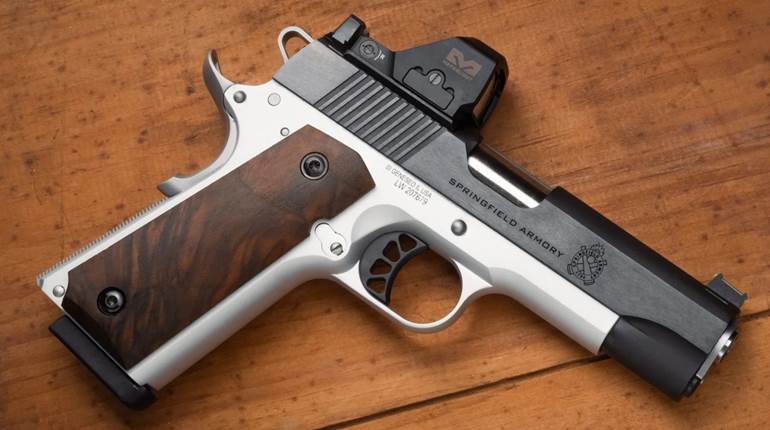
When it comes to firearms, I keep an AR with a Trijicon 4X ACOG ready to go with eight spare magazines carried in an Eagle plate carrier. I also keep a Springfield Armory 1911 customized by Larry Vickers at the ready, so that little jewel along with six spare mags is definitely going with me. In my go-bag is a Glock 9 mm with three spare mags (even though I’m not a “Glock guy,” it’s a good general-purpose pistol if I have to loan someone a gun). My wife is a revolver person, so I’ve also packed a copy of her favorite snubby, an S&W Model 60 with Crimson Trace LaserGrips.

Nighttime is most dangerous, so I have set of BNVDs (binocular night vision devices) with the latest pinnacle tubes (the best I-squared tubes available). My AR has an ATPIAL infrared laser, which is hot ticket for shooting at night while wearing the BNVDs.

For white light, I have a SureFire LX2, the variable output LED that’s the size of MiniMag Light, but about 18,000 times brighter.

I live in the gun-friendly state of Nevada so my go-bag includes a 17 ounce SureFire suppressor for my AR. On my wish-list is an integrally suppressed Ruger 10/22 from Gemtech.

A Leatherman Wave, Glock shovel and Strider BT combat knife round out my tools, and I keep a compass and GPS in a side pouch and a CamelBak hydration bladder is clean and ready to be filled.

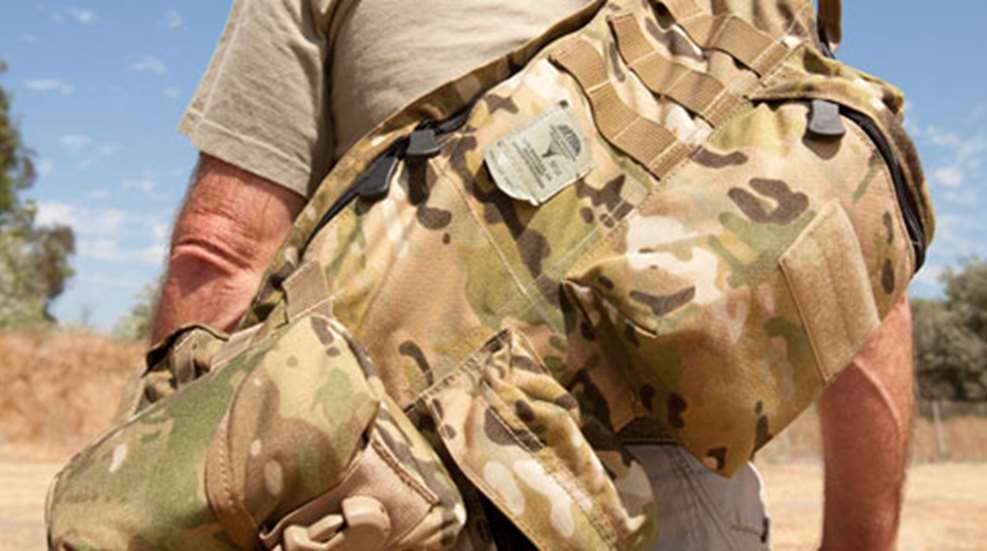
My go-bag itself is from SoTech and is called, appropriately enough, the Go Bag. I also have a small bag with nothing but magazines for my guns and a backpack with several changes of socks and underwear, lightweight wind shells and my wife’s clothes.

My bug-out destination is a rally point in the desert east of Henderson, Nev. If you’ve not planned for yours, now’s a good time to start.

  • Comment
  • Send to Friend
  • Share This

Comments

  • oran antrim

    11/3/2011 4:49:34 PM

    Unfortunately, in the gun friendly state of Nevada, the Marlin Papoose, or any long gun for that matter, is illegal to carry concealed in a back pack without a concealed carry permit, which they won't give. Maybe have to move to california where they are not so strict. Not funny, but true.

  • ntrudr_800

    5/23/2011 2:42:23 AM

    If not a .223 or .308 caliber gun, if not a 9mm or .45 pistol, at least keep an honest .22lr rifle handy! Marlin has the Papoose which is like the Model 795 autoloader but breaks in half for easy storage and transportation. You can pick up a Marlin 795 or Marlin 60 autoloader for around US $160 I believe. These rifles go a while before needing to be cleaned (try 300+ rds!)Also check out the Savage Mark II (Bolt Action) .22lr rifle. Marlin has a similar rifle to the Savage called the XT-22. The Ruger 22/45 and the Sig Mosquito (Desert Camo!)are some very nice .22lr pistols. I hear the Browning Buck Mark .22lr has a nice trigger. You can carry A LOT of .22lr cartridges--they're tiny! Perfect for hunting birds and small game. .22lr is rather quiet for a firearm. With the right suppressor it is as quiet as a pellet gun. Zombie Rifle? I have a Bolt Action .308 Ruger Gunsite Scout Carbine. It's beautiful. It has iron sights standard, is simple, easy to clean, has 10rd mag, & has a fluffy shoulder pad. I can load 1 rd at a time if I somehow lose the magazine. If I could have any weapon for a Zombie Apocalypse I'd go with a Steyr TMP or a Mini Uzi. Even if it's not the most practical, I'd die lmao while shooting zombies <3

  • RETD USAF CURMUDGEON

    9/29/2010 4:22:59 PM

    Everyones contributions are very interesting. Some well made points. I am fortunate in having over 2 decades service, Training in CQB and survival, former law enf plus living in Idaho. Also that I have been "acquiring" for many years. I am a bit heavy on firearms including 2 egistered GEMTECH suppressors, a .22 Outback and a .30 cal HVT. 3 threaded .22's and 2 quick mount .30s, with a whole lot of ammo. I carry Glock 10mms (M29 and M20 use same mags) My spouse prefers her S&W but is practiced on subguns. Traveling arms are a couple 9mm subguns. Registered & Legal in Idaho of course; which I have had for a couple decades. A 150lb Barret crossbow with 10 boxes bolts. For Light: maglight & a couple 65 lumin surfires. For blades, gerber machette & MKII knives. Equiptment includes CBR shelter manager kit, gas & dust masks. Water purification tabs, & months worth of canned & dry goods. Fire starter sticks but I do need yet to pick up a few minor items from NRA catalog, such as shovel & hatchet. For light readng, Anarchists cookbook, The edible wild (now out of print since 1971) + a couple army survival manuals. I readilly admit that it is all more than fits in a didi bag, but my wheel chair & crutches wont fit in a bag either so I rely on my AWD to carry me & mine to a preselected not distant mountain location. Part of my plan is training my grandchildren as it is unlikely that crap will hit the fan in my remaining lifetime ... but we never know. I wish each and every one of you & yours a safe and secure future; dispite the present administration.

  • Rick_SiG

    9/27/2010 9:31:26 PM

    Some good advice here, but not everything will work for everyone in every situation. Murphy's Law of Combat says "no plan survives first contact with the enemy". I had a "dry run" several years ago with that massive east coast power failure. We sill had water pressure, due to the pumping plants having their own power systems. But due to the danger of low pressure and backflow, everything was under a "boil water" alert for a couple days after power was restored. It was summer, and hot, and boiling water to drink wasn't very appealing. But since I had a refrigerator full of bottled water, I could have a "cold one" whenever I wanted. Bottled water is trashed as expensive and environmentally unfriendly, but in an emergency situation it's dirt cheap, and the first need for survival. Long-term water needs require storage and purification, but short-term bottled water is a cheap way of assuring something to drink. Buy a case once a month, and nobody will report you to the government for "hoarding". The next general concept is to abandon the "survival backpacks" I was building, and switch to the "go bag" concept. The idea is to load each bag with something unique, plus a few redundant items that are always handy to have. The bags have either winter gear, food, medical supplies, or ammo in them. They're tagged, and stacked on a rack in the basement. I can easily take two bags at a time, and pack them into my vehicle. The last items to be loaded will be a 5.56mm short(er) scoped rifle, a go bag with about 800 rounds of ammo, and a few spare magazines. I don't foresee the need for 7.62mm, but I have a folding-stock M1A SOCOM and a go-bag of ammo, just in case I have a few extra minutes to load some "luxuries". While all this is going on, I'll have grabbed one of my "messenger bags" that has the bare minimum of a handgun, ammo, snacks, and flashlight. If I can't grab anything else, at least I won't be totally disarmed.

  • mike

    9/27/2010 7:09:35 AM

    Some great ideas in there but if you are having to survive, there are more important things than lots of ammo. Ponchos, space blankets, etc are crucial. Water-purification and dried food, a good leatherman, that crank radio w/ built in light- great for morale and updates, bring a headlamp. Great to know what local plants you can eat- a small book on what you can forage for and safely eat will keep you fed long after tht rifle runs out of bullets. put your 1st aid kit, compass and map in a nalgene bottle- it will protect it and keep you w/ another way to carry water beside your camelbak, in your go-bag. Quality footware and sox are key. weight does matter.I don't call myself an expert but I've lived in the woods for months, the author's go-bag seems better fit for zombie invasion and looking cool than actual survival.

  • Scotty

    9/26/2010 3:50:48 PM

    This is not a complete article by any means, just a primer and a reminder. As far as flashlights are concerned, I like the Olight I10/15 series beacuse of the variable light output (6-220 lumens), w/Strobe, S.O.S. With a simple battery tube change you are able to use a single CR123A or AA. Battery life of 1-50 hours all contained in a flahlight the the length of your finger!

  • finsII

    9/26/2010 11:21:07 AM

    I have a small bugout bag ready for my car. i am setting up a secure area right at my farm where I live. I have purchased extra ammo, put foodstocks in, have seeds and a secure water source.I have also purchase supplies to secure my home and barns. My next purchase is a generater that works on natural gas for emergency power. good luck to us all.

  • Dadrock33

    9/25/2010 6:44:37 PM

    Ok, I've been around a while and, not being an expert in any one area, what's the total price tag of your equipment? I'm telling you right now, I can't afford it. Need to prune your list quite a bit for those of us "working stiffs".

  • george

    9/25/2010 4:06:46 PM

    Your bag is HEAVY on guns and ammo. That's to be expected from a writer for a gun magazine. What are you going to eat? In two weeks, you'll starve to death and be just as dead as if you were shot. Where I live, the danger of social tension is just as bad, but it gets Cold in the winter. MRE's don't require any prep time or a fire. You don't have any prepositioned water but rely on filling a container as you exit. If you don't have water pressure, you're going to get thirsty before you ever need to defend yourself. I hope you're not thinking of looting all the stuff you need for real survival, which includes filling your belly as well as your magazines.

  • Jack

    9/25/2010 9:06:38 AM

    I totally understand the philosophy behind having a “go-bag”. But keep in mined that if your destination is a government provided “safe area” or you have to cross “check points”, most likely your going to be questioned and possibly searched. And while the Fourth Amendment “guarantees” one being safe in their possessions, most likely you be under “Marshall Law” and therefore most of you Constitutional rights will be suspended.

  • ctd

    9/25/2010 8:46:17 AM

    "the truth is that guns and ammunition comprise a small portion of a well-equipped go-bag" ...then list an arsenal better than most peoples' collections? ACOG & suppressor & lasers & night vision, vs a cursory reference to dried/canned foods etc. to last days or weeks? Start with prepping for 3 days impromptu camping, add a hard-use pistol & rifle, review a survival book like Les Stroud's "Survive!", adapt to circumstances and weather.

  • Gunslinger454

    9/25/2010 5:34:17 AM

    To Mr. Unprepared, that's exactly why no one in my neighborhood knows where my supplies are kept!!! Oh, and aren't IR lasers restricted to law enforcement and military only?

  • John

    9/24/2010 11:42:48 PM

    Personally, I don't like bright flashlights for nighttime. I'm sure the sure fire is great, but a really bright light is a giant beacon as to your position. A few other things I keep in my go bag are: camp suds, a bandanna (can be used as a towel, or as reusable toilet paper if washed correctly,) and water purification tablets. Salt is also very good to have because it'll replace some electrolytes in your system if added to water, and actually helps your body absorb more of the water that you drink. Paracord is great. Enough said. Another thing to keep in mind is that in choosing your primary firearm, choose a very common caliber so that you have the potential to find/ barter for more. Stay away from .303 british and other fairly uncommon cartridges. I live in NY, and do not own any handguns, so my secondary is a Henry U.S. Survival rifle. ~$250, .22LR, 2.5 pounds, and it breaks down and can be stuffed in your pack in about 30 seconds. Another great feature is that it's much quieter to fire than a full sized rifle, or a handgun. With hollow point .22LR, you can take animals up to deer size if the bullet hits the right spot.

  • Gary

    9/24/2010 11:10:08 PM

    Lots of firepower equals lots of weight. In my drop and run kit I actually have a selection to choose from. I can pick up what is appropriate. An earthquake in Seattle means loss of services and food shortages at the market and possibly pitching a tent in my back yard. I can then dig out any firearm and ammunition. Having food and water on hand is the deal. If a riot keeps me isolated at home; still not a problem. If I have to leave; a rifle that serves as defence and a game getter works. In a civil emergency a pistol works well for immediate self defence but I know I'll have to eventually account for using it if I'm forced to; best to just put distance between the trouble and me. If the trouble follows me I'll stick with my rifle. Again, depending on the breakdown: Food, water, shelter and defence; pretty much in that order. Remember, when you have to drop the large load and run, weight is everything.

  • John Bourbon Jr

    9/24/2010 10:04:47 PM

    This is a very timely article as I have been preparing 2 Bug Out Bags, one to keep in my truck and one to have at home. My thoughts on what to pack centered around what will I need to survive 2 nights outdoors, (in the case of a natural catastropy) and what do I need to survive a civil disturbance on the off chance that I get caught in one far from my Vt home. My bags aren't nearly as big as the one pictured, but they are quick to carry and if need be, my wife could easily shoulder the weight if for some reason I can't.