Gamer vs. gunfighter is one of the oldest and most misunderstood arguments in the shooting world. From the combative perspective, it’s not a matter of “gaming is good" or "gaming is bad." It's an undeniable fact that competition and combat solve different problems. Mistaking one for the other or rejecting either one is a mistake.
If you've spent any time around shooting ranges over the past 30 years, you've undoubtedly heard the debate. "That gaming stuff will get you killed on the street." "I wouldn't stand in the middle of a doorway." "Nobody slices a pie like that." "Real gunfights don't have buzzers."
Let's get something straight right out of the gate. Competitive shooting is not tactical training. It was never intended to be. IPSC, USPSA, IDPA and every other organized action-shooting sport operate under a specific set of rules. Those rules define the game, just as the rules define football, baseball or boxing.
If the shooting stage requires engaging targets from a particular position, that's what the competitor does because that's how the game is scored. If penalties are assessed for stepping outside a fault line or engaging targets out of sequence, good competitors learn to play by those rules. That's not a tactical doctrine. It's simply understanding the game you're playing.
Tactical training isn't trying to win a match. It's trying to solve a lethal-force problem while minimizing unnecessary risk to yourself and others. A doorway on a competition stage is simply part of the course design. A doorway in a hostile structure may be a fatal funnel requiring an entirely different solution.
One environment rewards efficiency within the rules of the game. The other rewards survival within the realities of real-world violence. Confusing those objectives doesn't make either discipline wrong. It simply means you've applied the wrong tool to the wrong problem.
Where the argument falls apart is when people assume competitive shooters can't shoot or tactical shooters automatically shoot better. That's simply not supported by reality.
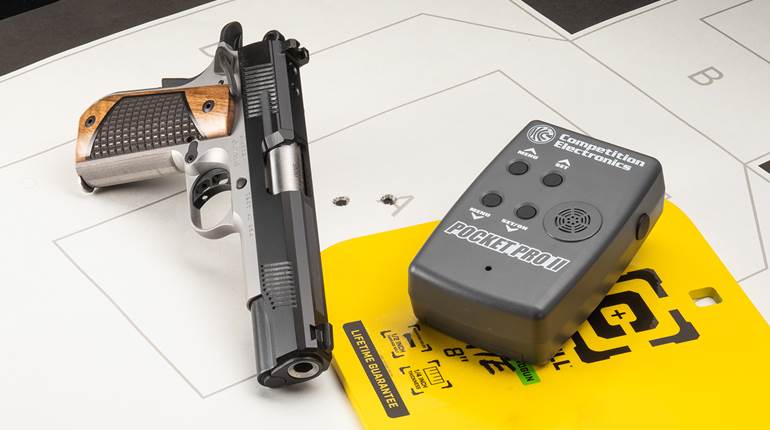
The high-level competitive shooter possesses an extraordinary level of gun-handling skills and marksmanship. Their draw stroke, recoil management, visual processing, trigger control, target transitions and firearm manipulations have been refined through tens of thousands of measured repetitions under objective standards. Put simply, they know how to run a gun.
The timer doesn't care about opinions. The target doesn't care about internet arguments. High-level competitive performance leaves very little room for self-deception.
That raises an interesting question. If competition is supposedly so detrimental to real-world performance, why do elite military and law-enforcement organizations repeatedly seek instruction from world-class competitive shooters? The answer is remarkably simple. Because shooting is shooting.
Whether you're drawing a pistol in front of a timer or under life-threatening circumstances, the mechanical fundamentals don't suddenly change. Sight management doesn't change. Trigger control doesn't change. Recoil still must be managed. Many of the nation's most respected performance shooters have spent years teaching those same mechanics to military special mission units and law enforcement firearms instructors for one reason: they understand performance at the highest level.
That doesn't mean a Grand Master automatically understands small-unit tactics, room clearing or armed movement through complex environments.
The ability to shoot from a sub-one-second draw doesn't automatically teach someone how to search a structure, work with a partner, identify unknown contacts or make lawful use-of-force decisions under rapidly evolving circumstances. Being exceptional at one does not automatically confer expertise on the other.
The irony is that both communities have something the other can benefit from if they're willing to leave their egos at the door. The tactical shooter can learn an enormous amount about efficiency, measurable performance, diagnostics and skill refinement from the competitive world. Competitive shooters have spent decades dissecting every component of gun handling until tenths and even hundredths of a second become measurable improvements.
Conversely, the competitive shooter who carries a firearm for personal protection owes it to themselves to understand movement, use of cover, positional advantage, appropriate use of force, threat recognition, decision-making and the realities of interpersonal violence. Those lessons are not found in a score sheet. They're found in quality defensive training.
The mistake is believing you must choose one world over the other. You don't. In fact, the savviest shooters I've known have always borrowed shamelessly from both. They develop their marksmanship, gun handling and measurable performance wherever the highest standards exist. They develop their tactics, judgment and decision-making from instructors who have devoted their careers to solving real-world problems. Each discipline fills gaps the other was never designed to address. Together they produce a far more complete shooter than either one alone.
Bullets don't know whether the buzzer just sounded or whether you've just recognized a deadly threat. Nor do they know or care if you're standing on a competition stage or in your own living room in your underwear at two o'clock in the morning.
Instead of wasting time arguing about which world is superior, why not take the best each one has to offer and build a skill set that best serves why you even have a gun?
Performance shooting and tactical application are complementary, not competing, disciplines.
Most Popular